
Featured image for What is Plywood Furniture Grade? A Manufacturer’s Expert Guide to Selection and Quality
What is furniture grade plywood? A Manufacturer’s Expert Guide to Selection and Quality
A British wholesaler once sent me a photo of a freshly delivered panel—what he thought was “furniture grade” plywood looked fine until his team started cutting. Edges crumbled, and the veneer peeled away in strips. It’s a classic case of mislabeling, and it happens more often than many buyers realize, especially when specs get lost in translation.
Furniture grade plywood is engineered for precise joinery, visual appeal, and structural reliability. High-quality face and back veneers, typically hardwoods graded A or B, are selected for minimal defects and superior smoothness. The core uses closely layered, void-free plies or solid hardwood to ensure dimensional stability and strong screw-holding. Thickness is tightly controlled for consistent panel fit, and moisture resistance is specified according
What Makes Plywood Furniture Grade Quality?
Furniture grade plywood features high-quality hardwood face and back veneers—such as birch, maple, or poplar—with A or B surface grades for minimal defects and superior appearance. Its core is dense, uniform, and has a higher ply count, ensuring strength, dimensional stability, and consistent thickness for precise furniture assembly compared to construction-grade panels.
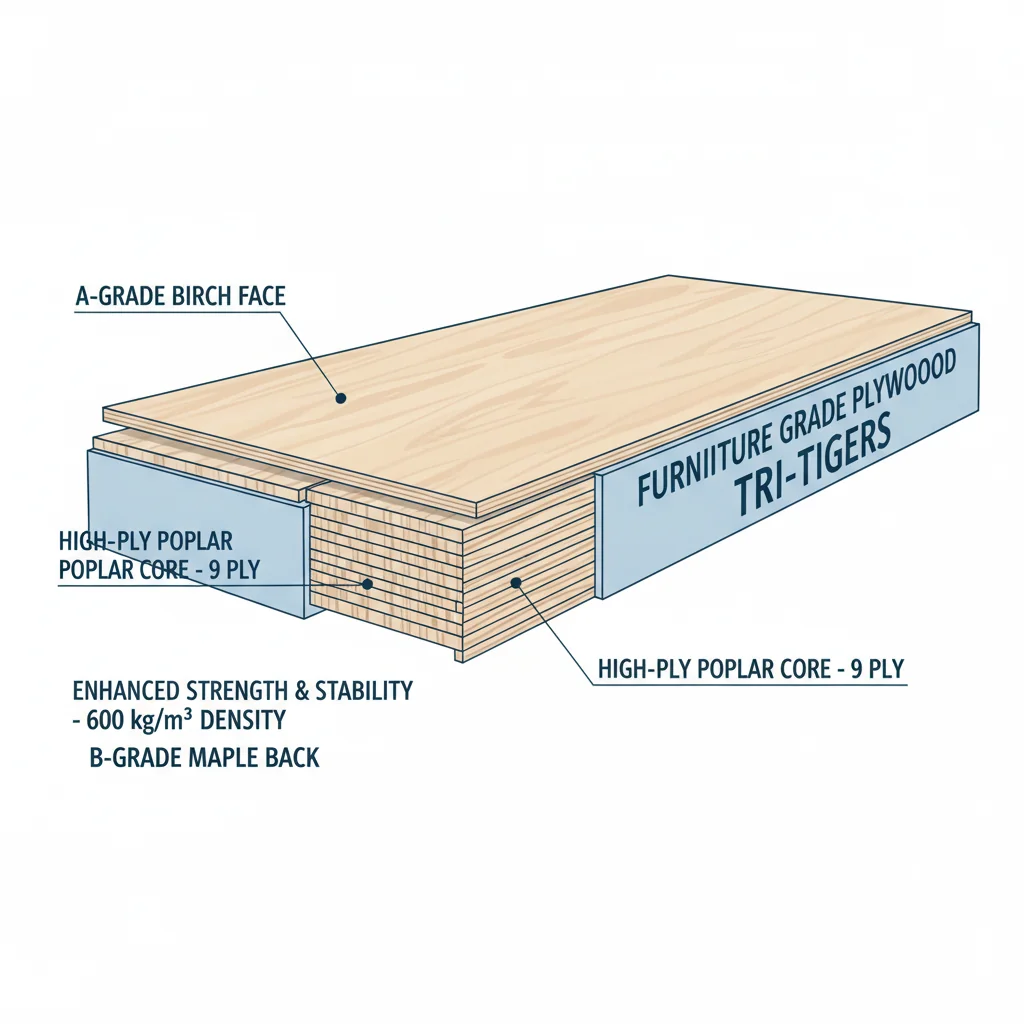
Most people don’t realize that furniture grade plywood is a different animal compared to what’s used in basic construction. The first thing buyers from Germany or the Netherlands usually ask me about is the face veneer. For visible furniture parts—think cabinet doors or tabletop panels—you want an “A” or “B” face grade, usually in birch, maple, or poplar. These faces are smooth, free from open knots, and take lacquer or paint evenly. I’ve seen French buyers reject full 40HQ containers simply because of a few surface putty repairs or color mismatches across panels. Quality here really matters.
Let me share something important about the core. Unlike construction plywood, furniture grade uses higher ply counts—often seven, nine, or even eleven layers for 18mm thickness. These plies are arranged with alternating grain directions, which keeps panels flat over time. In Poland, I worked with a retailer who switched to cheaper panels and ended up with warping shelves within six months. The core must be dense, with minimal gaps, or you risk screws pulling out during assembly. Most European buyers now specify E1 formaldehyde emission (≤0.1 ppm) as a minimum—essential for compliance and indoor air quality.
Another key point: thickness consistency. For precise joinery—like cam-lock or dowel connections—panels need to be ±0.3mm across the batch. I always suggest requesting a few production samples before confirming your order. This way, you can check the veneer grade, core gaps, and thickness in person. It’s the difference between smooth assembly and a costly headache later.
Furniture grade plywood typically requires at least a 'B' face veneer, which has fewer than 5% open knots and must be sanded to a 180-220 grit smoothness to ensure uniform lacquer absorptionTrue
The 'B' face grade restricts defects like open knots to under 5%, providing a smooth surface that accepts paint or lacquer evenly, essential for visible furniture parts like cabinet doors. The sanding grit range ensures optimal finish quality.
Furniture grade plywood is primarily distinguished by its thickness, with all furniture-grade panels being at least 25mm thick regardless of the face veneer qualityFalse
Thickness alone does not define furniture grade plywood; the critical factor is the quality of the face veneer such as 'A' or 'B' grade with minimal knots and smoothness. Furniture grade panels can vary in thickness depending on design requirements.
Key takeaway: Furniture grade plywood stands out for its premium hardwood veneers, uniform core, and precise thickness. These attributes ensure strong, stable, and visually flawless panels, making them essential for high-quality furniture manufacturing where appearance and assembly accuracy are critical.
How Do Veneer Grades Impact Appearance?
Face veneer grades1 determine the visual quality and finish of plywood surfaces, ranging from A (smooth, near flawless) to D (rough, with visible defects). Premium A and AA grades present consistent color, minimal repairs, and tight grain matching—ideal for visible furniture components—while lower grades, such as C or D, are suitable for hidden or structural areas.
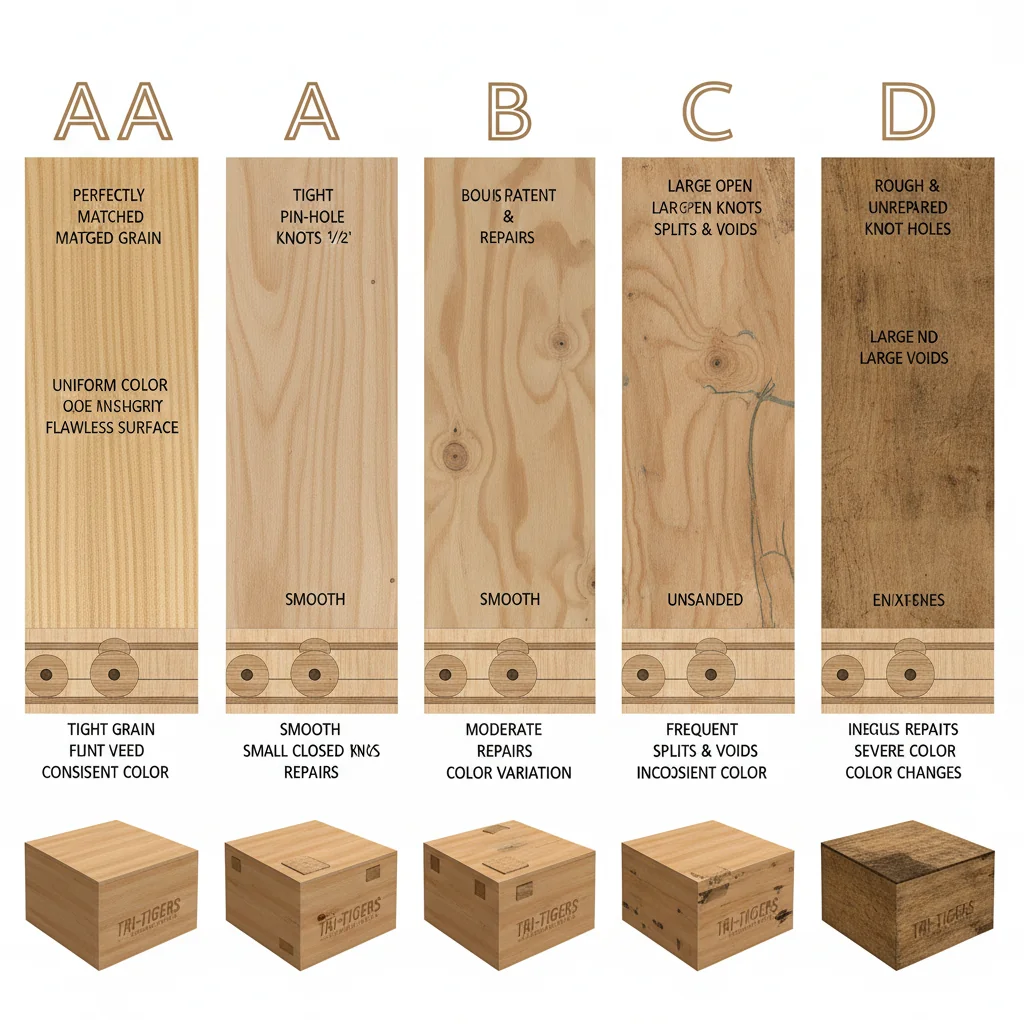
Let me share something important about face veneer grades—this detail is often overlooked, but it makes or breaks the look of your finished furniture. I’ve worked with buyers in Germany and the UK who expected flawless surfaces for their cabinet doors, only to discover visible knots and patchwork after delivery. That’s almost always down to the veneer grade specified in the purchase order. For high-visibility parts—think wardrobe doors, tabletops, or shelving fronts—I always recommend at least an A or B grade face. With A grade, you get a smooth surface, consistent color, and minimal repairs. These panels take paint or clear lacquer beautifully and create the kind of finish European retailers expect.
Now, if you’re sourcing for hidden panels or drawer bottoms, a C or D grade face is usually enough—these allow filled knots, color variation, and surface repairs. I recently supplied a Polish importer with 40HQ containers of plywood shelving. We matched AA grade veneer for visible shelves—no color mismatch, tight grain, perfect for their retail display. For the backing panels, we dropped to C/D grade, cutting material cost by around 20% without affecting the visible finish.
Here’s what matters most: the veneer grade tells you exactly what the customer will see and touch. Don’t assume all “plywood” looks alike. I suggest requesting production samples of both A and C grade before you confirm your spec. That way, you know exactly what you’re getting—no surprises when the shipment lands.
Furniture grade plywood typically requires a minimum face veneer thickness of 0.6 mm to ensure durability and a premium appearanceTrue
A veneer thickness of at least 0.6 mm provides sufficient surface strength and allows for sanding or refinishing, which is essential for high-visibility furniture parts like cabinet doors or tabletops. Thinner veneers often result in visible patchwork and reduced longevity.
All veneer grades labeled as 'A' guarantee a completely knot-free surface without any natural wood defectsFalse
Grade 'A' veneers are generally the highest quality but can still include minor natural features such as small knots or color variations. Absolute knot-free surfaces require selecting 'Premium' or custom-specified veneers, and even then some natural characteristics may remain.
Key takeaway: Selecting the appropriate face veneer grade is crucial for achieving the desired furniture appearance. For visible or touchable surfaces, manufacturers should specify at least an A or B grade to ensure optimal finish, while lower grades are best reserved for non-visible or structural areas.
Why Is Void-Free Plywood Core Essential?
Void-free core2 quality in furniture grade plywood is critical for structural strength, reliable screw holding, and clean machining. Multiple thin plies3 or solid hardwood cores, properly glued under pressure, eliminate gaps that cause sagging, stripped screws, and warping. Inspecting core type and edge quality ensures panels remain flat, durable, and visually flawless in demanding furniture applications.
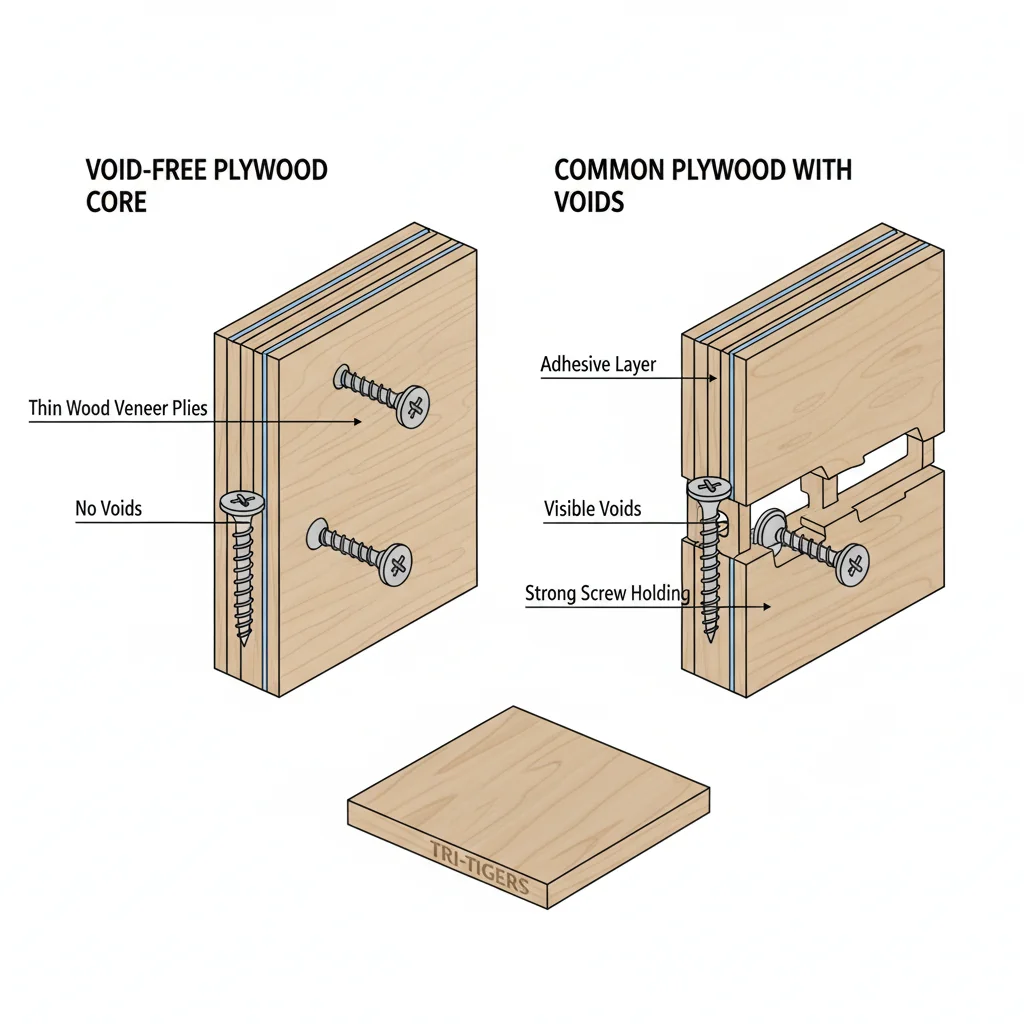
The biggest mistake I see is buyers assuming all plywood cores are the same, especially when comparing quotes from different suppliers. In reality, the core quality makes or breaks your final product—quite literally. I’ve worked with a German importer who ordered a 40HQ container of flat-pack wardrobes using so-called “furniture grade” plywood. When they assembled the shelves, screws stripped out and a few panels sagged within six months. We checked the core—large gaps inside, and overlapping plies. That’s what caused the weak spots.
Here’s what matters most: a void-free or solid hardwood core is essential for any furniture expected to handle weight or frequent use—think beds, bookshelves, or built-in units. Properly made panels use multiple thin plies (often 7, 9, or 11, depending on thickness), each glued under high pressure so the layers bond tightly. This keeps the board flat and prevents internal movement that leads to warping or splitting. In my experience, a standard 18mm plywood panel with a high-quality void-free core holds screws about 30% better than a budget combi core.
For buyers in the UK or France, I always suggest inspecting a cut sample—look for clean, even layers without dark gaps or voids. Ask about the core type (all-hardwood, combi, or finger-jointed) before confirming your order. Most factories will provide offcuts or small panels for testing if your MOQ is at least 100 sheets. This simple check pays off with stronger joinery and far fewer complaints down the line.
Void-free plywood cores typically contain less than 2% internal gaps, which significantly enhances screw holding strength and load-bearing capacity in furniture-grade applicationsTrue
Low-void cores ensure uniform density and structural integrity, preventing issues like screw stripping and panel sagging that occur when internal gaps weaken the core's mechanical strength.
Furniture grade plywood cores can contain up to 15% voids without affecting the durability or screw retention performance of the final productFalse
High void content compromises core stability, leading to weak screw holding and increased risk of deformation; 15% voids is well above acceptable limits for furniture grade, causing premature failure in assembled products.
Key takeaway: Specifying void-free or solid-core plywood is essential for high-performance furniture. Superior core quality prevents weak spots, warping, and visible defects, resulting in stronger joins, better screw retention, and long-lasting, professional-grade results—especially in shelves, beds, and built-in units subjected to heavy or continuous loads.
How Does Moisture Resistance Affect Plywood Selection?
Moisture resistance is a critical factor in selecting furniture grade plywood, especially for use in kitchens, bathrooms, and humid environments. Categories include MR (Moisture Resistant) for dry interiors, BWR (Boiling Water Resistant) for occasional splashes, and BWP/Marine for prolonged water exposure. The higher the resistance, the greater the suitability and price for demanding applications.
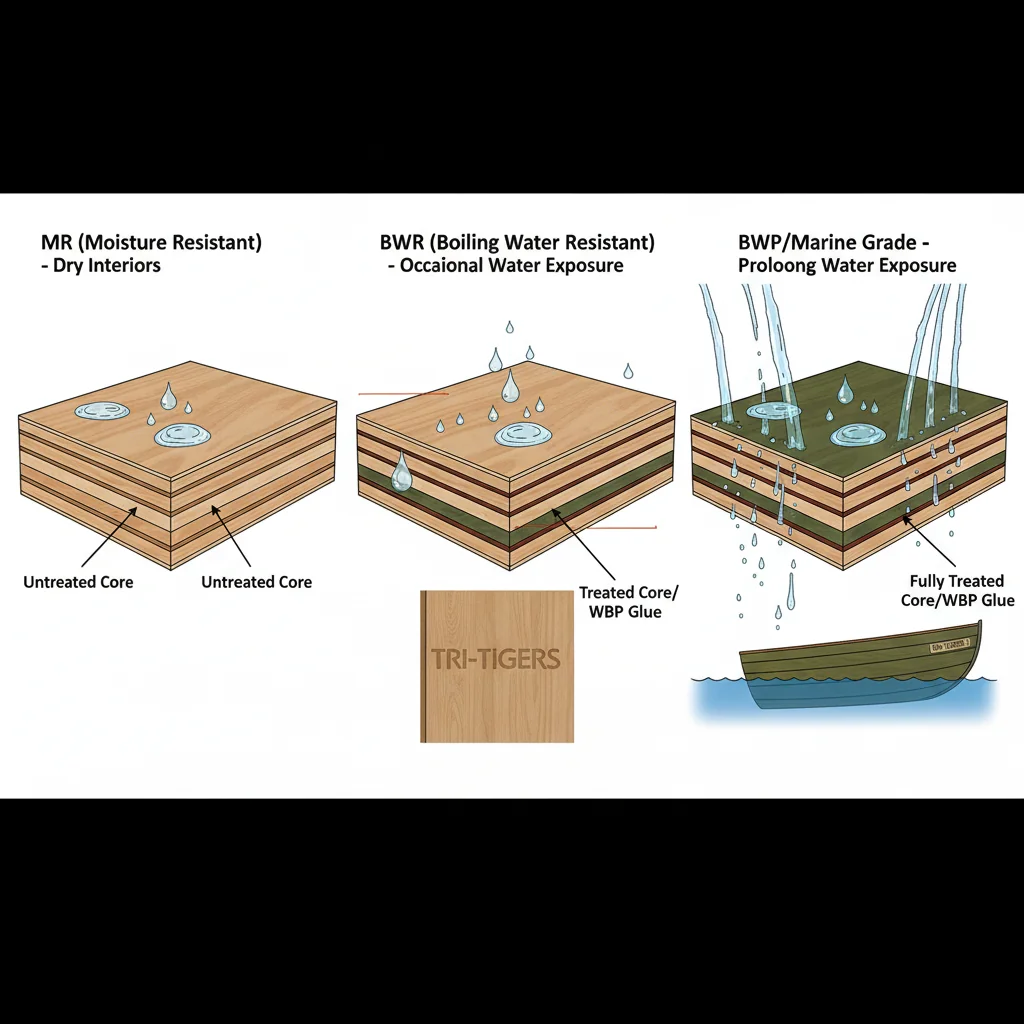
To be honest, the spec that actually matters for plywood in kitchens or bathrooms isn’t just thickness or face grade—it’s moisture resistance. I’ve seen several UK buyers get stuck with beautiful 18mm plywood that warped within months just because they used MR grade in a humid kitchen install. MR (Moisture Resistant) plywood handles normal indoor humidity but fails if exposed to regular splashes or condensation. That’s why in Germany and Poland, importers usually request BWR (Boiling Water Resistant) or even BWP/Marine grade for cabinets near sinks or laundry areas.
Here’s a real example: A Polish wholesaler I worked with last year switched from MR to BWR for their flat-pack vanity units. Their costs rose by about 20% per sheet, but complaints about swelling dropped by at least 80%. For a 40HQ container, that meant paying €2,000 more upfront, but saving much more in warranty returns and reputation damage.
What many buyers overlook is that these ratings aren’t universal—“BWR” in India may not meet the same test as “exterior grade” in France. I always recommend confirming the glue line type (phenolic for BWR/BWP, urea-formaldehyde for MR) and requesting test certificates. For humid regions or contract projects, I suggest BWP/Marine grade even if the price is 40-50% higher. The extra cost protects against “second-order surprise”—great first delivery, then issues six months in.
In short: match the plywood grade to the environment. It’s a small upfront investment that avoids big headaches down the road.
BWR (Boiling Water Resistant) plywood is preferred for kitchen and bathroom furniture because it withstands regular splashes and condensation, unlike standard MR grade plywoodTrue
BWR plywood is treated to resist boiling water exposure, making it suitable for high-humidity areas where MR plywood, designed only for normal indoor humidity, would warp or delaminate over time. This treatment is critical for durability in kitchens and bathrooms.
MR (Moisture Resistant) plywood is suitable for all indoor furniture applications, including kitchens and bathrooms, as long as it is at least 18mm thickFalse
Thickness alone does not guarantee moisture resistance. MR plywood tolerates normal indoor humidity but is not designed to withstand direct water exposure or condensation common in kitchens and bathrooms, leading to warping despite sufficient thickness.
Key takeaway: Always match the plywood’s moisture resistance rating—MR, BWR, or BWP/Marine—to the specific exposure conditions of the furniture’s intended environment. This ensures both durability and cost-effectiveness, especially in regions or projects where humidity and water contact are major concerns.
When Is Furniture Grade Plywood Worth It?
Furniture grade plywood, costing 20–40% more than construction grade, offers smoother A/B faces and minimal defects, significantly reducing labor on filling, sanding, and patching. For visible or load-bearing applications—cabinetry, shelving, desks, and doors—furniture grade plywood delivers superior finish and long-term savings. Professionals often mix grades, reserving premium panels for exposed or structural sections.
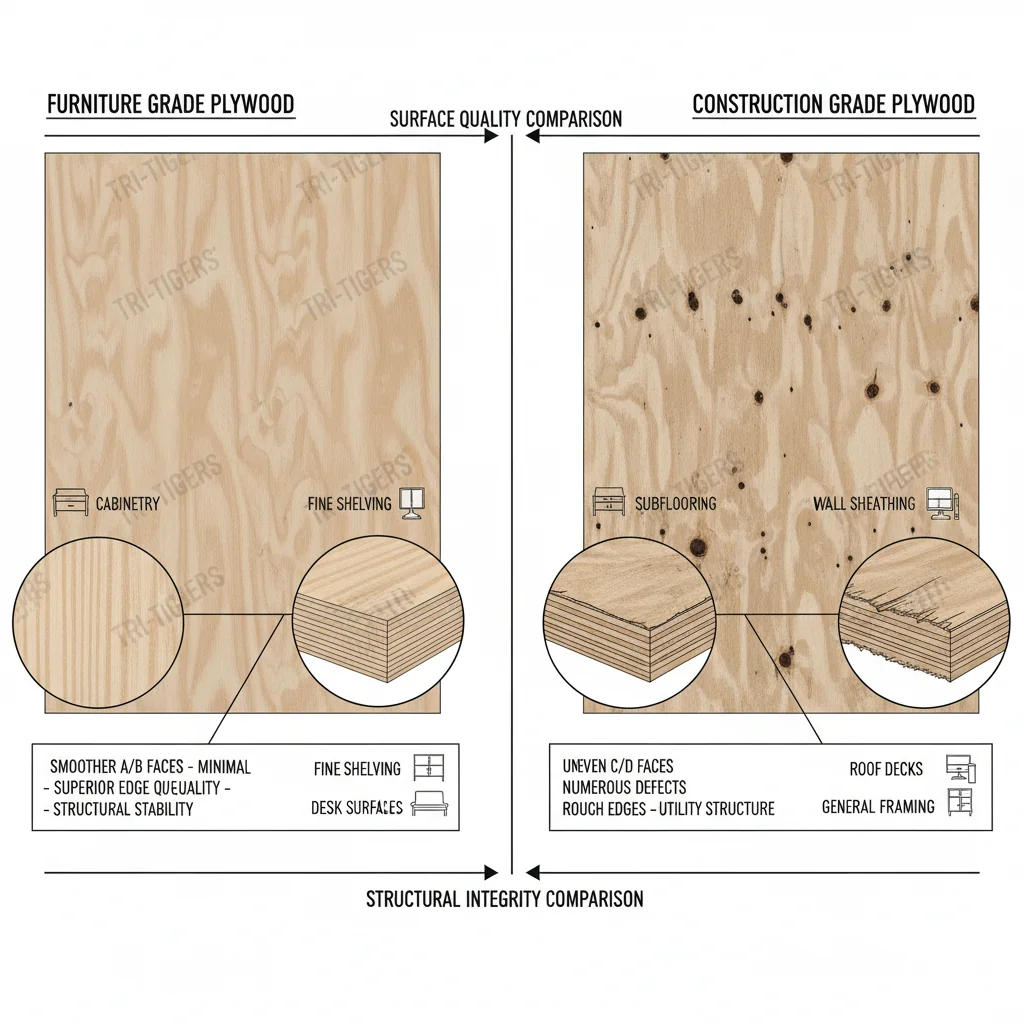
Last month, a wholesaler in Germany asked me whether the higher price for furniture grade plywood was really justified for their new line of flat-pack desks. My answer: it depends on where and how you’re using it. For any visible or load-bearing parts—cabinet doors, side panels, shelving—furniture grade is almost always worth the 20–40% premium compared to construction grade. The reason is simple. With smooth A/B faces and minimal defects, you’re not spending hours filling knots, sanding rough patches, or disguising core voids. On a recent project, a French client saved at least two full working days per 40HQ container by switching to A/B birch plywood4 for exposed cabinet cases. Their labor costs dropped by about 30%, and the finishing quality was far more consistent.
For hidden parts—think kick plates, drawer bottoms, or back panels—construction grade or even C/D plywood makes sense. You won’t see the surface, and strength isn’t as critical. Many customers mix grades within a single order: premium panels for doors, visible sides, and shelves; utility grade for the inside or base. It’s a practical way to balance quality and budget. I always advise checking thickness tolerance (±0.3mm is standard for furniture grade) and confirming E1 or E0 formaldehyde rating if you’re supplying to Europe.
If you’re unsure, request samples of both grades. Run a sanding or painting test. Often, the savings in rework and finishing more than offset the upfront price difference. In the long run, the right plywood grade pays for itself.
Furniture grade plywood typically features A/B faces with fewer than 5% allowable knots or defects, which reduces finishing time by up to 50% compared to construction gradeTrue
Furniture grade plywood is manufactured with strict face quality standards, such as A/B grading, limiting visible defects and knots to less than 5%. This smooth surface requires less sanding and filling, significantly cutting down preparation time for visible or load-bearing furniture parts.
Furniture grade plywood costs 20-40% more primarily because it uses thicker veneers to increase structural strengthFalse
The premium price for furniture grade plywood mainly comes from higher face veneer quality and fewer defects, not thicker veneers. Thickness is generally consistent across grades; the difference lies in surface appearance and defect control rather than structural thickness.
Key takeaway: Investing in furniture grade plywood is cost-effective for visible or load-bearing components, due to its superior surface quality and reduced labor for rework. Mixing grades—using furniture grade where appearance or strength matters and construction grade for hidden parts—can maximize both quality and project budget efficiency.
Where Is Furniture Grade Plywood Used?
Furniture grade plywood excels in applications where both visual appeal and structural performance are critical. Typical uses include cabinet carcasses and doors, bookcases, wardrobes, desks, tables, bed frames, and built-in shelving. Higher architectural grades (AA/AAA) are specified for premium installations such as wall paneling, reception desks, and custom furniture, demanding uniform grain and superior finish.
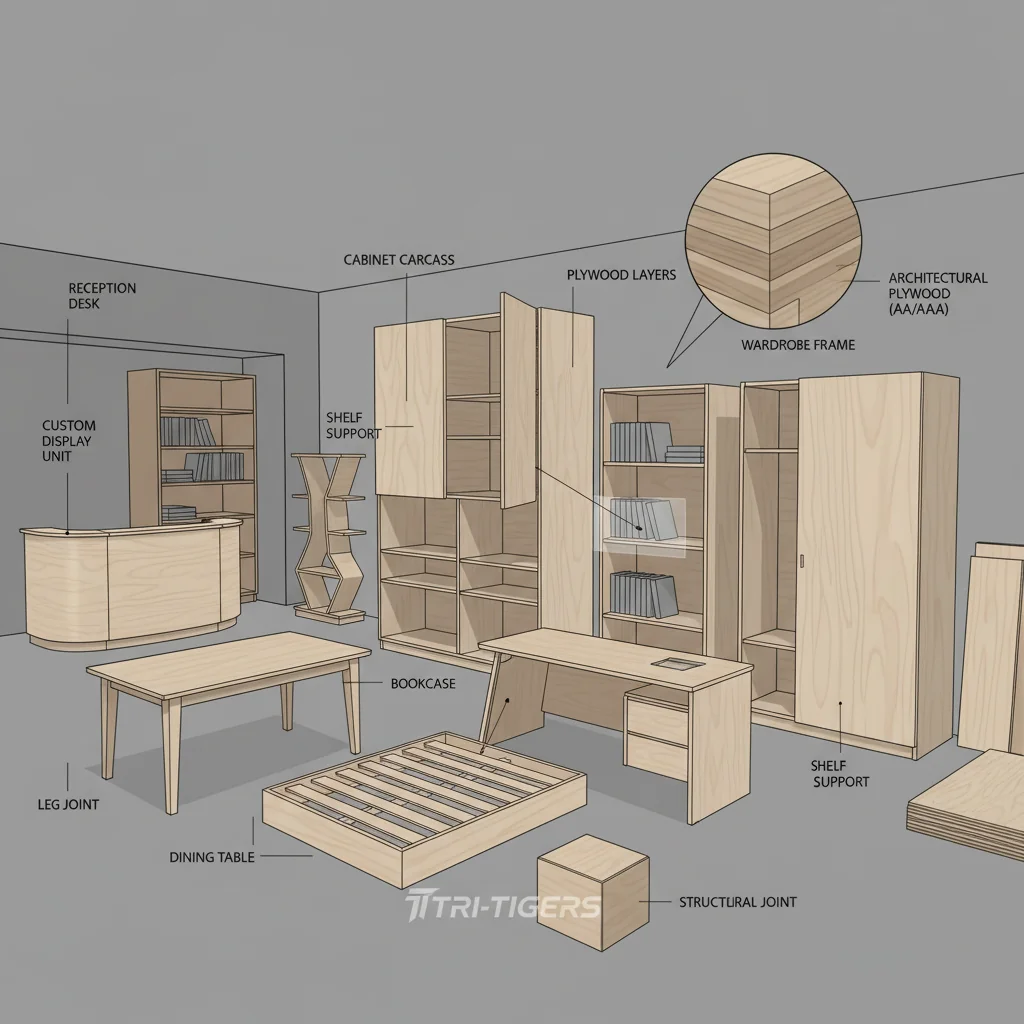
When customers ask where to specify furniture grade plywood, I always recommend starting with the areas people see and touch most. In the German market, for example, cabinet carcasses and wardrobe doors often use 18mm, A-grade plywood5 because it delivers a clean finish, holds screws well, and stays dimensionally stable. I’ve seen French wholesalers request AA grade for built-in shelving and reception counters—those spots need perfect grain and color matching, especially for high-end retail interiors.
Here are the most common applications for furniture grade plywood:
- Cabinet carcasses and doors – 16mm or 18mm A-grade plywood with UV lacquer or wood veneer finish for kitchens, wardrobes, and sideboards.
- Bookcases and built-in shelving – 18mm to 25mm thickness, often with PVC edge banding6g](https://dcifurn.com/edge-banding-everything-you-need-to-know/)[^10] for durability.
- Tables and desks – Top panels and underframes, especially when a consistent surface and strong edge holding are needed.
- Bed frames and headboards – 18mm plywood for stability without heavy weight.
- Architectural wall paneling – AA or AAA grade for lobbies or offices, where flawless surface and uniform color matter.
From my experience, buyers in the UK sometimes specify architectural grades for entire kitchens, but that’s usually overkill. For most projects, reserve premium plywood for visible zones and use construction grade (C/D) for hidden or structural parts like drawer bottoms or back panels. This approach keeps costs under control while ensuring a high-end look where it counts. If you’re unsure about finish or grade, I suggest requesting a sample cut—seeing and touching the real thing is the fastest way to make the right choice.
Furniture grade plywood typically requires a minimum of A-grade veneer on both faces, with at least 18mm thickness to ensure screw-holding capacity and dimensional stability in cabinetry applicationsTrue
A-grade veneers provide a smooth, defect-free surface essential for visible furniture parts, while 18mm thickness balances strength and workability, ensuring the plywood holds screws securely and resists warping under load.
Furniture grade plywood is generally specified with only one face veneer quality, as the back face is covered and does not affect the overall furniture grade classificationFalse
High-quality furniture grade plywood requires matching veneer quality on both faces to prevent warping and ensure consistent moisture resistance, which is critical in visible and structural furniture components.
Key takeaway: Furniture grade plywood should be specified for components that are visible or frequently touched, maximizing both value and aesthetics. Reserve higher grades for high-visibility or premium applications, while construction-grade plywood remains best for hidden or structural elements where appearance is not a priority.
How to Inspect Furniture Grade Plywood?
Inspecting furniture grade plywood requires evaluating the face for smoothness, uniform color, and minimal patches. The edges should reveal evenly thick plies and tight glue lines, with no core gaps or overlapping veneers. Face veneer thickness should be at least 0.5–0.6 mm to resist chipping. Consistent thickness and strong bonding are essential for quality panels.
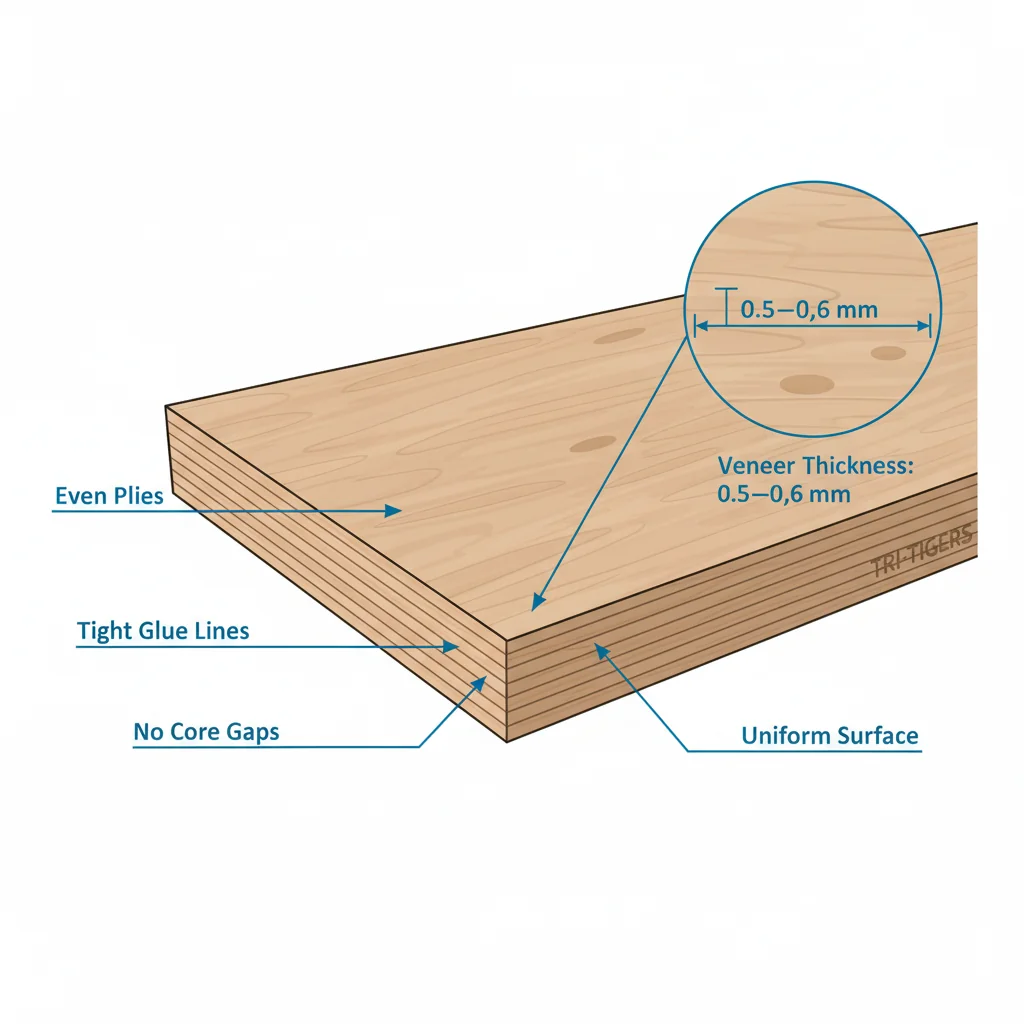
Here’s what matters most when you’re inspecting furniture grade plywood: don’t just look at the face veneer and call it a day. Last quarter, a buyer from Germany sent me photos of “A-grade” plywood with perfect faces—but when I asked for an edge shot, clear core gaps and overlapping veneers stood out. That’s a risk for shelving or cabinet sides; those hidden flaws can lead to delamination or visible seams after CNC cutting.
Always start by running your hand across the surface. You want a smooth, uniform color—no rough grain, no putty patches, and definitely no ripples. If you spot patches, make sure they’re minimal and well-blended, not obvious repairs. I suggest checking face veneer thickness with calipers if possible; for furniture use, at least 0.5–0.6 mm is ideal. Thinner faces chip too easily during machining or edge banding.
Next, check the edge profile. You should see even, tight glue lines between plies, not open splits or big voids. For a 15mm or 18mm board, you’ll typically see 7–11 plies—fewer plies or thick core layers often mean a softer, less stable panel. I’ve seen Polish importers get stuck with “furniture grade” boards that had just five plies and poor bonding; their finished cabinets warped within months.
If possible, ask the supplier for a core sample or cut-off. Push gently on the face—if you feel bubbles or soft spots, bonding is weak. I always recommend inspecting consistency across several sheets before committing to a 40HQ container. It’s worth catching issues early to avoid costly quality claims later.
Inspecting the plywood edges for core gaps and overlapping veneers is critical because these defects can reduce the panel's bending strength by up to 15%, leading to premature failure in shelving applicationsTrue
Core gaps and overlapping veneers create weak points that compromise structural integrity, especially under load, which is why edge inspection can reveal hidden flaws not visible on the face veneer. Studies show such defects can reduce strength and increase risk of delamination or warping.
Furniture grade plywood is primarily graded by the thickness of the face veneer, with thicker veneers always indicating higher quality and better durabilityFalse
While face veneer thickness contributes to appearance, it does not solely determine furniture grade quality. Core construction, veneer bonding quality, and absence of defects like gaps or overlaps are equally or more important in ensuring strength, durability, and finish quality.
Key takeaway: Careful inspection of furniture grade plywood—focusing on surface quality, veneer thickness, edge integrity, and core construction—ensures panels meet high manufacturing standards and provide superior performance in furniture applications. Always verify these characteristics before purchase to avoid issues with durability and finish.
How Do Emissions Standards Impact Plywood?
Emissions standards for furniture grade plywood, such as CARB Phase 27, TSCA Title VI, and E1, restrict formaldehyde release from adhesives, ensuring panels are safer for indoor use. Manufacturers offer low-emission options, including E1, E0, CARB2, and NAF panels, which support healthier indoor air quality and compliance with green building certifications.
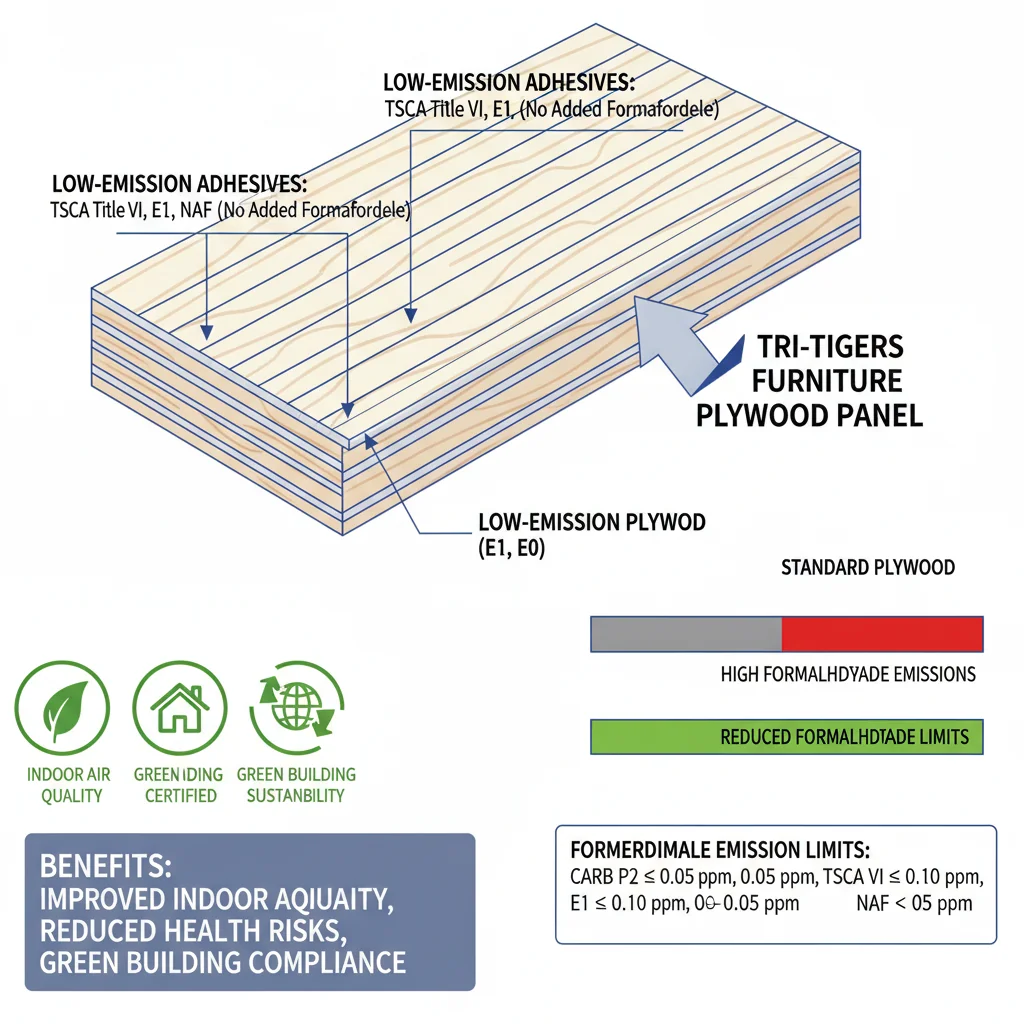
Last spring, a wholesaler in Germany reached out with concerns about plywood emissions for a children’s bedroom range. They’d used standard plywood before, but increasing client demand for E1 or better forced them to dig deeper into certifications. I explained that E1 panels8, now a baseline in Europe, emit ≤0.1 ppm formaldehyde—much safer for closed spaces than E2 or uncertified products. Some projects even specify E0 (≤0.05 ppm) or CARB2 panels for nurseries or hospitals, where air quality is critical.
Here’s the technical reality: Most furniture plywood uses urea-formaldehyde adhesives, which off-gas over time. CARB Phase 2 (California) and TSCA Title VI (U.S.) standards are roughly equivalent to E0 in Europe, but testing methods vary. If you’re supplying to both EU and U.S. clients, ask for dual-certification test reports—don’t assume they’re interchangeable. In my experience, low-emission panels cost about 8-15% more at the factory level and may push MOQ up by 20% (for example, minimum 200 sheets instead of 160 in a 40HQ container).
To safeguard health—and stay compliant—I suggest always requesting formaldehyde emission documentation: look for E1, E0, CARB2, or NAF on spec sheets. Seal all cut edges on-site, especially if panels are stored before assembly; this step can reduce residual off-gassing. In sensitive areas like bedrooms or kindergartens, the extra cost of low-emission plywood is well worth it. I remind clients: documented emission class is your best defense if there’s ever a dispute with inspectors or end customers.
E1-grade plywood panels emit formaldehyde at levels of 0.1 ppm or less, making them suitable for indoor furniture where air quality is a concernTrue
The E1 classification limits formaldehyde emissions to ≤0.1 ppm, which reduces indoor air contamination risks compared to higher-emission panels like E2, making E1 the baseline for safer indoor plywood use in Europe.
Plywood certified as E2 emits less than 0.05 ppm formaldehyde, making it the preferred standard for children's furniture in EuropeFalse
E2 plywood actually emits higher levels of formaldehyde, typically around 0.3 ppm or more, which is above safe thresholds for sensitive environments like children's rooms; E1 or better standards are preferred for low emissions.
Key takeaway: Choosing plywood certified to low-emission standards significantly reduces formaldehyde exposure from indoor furniture, safeguarding health, especially in sensitive environments like bedrooms and nurseries. Requesting documented emission classes from suppliers and promptly sealing panels are best practices for manufacturers and specifiers concerned with indoor air quality and regulatory compliance.
How Should Plywood Furniture Be Finished?
Furniture grade plywood requires minimal surface preparation—typically just light sanding with 180–220 grit—before applying stain, varnish, or paint. All surfaces and edges must be sealed to prevent moisture absorption, warping, or delamination. Exposed edges should be protected using edge banding, solid wood lipping, or multiple seal coats for long-lasting performance.
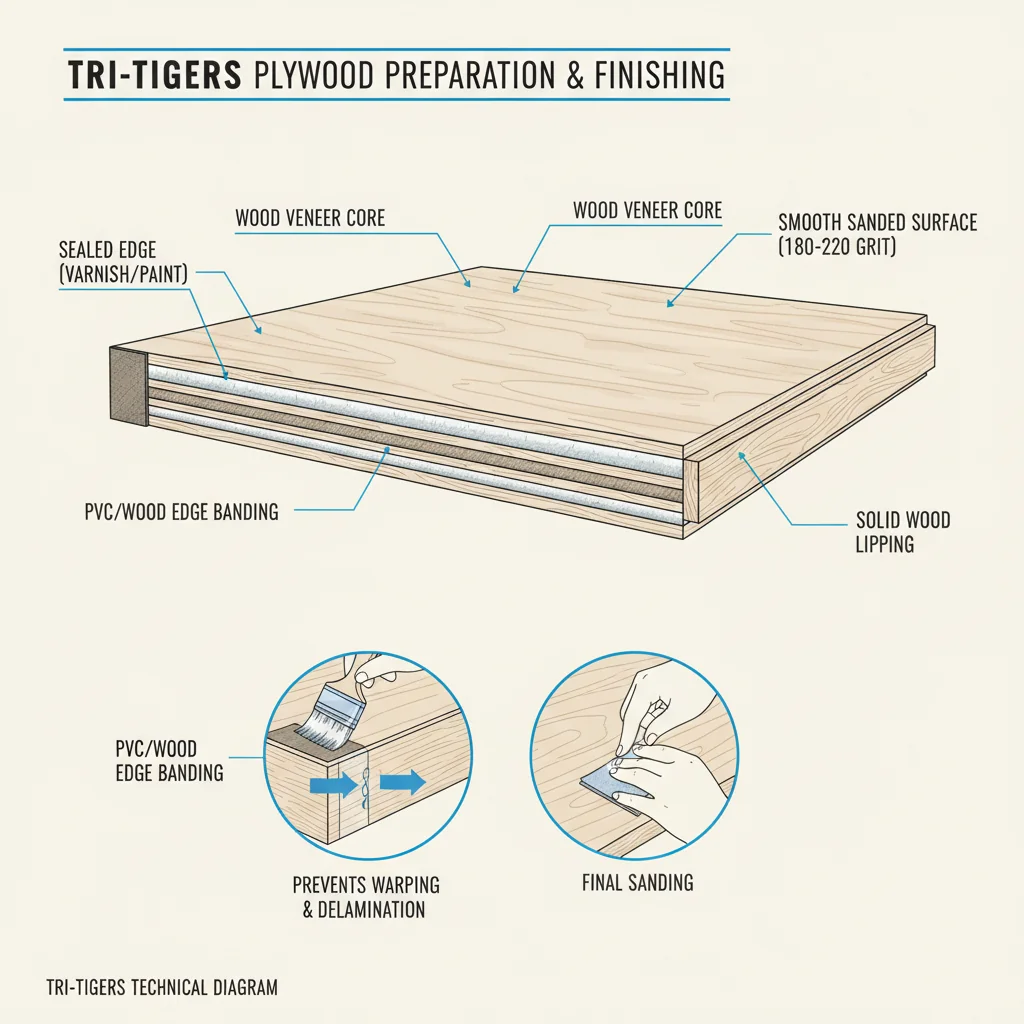
Last autumn, a client in Germany called me after noticing warped plywood cabinet doors just three months post-installation. They’d skipped edge sealing—classic case. With furniture grade plywood, even an A-grade face needs more than just a quick sanding. I usually recommend starting with 180–220 grit for the faces and 240 grit for the edges. It’s important to remove any mill glaze or minor surface fibers so the stain or lacquer lays down evenly.
The real issue is moisture. Plywood’s layered construction makes it strong, but every exposed edge is a sponge. In Poland, I’ve seen importers lose 10% of a shipment to edge swelling because only the front surfaces were finished. Always seal every surface and especially the edges—inside cabinets, undersides, even the backs. You can use 1mm ABS or PVC edge banding for a clean, durable result, or solid wood lipping if you want a premium feel. On lower-cost runs, double-seal the edges with clear PU or UV lacquer.
Storage before finishing matters, too. I tell every buyer: let panels acclimate for at least 24–48 hours in your shop. Keep them flat, off the floor, and away from direct heat. This step helps avoid warping and ensures a consistent finish.
I suggest requesting a finished edge sample before placing a full order. That way, you’ll catch any shortcut in process—protecting your investment and your reputation.
Furniture grade plywood typically uses hardwood veneers with fewer than 10 layers to ensure stability and a smooth finish suitable for staining or lacqueringTrue
Furniture grade plywood is distinguished by high-quality hardwood face veneers and a limited number of layers—usually under 10—to prevent excessive thickness and reduce warping, allowing for better surface finishing and durability in cabinetry.
Furniture grade plywood always uses softwood cores with at least 15 layers to maximize strength and minimize costFalse
Furniture grade plywood generally avoids softwood cores with excessive layers because too many layers can increase thickness unevenly and cause warping; instead, it uses hardwood veneers and fewer layers for dimensional stability and a superior finish.
Key takeaway: Proper finishing and edge protection are essential for furniture grade plywood. Always seal all sides and edges to prevent moisture damage, and use appropriate sanding and edge treatments based on plywood grade. This preserves structural integrity and maintains an attractive appearance over time.
Conclusion
We’ve explored what sets furniture grade plywood apart—premium hardwood veneers, a stable core, and precise thickness that all contribute to quality results in furniture manufacturing. From my experience, the buyers who avoid long-term headaches are those who look beyond just the surface or the lowest quote. I’ve seen too many fall into the “quote-to-container gap”—where the price looks good on paper, but unexpected issues in quality or packing eat into the real landed cost. If you’re considering your next order, I’m happy to help you evaluate options or share what’s worked for others in your market. Have questions about finishes, core types, or lead times? Feel free to reach out. Every sourcing decision is unique—choose what fits your business and customers best.
References
-
Explains how A and B surface grades affect appearance, defect levels, and finish quality in visible furniture parts like cabinet doors. ↩
-
Explains how void-free cores enhance structural strength, screw holding, and prevent warping in furniture plywood. ↩
-
Details how thin plies glued under pressure create flat, durable panels that resist sagging and splitting in furniture applications. ↩
-
Expert insights on labor cost reduction and finishing quality improvements by using A/B birch plywood in visible furniture parts. ↩
-
In-depth insights on A-grade plywood’s clean finish, screw holding capacity, and dimensional stability for cabinetry applications. ↩
-
Technical overview of PVC edge banding’s protective qualities, application methods, and durability benefits for built-in shelving. ↩
-
In-depth overview of CARB Phase 2 standards, testing methods, and compliance requirements for low-emission plywood in the U.S. market. ↩
-
Detailed explanation of E1 panel emission limits, health benefits, and why they are preferred for indoor air quality and green building certifications. ↩
Published: 2026-01-19