
Featured image for Solid Wood Furniture Benefits: Manufacturer’s Guide to Lasting Value
Solid Wood Furniture Benefits: Manufacturer’s Guide to Lasting Value
At a recent trade fair in Cologne, a French retailer pulled me aside, frustrated by the endless cycle of replacing sagging particleboard shelving in his Paris shop. He wanted to know if solid wood could really justify its higher price—or if it was just old-fashioned marketing. That question comes up more than you’d think, especially when I’m dealing with new importers trying to balance cost and quality for the European market.
Solid wood furniture is crafted from continuous planks or blocks of natural hardwoods such as oak, walnut, and maple, providing inherent structural durability and longevity. Unlike veneered or engineered alternatives, solid wood lacks weak cores susceptible to swelling, delamination, or catastrophic failure. Well-constructed hardwood pieces routinely last 20–50 years and retain higher resale value, as they can be repaired and refinished multiple times.
Why Does Solid Wood Furniture Last Decades?
Solid wood furniture endures for decades due to its construction from continuous hardwood planks1—such as oak or walnut—without weak cores found in MDF or particleboard. This eliminates risks of swelling, crumbling, or delamination. Properly maintained, quality hardwood pieces withstand daily use and environmental stress, offering a lifespan of 20–50+ years, unlike engineered alternatives requiring frequent replacement.

Most people don’t realize that solid wood furniture is built to outlast trends, kids, and even a few house moves. I’ve been manufacturing and exporting to Europe for over 10 years, and I can tell you the core difference. Unlike MDF or particleboard, which rely on compressed wood fibers or chips bonded with resin, solid wood pieces—especially oak, walnut, or beech—are crafted from continuous planks. That means no weak core, no hidden glue lines, and nothing to swell or crumble if there’s a spill. I’ve worked with importers in Germany who still sell oak tables originally delivered twenty years ago. They might show some patina around the edges, but the structure holds up—no sagging, no wobbly joints.
Let me share something important about maintenance. With engineered boards2, even a small moisture issue can cause panels to bubble or delaminate. I’ve seen this with UK wholesalers: a batch of particleboard wardrobes stored in a damp warehouse lost about 12% to swelling and unusable returns within the first year. Solid wood, on the other hand, can be sanded and refinished if scratched or stained. That’s why a well-made hardwood dining table can see daily use for decades—sometimes fifty years or more.
To be honest, you pay more upfront for solid wood, and MOQs are higher—usually at least 30–50 pieces per order, depending on size and finish. But with lead times averaging 45–60 days and a 40HQ container fitting roughly 120–150 solid oak tables, you’re investing in pieces that become long-term fixtures, not disposable items. I suggest verifying source wood certification and requesting care instructions to maximize value.
Solid wood furniture like oak and walnut can resist moisture-induced swelling for decades due to the absence of resin-bonded coresTrue
Unlike MDF or particleboard, solid wood is a continuous plank without glue lines or compressed fibers, which prevents common issues like swelling and crumbling when exposed to spills or humidity over time. This structural integrity allows furniture to remain stable for 20+ years.
Solid wood furniture requires annual chemical treatments to maintain its structural integrity and prevent degradationFalse
While periodic maintenance like polishing or oiling can enhance appearance, solid wood’s durability comes from its natural dense grain structure, not from mandatory chemical treatments, which are generally unnecessary and can sometimes damage the wood.
Key takeaway: Solid wood furniture, crafted from single-species hardwood, provides unmatched structural integrity and long-term durability compared to engineered panels. Investing in reputable manufacturers and following basic care practices ensures these pieces remain functional and attractive for generations, delivering significantly greater value over time.
How Does Solid Wood Hold Long-Term Value?
Solid wood furniture commands higher initial costs—typically 20–50% more than engineered alternatives—but its superior structural integrity and restorability deliver lasting value. Unlike MDF or veneer, which often depreciate rapidly and are difficult to repair, solid wood retains resale value over decades and can be refurbished multiple times, reducing annual ownership costs and increasing overall investment security.
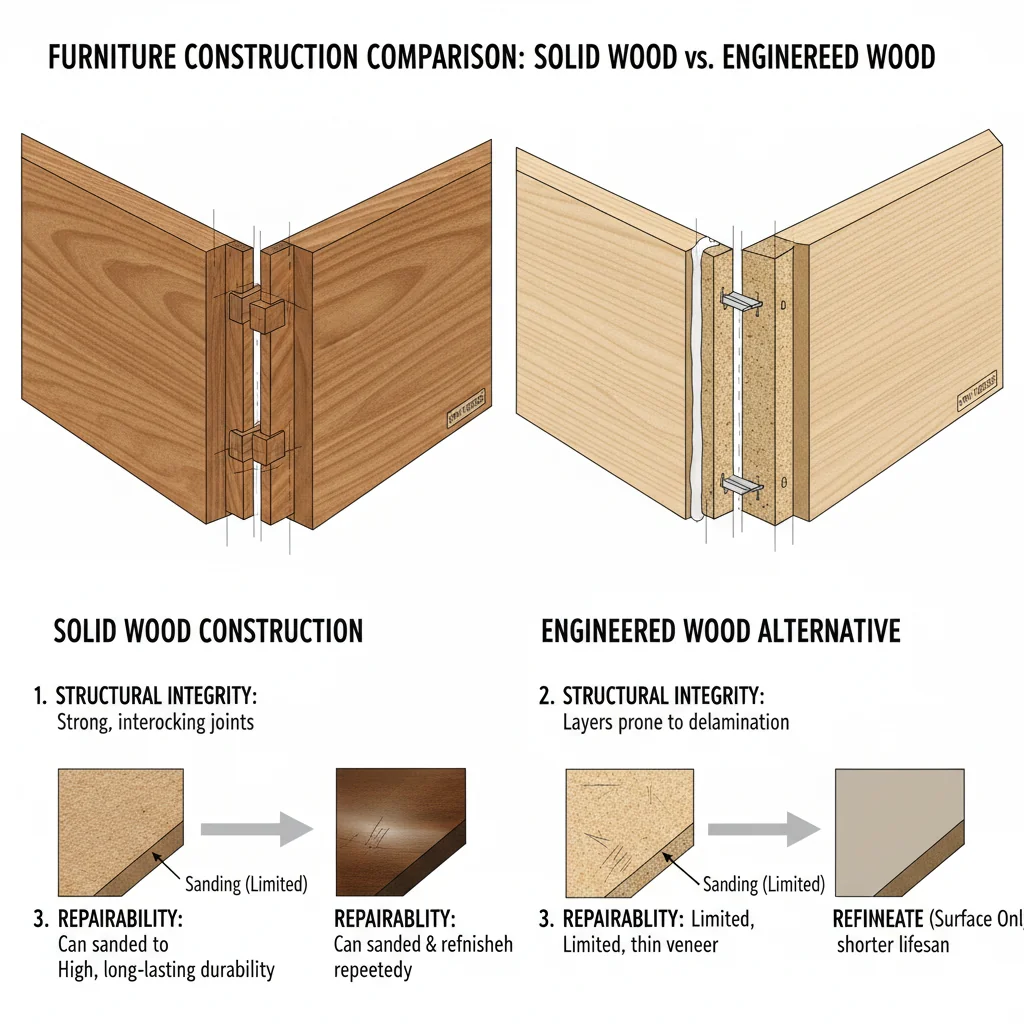
Let me share something important about solid wood and long-term value—especially when you’re comparing options for high-traffic pieces like dining tables or beds. I’ve worked with buyers in Germany and the UK who questioned the higher upfront costs of solid oak or walnut, often 30–40% above MDF or particleboard alternatives. But here’s what happens: after 8–10 years, their engineered wood items show swelling, edge chips, or peeling veneer—especially in humid flats or busy family homes. Most times, repairs just aren’t possible. The only option is replacement.
In contrast, solid wood furniture tells a different story. One UK retailer I supply bought 40HQ containers of 25mm oak tables back in 2012. Today, many of those tables are still in showrooms—with only minor scratches that their team buffs out with a simple sanding and oil finish. Solid wood lets you refinish surfaces3 multiple times, keeping the piece looking fresh for decades. This is impossible with a melamine or veneer finish over MDF; once the top layer’s damaged, it’s finished.
Here’s the financial reality: solid wood holds resale value. Well-made oak or cherry tables can easily fetch 30–50% of their original price on the secondhand market, even after 15–20 years. Flat-pack MDF, on the other hand, rarely lasts beyond one move. I always suggest investing in solid wood for statement pieces you expect to use long-term. For budget areas or short-term needs, engineered panels are fine—but for legacy value, nothing beats genuine wood.
Solid wood furniture like oak or walnut can retain structural integrity and aesthetic appeal for over 15 years even in humid or high-traffic environmentsTrue
Solid wood's dense cellular structure resists moisture ingress and mechanical wear better than engineered wood, preventing swelling and veneer peeling that typically occur after 8-10 years in humid or busy household settings.
Engineered wood furniture with modern waterproof coatings outperforms solid wood in long-term durability under high humidity conditionsFalse
Despite advances, engineered wood's layered construction and veneer surfaces remain more susceptible to moisture damage such as swelling and edge chipping over time, whereas solid wood's natural density offers superior long-term durability in humid environments.
Key takeaway: Solid wood furniture, though more expensive upfront, maintains structural integrity and aesthetic appeal for decades. Its ability to be restored and higher resale value make it a worthwhile investment, often resulting in a lower long-term cost compared to frequently replacing lower-quality engineered pieces.
How Repairable Is Solid Wood Furniture?
Solid wood furniture is highly repairable due to its homogenous composition. Surface scratches, dents, and even deeper marks can often be remedied by sanding, filling, and refinishing, restoring the original look. Unlike veneer-over-MDF4 or particleboard, solid wood allows multiple refinishing cycles, significantly extending the usable lifespan and design flexibility of the piece.
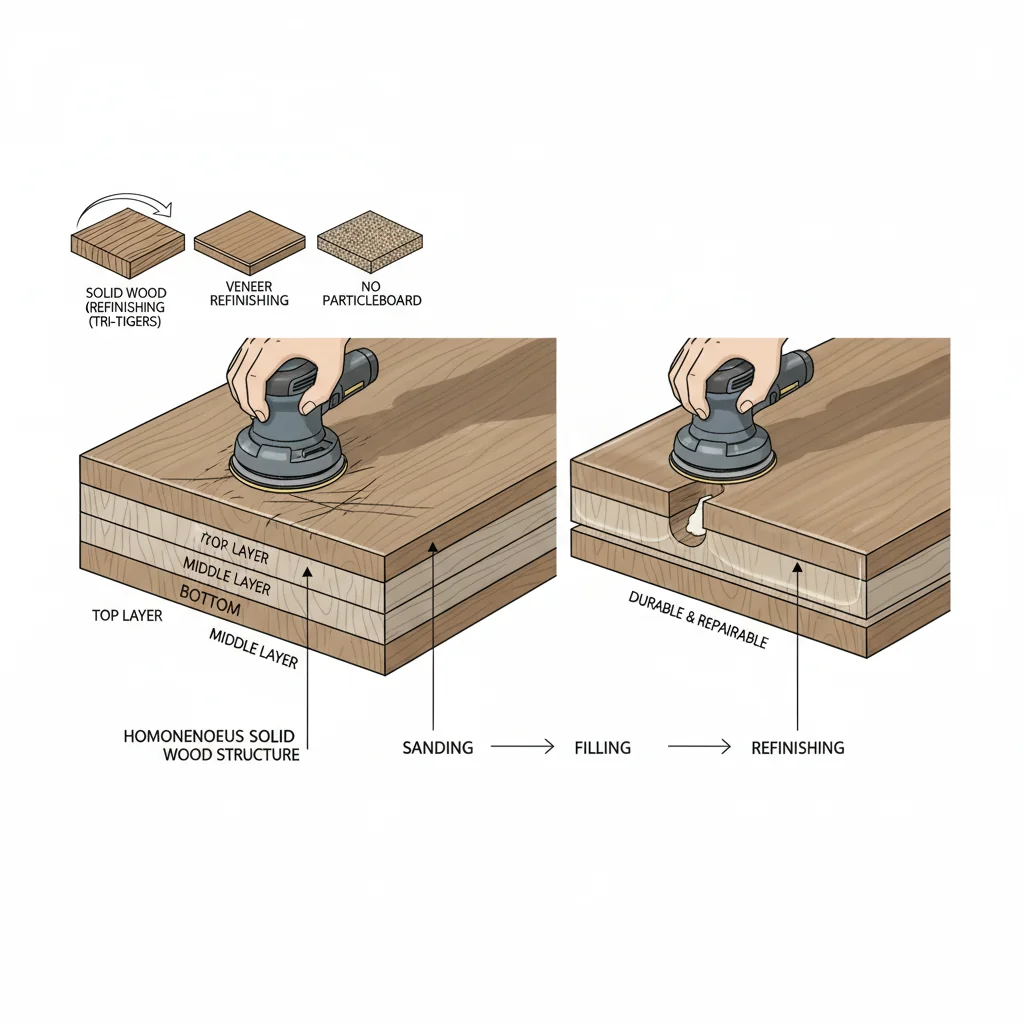
Here’s what matters most when you’re evaluating repairability: solid wood is in a completely different league from any veneered panel furniture. I’ve seen this first-hand with German retailers who run high-traffic showrooms—solid oak tables that looked battered after a few years were brought back to showroom condition with just sanding and a fresh coat of oil. Veneered MDF or particleboard? Once you sand through that thin veneer, there’s no going back. You’re left with an exposed core, and replacing the whole top is often the only option.
To be honest, the spec that actually matters is the homogenous structure of solid wood. You can sand out dents, fill deeper gouges, and even reset the finish multiple times over the product’s life. For example, a customer in the UK recently asked about refinishing a batch of 18mm solid beech chairs after a pub refit—no problem. The entire set was sanded down and stained to match a new interior, extending their usable life by at least five years. If those chairs had been veneer-over-MDF, that level of restoration would have been impossible.
From my experience, most solid wood pieces can handle at least three to five full refinishing cycles without risking structure. This flexibility is why I suggest specifying natural oil or light finishes if you’re supplying hospitality or rental projects—wear and tear is inevitable, but restoration is straightforward. For deeper repairs, work with a local professional, and always test stains or fillers on a hidden spot first. That way, you protect both appearance and long-term value.
Solid oak furniture can often be restored to near-showroom condition after 5-10 years of heavy use with just sanding and a fresh coat of oilTrue
Solid oak’s dense grain allows surface damage to be removed by sanding without compromising structural integrity, and oil finishes penetrate deeply to rejuvenate wood fibers, enabling multiple refinishing cycles over a decade or more.
Once a veneer on MDF furniture is sanded through, it can be replaced seamlessly with a new veneer layer without affecting the furniture’s appearance or durabilityFalse
Sanding through veneer exposes the MDF core, which cannot be re-veneered invisibly due to its porous, absorbent surface and lack of structural wood grain, making repairs visibly inferior and less durable.
Key takeaway: Solid wood furniture stands out for its exceptional repairability. Scratches, dents, and wear can be effectively addressed through sanding and refinishing—a process rarely possible with veneered panels. This ability to restore appearance adds lasting value, making solid wood an ideal choice for long-term use.
How Durable Is Solid Wood Furniture?
Solid wood furniture made from dense hardwoods5 like oak, maple, and walnut resists sagging, bending, and damage from daily use. Unlike MDF or particleboard, solid wood maintains structural integrity under heavy loads and minor impacts. Surface dents on hardwoods are typically cosmetic, not structural, but protection from moisture and humidity remains essential for longevity.
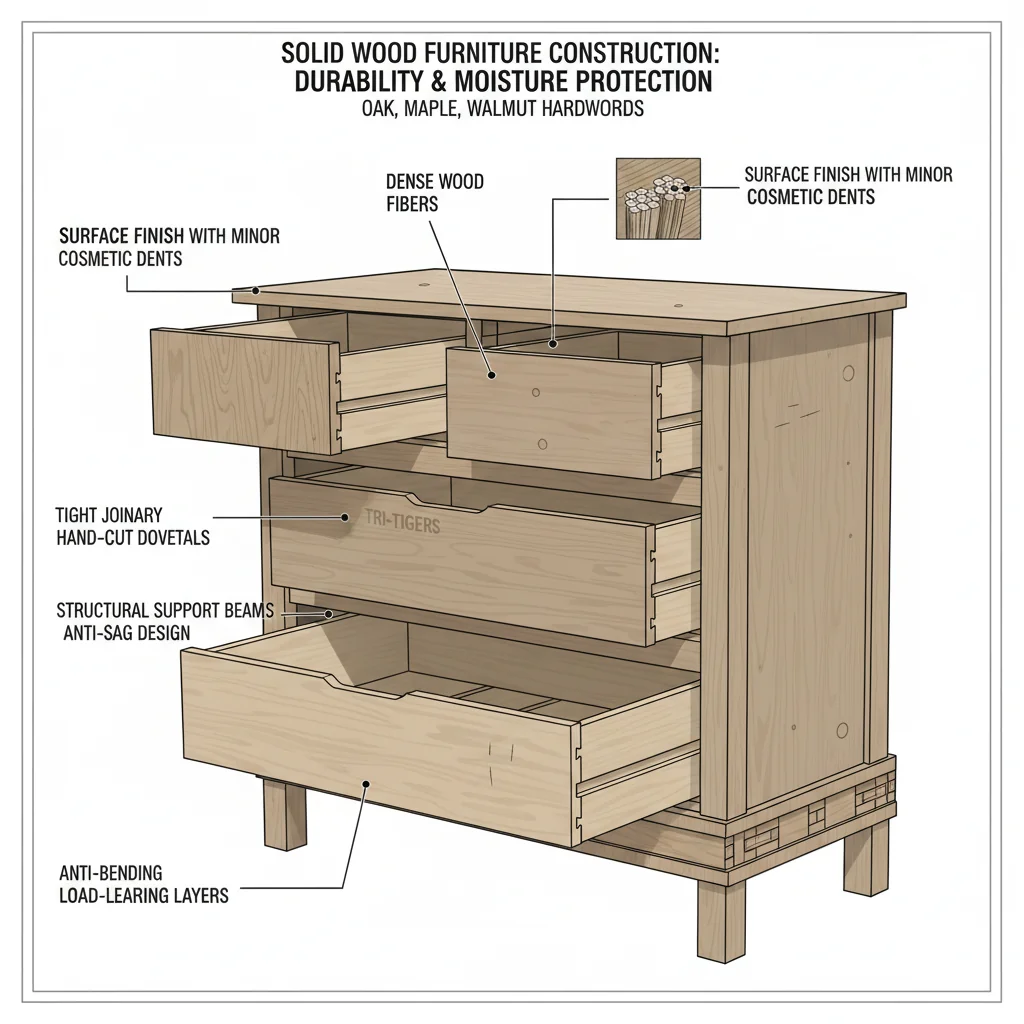
The biggest mistake I see is assuming all solid wood furniture is equally durable, regardless of species or construction. That’s not the case—dense hardwoods like oak, maple, and walnut offer far better resistance to sagging and bending compared to softer woods or engineered panels. For example, one of my German clients switched from particleboard bookshelves to solid oak a few years ago. The particleboard units started showing visible bowing after just two winters, especially on shelves loaded with heavy textbooks. By contrast, their new solid oak shelves (standard 25mm thickness) have held up for over three years with no measurable deflection—each shelf supports at least 40 kg without strain.
From my experience, hardwood’s natural density (oak is around 700 kg/m³) means furniture like dining tables, bed frames, and desks can handle daily stress and occasional knocks without losing their shape. You might see small dents or surface marks over time, but these are usually cosmetic, not structural. I’ve seen French retailers specifically request E1-rated solid wood6 for table tops, knowing it won’t warp or split as easily as lower-grade boards.
That said, solid wood is still sensitive to moisture swings. Humid summers or unventilated basements can cause warping or cracks, even in the best hardwood. I always suggest using coasters, pads, and keeping furniture away from direct water sources. For high-traffic spaces, stick with denser hardwoods and request samples to check quality before full orders. That’s the best way to protect your investment and minimize surprises.
Hardwoods like oak and maple have Janka hardness ratings above 1,200 lbf, which directly correlates to their superior resistance to denting and structural deformation in solid wood furnitureTrue
Janka hardness measures a wood's resistance to denting and wear; species like oak (1,290 lbf) and maple (1,450 lbf) are significantly harder than softer woods like pine (380 lbf), resulting in more durable furniture that resists sagging and bending over time.
Solid wood furniture made from softwoods like pine has better resistance to sagging and bending than engineered panels due to its natural grain structureFalse
Softwoods such as pine have lower density and Janka hardness compared to engineered panels like plywood or MDF, which are manufactured for uniform strength and stability, often outperforming softwoods in sagging resistance under load.
Key takeaway: Dense hardwoods such as oak, maple, and walnut provide superior durability compared to engineered panels, resisting sagging and damage in load-bearing applications. However, protection from excessive moisture and humidity is crucial to preserve lasting value and prevent warping or structural compromise over time.
What Aesthetic Value Does Solid Wood Add?
Solid wood delivers unmatched visual depth and authentic character through its natural grain patterns7, knots, and unique color variations. Unlike engineered panels, no two pieces are identical, and the material develops a distinctive patina over time. This genuine appearance enhances statement furniture, transcends décor trends, and contributes to enduring appeal in both modern and traditional interior applications.
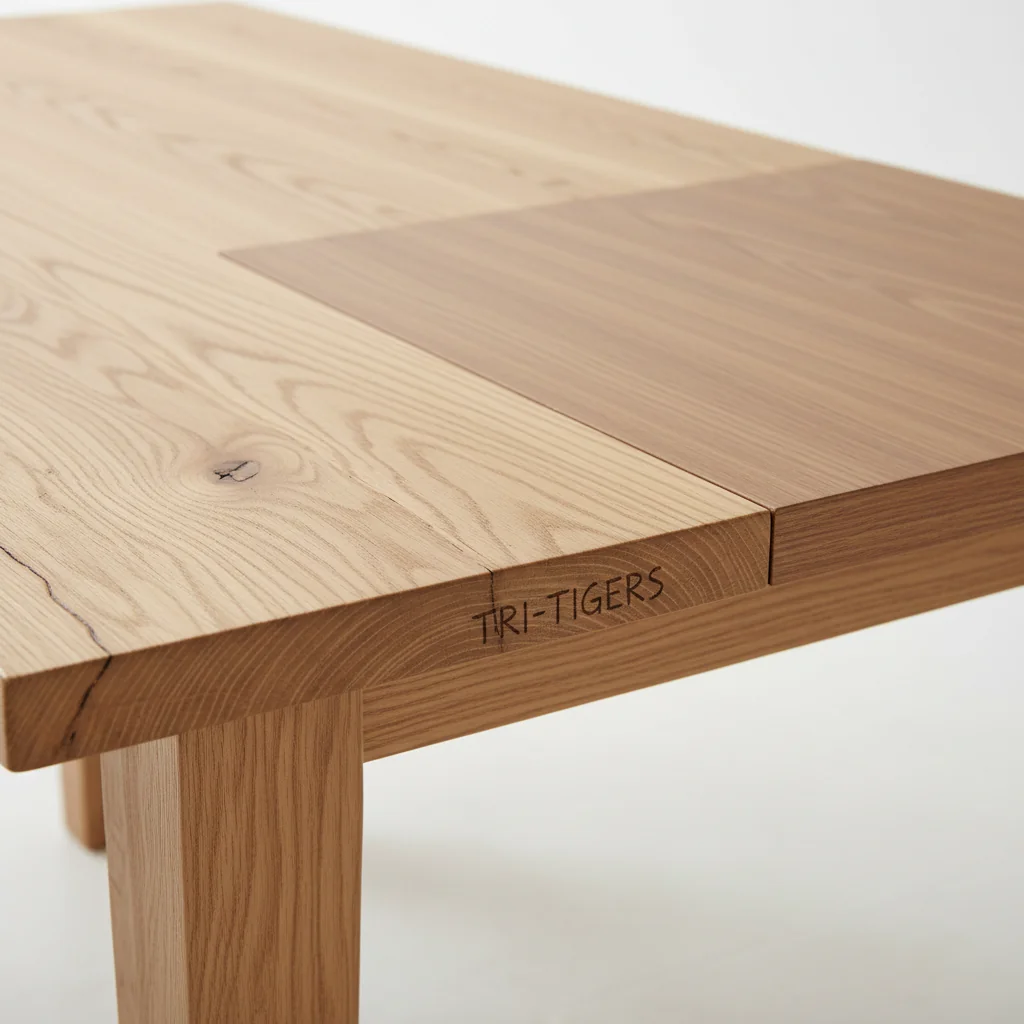
To be honest, the spec that actually matters with solid wood isn’t what most buyers expect. It’s not just about thickness or species—it's the visual depth created by the grain and natural imperfections. I’ve seen this over and over, especially with German and UK clients sourcing statement dining tables. They want that unmistakable “real wood” look: the swirls, knots, and subtle shifts in shade you simply don’t get with MDF or melamine panels. Even a standard 25mm oak plank can look dramatically different from batch to batch, and that’s part of the charm.
One recent order from a Polish retailer stands out. They needed 40HQ of solid ash dining tables, each piece with unique grain, for a premium line. We worked closely with the mill to bookmatch boards8—lining up adjacent planks so the grain flows from one to the next. This detail adds a premium feel and, in their case, justified a 20% higher retail price compared to veneered options. Over time, those tables will develop a richer patina—ash tends to mellow, cherry darkens, and even small marks add story, not “damage.”
For long-term value, I always suggest inspecting real samples, not just photos or small cuttings. Look for grain direction, color consistency, and how boards are joined. These factors directly affect both first impressions and how the furniture ages. Solid wood’s authenticity doesn’t go out of style—it adapts, develops, and holds value year after year.
The visual depth of solid wood furniture is primarily due to the unique grain patterns and natural imperfections, which cannot be replicated by engineered wood products regardless of thickness or finishTrue
Solid wood’s grain, knots, and subtle shade variations create a three-dimensional visual texture that engineered products like MDF or melamine lack because they use printed or uniform surfaces without natural variation. This is why even a standard 25mm oak plank can have a strikingly different aesthetic impact.
Solid wood furniture always has a higher moisture resistance than engineered wood, making it less prone to warping in humid environmentsFalse
Solid wood is more susceptible to moisture changes because it is a natural hygroscopic material that expands and contracts with humidity, whereas engineered woods like plywood or MDF are often more dimensionally stable due to their layered or compressed structure and adhesives. Therefore, engineered wood can sometimes outperform solid wood in humid conditions.
Key takeaway: Solid wood’s natural grain and evolving patina ensure each furniture piece is visually unique and timeless. This authenticity not only elevates aesthetics but also supports long-term value, making solid wood a preferred choice for statement pieces that remain relevant across changing design trends.
How Does Solid Wood Impact Health, Sustainability?
Solid wood furniture emits significantly fewer volatile organic compounds (VOCs) than MDF or particleboard, improving indoor air quality—crucial for bedrooms and children’s spaces. When responsibly sourced, solid wood is biodegradable, repairable, and longer-lasting, reducing landfill waste. Certifications like FSC or PEFC verify sustainable sourcing, while low-emission finishes further minimize environmental and health impacts in residential or commercial interiors.
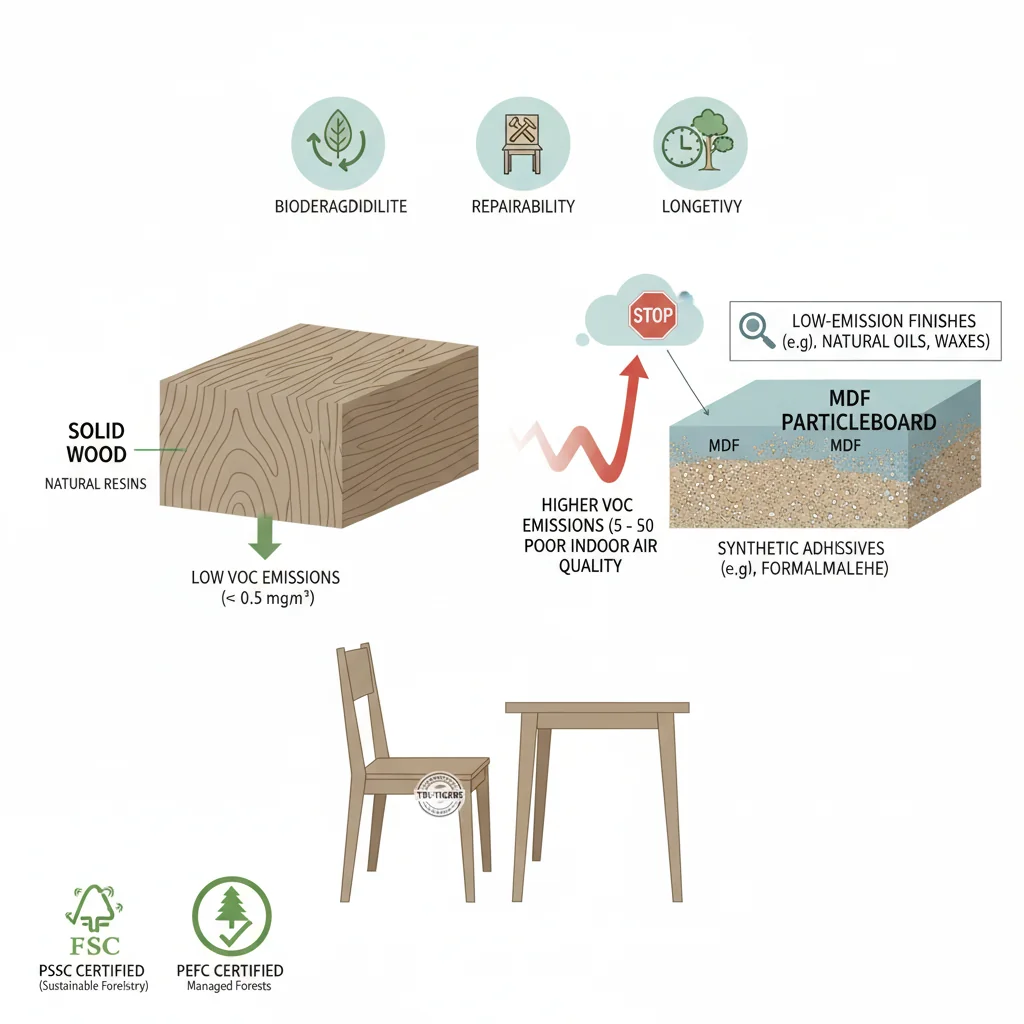
Last month, a retailer in Germany asked me about the real health benefits of solid wood compared to engineered panels like MDF or particleboard. I explained that solid wood typically emits much lower levels of volatile organic compounds (VOCs)—mainly because it doesn’t rely on formaldehyde-based adhesives in the core. With MDF and particleboard, even E1-rated boards (≤0.1 ppm formaldehyde) still release more emissions than well-finished oak or beech. In tightly sealed homes or children’s bedrooms, that difference is noticeable. I always suggest choosing water-based or natural oil finishes for solid wood. These options further reduce emissions, compared to solvent-based lacquers.
Sustainability is another area where solid wood stands out—if you source it right. I’ve worked with French importers who insist on FSC certification9, which verifies responsible forestry practices. FSC or PEFC labels help you avoid timber linked to illegal logging or deforestation. The bonus? Solid wood furniture is fully biodegradable and can be repaired or refinished. I’ve seen dining tables in the UK still in use after 20 years, with only minor sanding and oiling. Engineered boards rarely last that long; edge swelling, delamination, and surface wear send most low-cost pieces to landfill in under a decade.
For buyers who want a healthier and greener interior, I suggest asking for documentation on wood origin and certification. Also, request details about the finish type—water-based, oil, or wax is best. Small details here make a big difference in long-term value and indoor air quality.
Solid wood furniture typically emits less than 0.05 ppm of volatile organic compounds (VOCs), significantly lower than even the strictest E1-rated engineered panels, due to the absence of formaldehyde-based adhesivesTrue
Solid wood naturally lacks synthetic adhesives that release formaldehyde, resulting in VOC emissions often below 0.05 ppm, whereas E1-rated MDF or particleboard can emit up to 0.1 ppm despite strict regulations. This difference impacts indoor air quality, especially in sealed environments.
Engineered panels like MDF or particleboard are generally more sustainable than solid wood because they use less wood material and have lower overall carbon footprintsFalse
While engineered panels use wood fibers and adhesives, their production involves significant formaldehyde emissions and chemical processing. Solid wood, especially from sustainably managed forests, often has a lower carbon footprint and better end-of-life recyclability, making it more sustainable overall.
Key takeaway: Solid wood furniture offers health and environmental advantages over engineered boards by emitting fewer VOCs and providing a durable, repairable, and biodegradable option. Responsible sourcing and the use of low-emission finishes amplify these benefits, making solid wood a preferred choice for sustainable interior spaces.
How Customizable Is Solid Wood Furniture?
Solid wood furniture offers extensive customization at both the point of manufacture and throughout its lifespan. Buyers can specify wood species, stain color, dimensions, edge profiles, and hardware. Unlike engineered wood, solid wood pieces can be sanded, refinished, or painted multiple times, allowing adaptation to changing design preferences or room layouts.
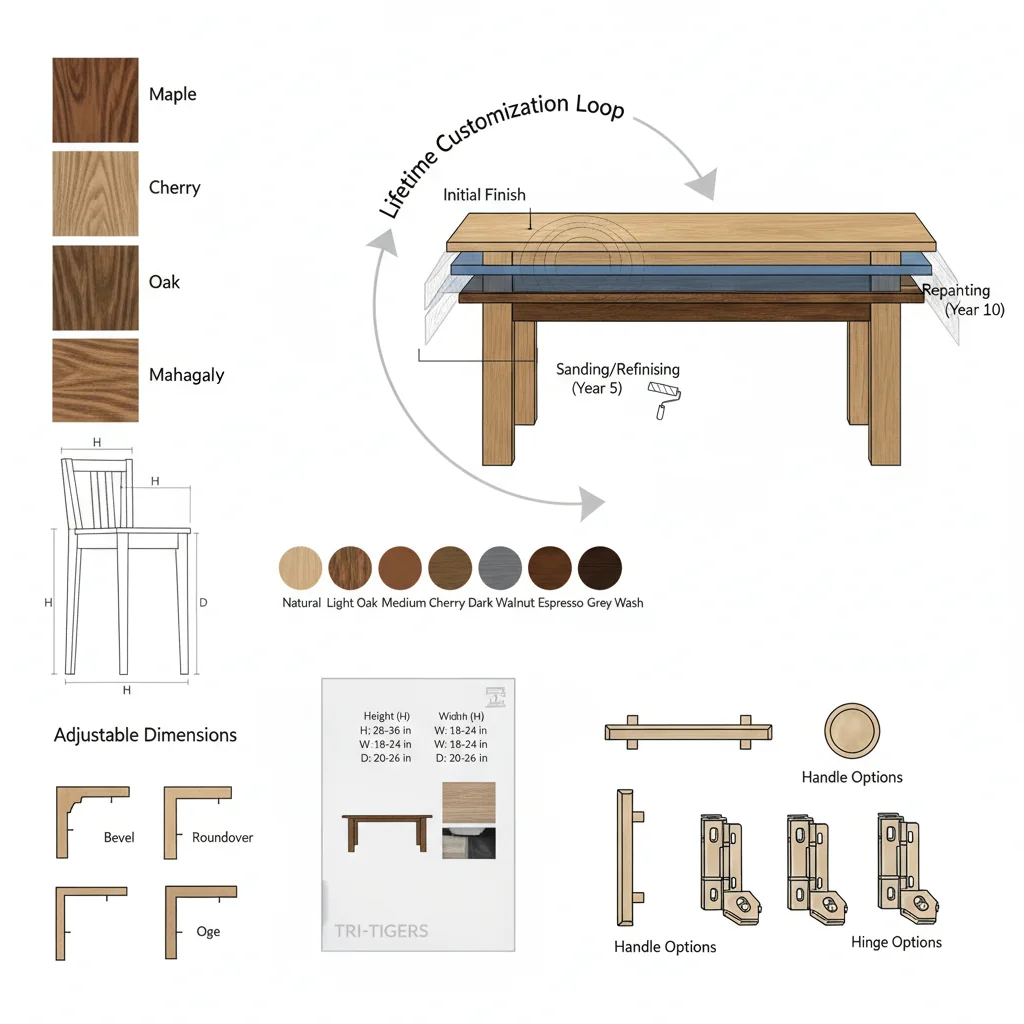
One thing I always remind buyers—especially those sourcing for the German and UK markets—is how much flexibility solid wood allows right from the factory floor. Last quarter, a wholesaler in Hamburg requested oak dining tables with a custom ebonized finish and non-standard 950mm width to match a client’s architectural plans. The factory adjusted the CNC cutting and sanding process without much trouble, even at an MOQ of just 30 pieces. That kind of made-to-measure work is much harder (and pricier) with MDF or particleboard, where edge banding, lamination, and drilling patterns are locked in early.
But the adaptability doesn’t stop after production. I've seen Polish retailers take surplus stock—say, walnut-stained sideboards—and refinish them into a natural oak look for a new collection. Solid wood’s surface can be sanded, stained, or painted several times over the years. This means a dark-stained piece that feels dated today can become a fresh, lighter showpiece next season. Try that with melamine or PVC—once scratched or outdated, you’re stuck.
To get the most out of customization, I always suggest buyers specify classic shapes and strong joinery, like mortise-and-tenon or dovetail. These details last through multiple refinish cycles. If you’re sourcing for spaces with tricky dimensions or evolving styles, investing in solid wood pays off. For large projects, request a sample run—one table, refinished three ways—before committing to a 40HQ container. That way, you see the real versatility up front.
Solid wood furniture factories can customize dimensions within ±10mm tolerance without increasing minimum order quantities, allowing precise architectural fitTrue
Advanced CNC machines enable precise cuts and sanding adjustments on solid wood pieces, maintaining tight tolerances even for small MOQs like 30 units, which supports bespoke sizing needs in markets like Germany and the UK.
Custom ebonized finishes on solid wood furniture require at least 500-piece minimum orders due to the complexity of the staining processFalse
Ebonized finishes can be applied efficiently at much lower MOQs, such as 30 pieces, as modern finishing lines and batch processing allow customization without necessitating large production runs.
Key takeaway: Solid wood furniture stands out for its adaptability and long-term value. Manufacturers and homeowners can repeatedly update its appearance and fit, making it a sustainable choice for evolving spaces and tastes. Prioritizing classic forms and quality joinery further enhances versatility and design longevity.
How to Identify True Solid Wood Furniture?
Authentic solid wood furniture can be distinguished by examining product descriptions for terms like “solid oak” or “solid maple,” inspecting for continuous wood grain on all exposed edges, and checking joinery such as dovetails or mortise-and-tenon. Vague phrases like “wood finish” or edge inconsistencies often indicate veneer over MDF or particleboard, not true solid wood.
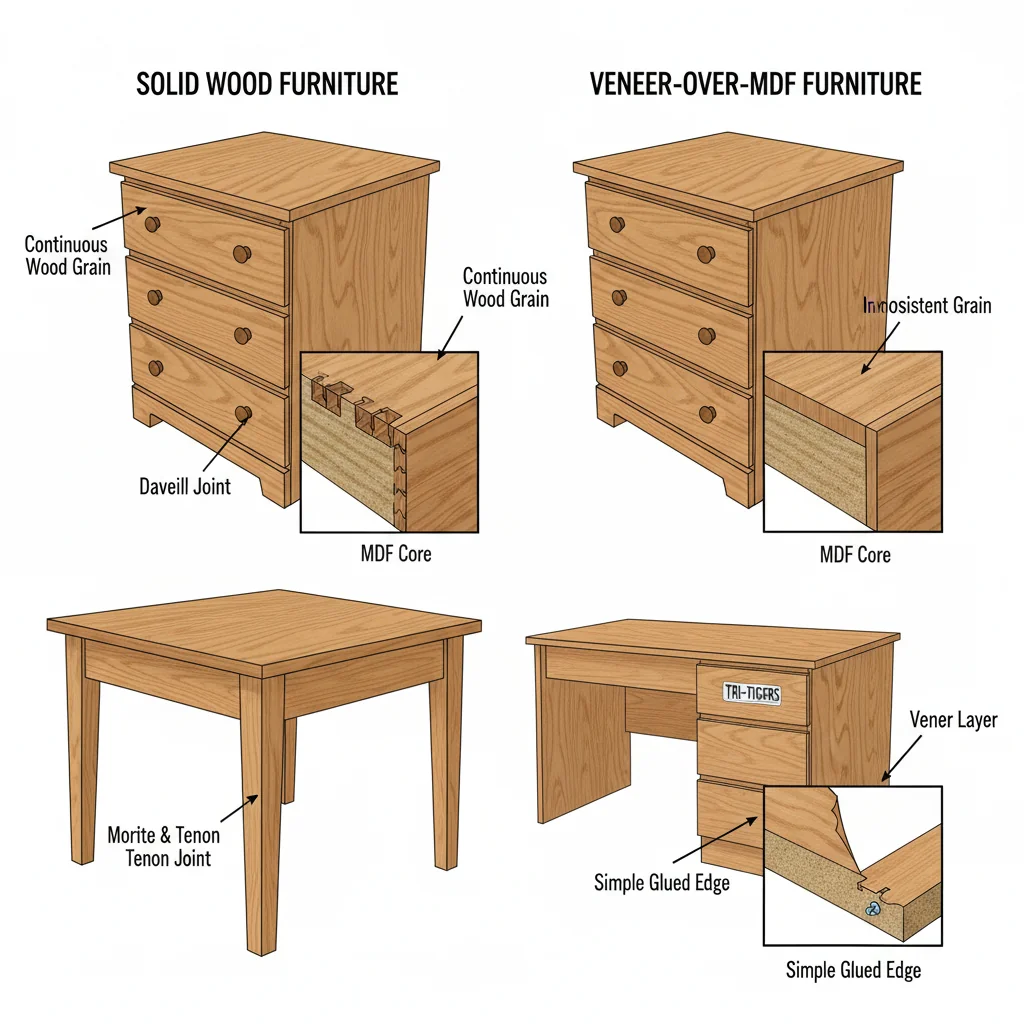
One question I get all the time from European buyers—especially in Germany and the UK—is how to tell if a dining table is truly solid wood or just a veneer on MDF or particleboard. The answer is in the details. For instance, true solid wood will show continuous grain not only on the surface but also on the end grain. If you see a table top with beautiful oak grain on the flat surface but the edge shows a completely different pattern or even a thin strip, it’s almost always a veneer. I’ve seen many Polish wholesalers surprised when their “solid oak” shelving turned out to be veneer over E1 MDF10—fine for budget lines, but not what they paid for.
I always suggest checking the product description for clear terms like “solid beech” or “solid ash.” Vague phrases like “oak effect,” “wood finish,” or “real wood veneer” mean you’re likely looking at an engineered core under a thin decorative layer. You can also ask the supplier for a cross-section photo. This is especially important before booking a 40HQ container, where a mislabel can mean €2,000-€5,000 difference in landed value for a full shipment.
Look at the joinery as well. Quality solid wood furniture often uses dovetail or mortise-and-tenon joints—these are hard to fake on MDF or particleboard. Cheaper, flat-pack lines rely on cam-locks, screws, and basic dowels. My advice: if you’re sourcing for long-term value, don’t hesitate to ask for detailed construction photos or even a sample. The extra step up front can save you a lot of headaches down the line.
True solid wood furniture shows continuous grain patterns on both the flat surface and the end grain, which is difficult to replicate on veneers or composite boardsTrue
Solid wood’s natural growth rings and fibers extend through the thickness of the material, making the grain visible on edges and ends; veneers typically have a thin decorative layer with different or inconsistent grain on the edges, revealing the underlying substrate.
All solid wood dining tables are inherently more resistant to moisture damage than veneer-covered MDF or particleboard tablesFalse
While solid wood can be more durable, it is also more susceptible to moisture-induced warping and swelling if not properly treated, whereas veneer-covered MDF or particleboard often has moisture-resistant coatings that can provide better protection in humid environments.
Key takeaway: Always verify that furniture labeled as solid wood uses clear terminology and construction details, such as visible end grain and quality joinery. Avoid being misled by ambiguous marketing terms or surface-only wood effects to ensure true value, durability, and longevity in panel furniture selection.
How Do Wood Species Impact Furniture Performance?
Different wood species exhibit varying hardness and durability, making selection critical for furniture performance. Hardwoods like oak, maple, beech, and walnut11 offer superior resistance to dents and wear, ideal for high-traffic areas. Softwoods such as pine and fir are lighter and more economical but are prone to damage. The Janka hardness rating12 helps manufacturers match wood species to real-world usage demands.
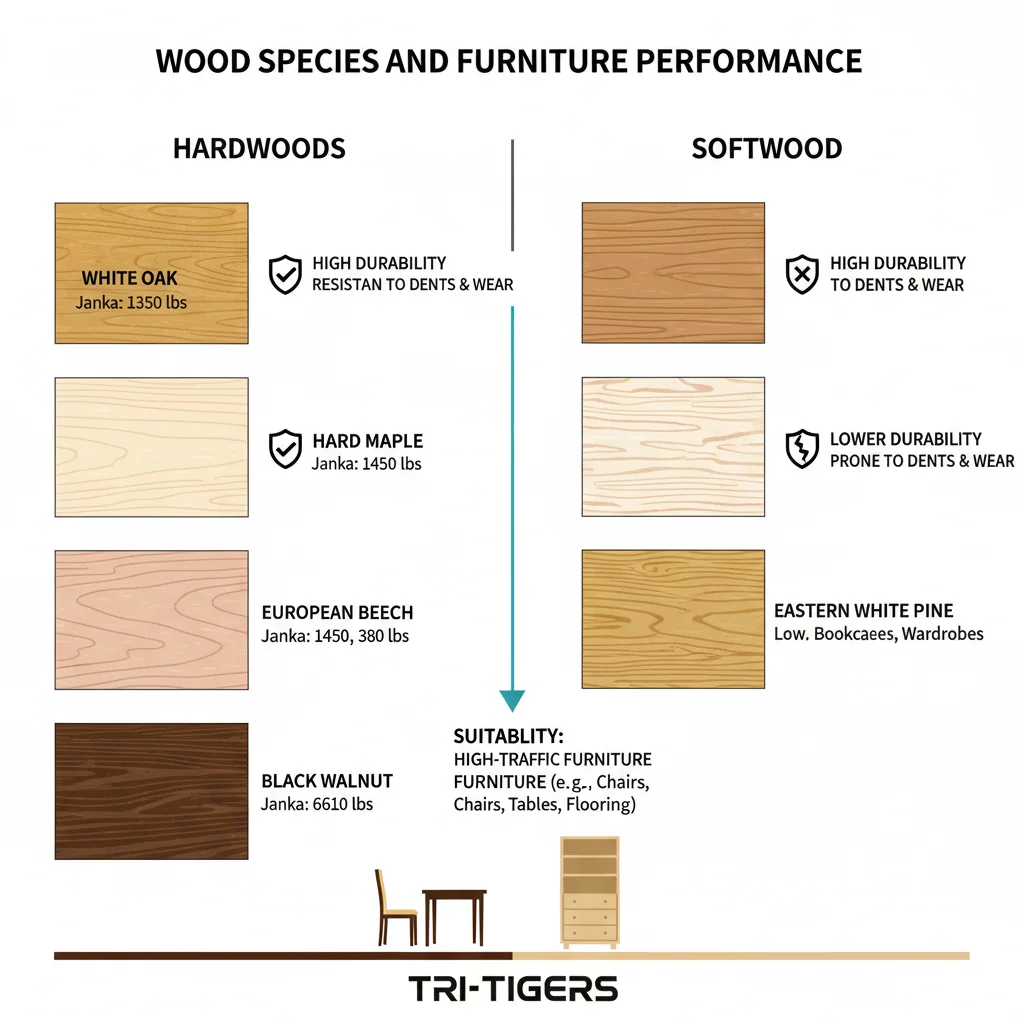
When I’m advising European buyers, I find many overlook how much wood species affect furniture performance in daily use. For example, last spring a wholesaler in Germany ordered solid beech dining chairs—beech scores about 1,300 lbf on the Janka scale, making it dense and highly resistant to dents. Their previous batch, made from pine (roughly 400 lbf), arrived with visible marks after just a few weeks on display. That switch to beech nearly eliminated warranty claims, even though it raised the FOB price by 12%. For high-traffic pieces like tables, desks, or shelving, investing in hardwoods—oak, maple, walnut, beech—pays off in the long run.
Not every application needs maximum hardness, though. Guest room headboards or infrequently used cabinets can use pine or fir, which are lighter and cut the cost per unit by 15–20%. I’ve seen Polish importers specify softwoods for secondary bedroom sets, keeping the retail price competitive. But I always remind clients: check board thickness too. A 25mm pine shelf can outperform an 18mm maple shelf for heavy books, simply thanks to extra mass.
Color and grain matter as well. Maple gives a clean, light look—good for Scandinavian styles. Walnut is darker, with a rich grain that feels premium. Oak has a pronounced pattern many UK buyers love. My suggestion? Ask your supplier for the wood species, Janka rating, and recommended use. And if possible, request samples to see both color and surface resistance before placing a full order. It’s a simple step, but it’s saved my clients a lot of headaches.
Beech wood’s Janka hardness of around 1,300 lbf makes it roughly three times more resistant to dents than pine, which scores about 400 lbf, directly reducing surface damage in high-use furniture like dining chairsTrue
The Janka hardness test measures wood’s resistance to denting and wear. Beech’s significantly higher rating compared to pine means furniture made from beech endures daily impacts better, leading to fewer visible marks and warranty claims.
Furniture made from softer woods like pine typically improves in durability over time as the wood fibers compress and harden with useFalse
Softer woods such as pine do not harden with use; instead, their lower density and Janka hardness make them more prone to dents and surface damage over time, which can worsen with continuous wear rather than improve.
Key takeaway: Choosing the right wood species is essential for matching furniture durability to its intended use. Hardwoods provide lasting value for heavily used pieces, while softwoods may suffice for occasional-use items. Technical factors such as Janka hardness, grain, and color should guide manufacturers and buyers in specifying materials.
Conclusion
We’ve looked at why solid wood furniture stands out for long-term durability and how careful manufacturing adds real, lasting value. From what I’ve seen, the buyers with the fewest headaches are the ones who look past surface-level pricing—they focus on build quality, supplier reliability, and after-sales support. It’s tempting to chase the lowest quote, but that’s where the “quote-to-container gap” shows up—those hidden shipping, packing, or aftercare costs that eat into margins over time. If you’re weighing your options or want to compare materials for your next line, feel free to reach out. I’m happy to share what’s worked for other importers in your market. Every project is different, so choose what helps your business stay strong for the long haul.
References
-
Explains how continuous hardwood planks prevent swelling and delamination, enhancing furniture lifespan and structural integrity. ↩
-
Details moisture-related risks like swelling and delamination in engineered boards versus the refinishing benefits of solid wood furniture. ↩
-
Expert insights on multiple refinishing techniques that keep solid wood furniture looking new and maintain its investment value. ↩
-
Expert explanation on the limitations of veneer-over-MDF repairability and why sanding through veneer damages the core irreversibly. ↩
-
In-depth insights on how dense hardwoods resist sagging and bending, ensuring long-lasting furniture durability under heavy loads. ↩
-
Comprehensive explanation of E1 rating, its impact on wood stability, formaldehyde emissions, and why it prevents warping in furniture tops. ↩
-
In-depth insights into how grain patterns create unique visual depth and character, enhancing furniture appeal and value. ↩
-
Expert explanation of bookmatching techniques, their impact on grain flow, and how they justify higher retail prices. ↩
-
Comprehensive overview of FSC standards, responsible forestry practices, and how certification prevents illegal logging and deforestation. ↩
-
Comprehensive explanation of E1 formaldehyde emission limits, its relevance for MDF safety, and impact on European furniture imports. ↩
-
Expert insights on the durability, resistance to dents, and long-term value of popular hardwood species in furniture making. ↩
-
In-depth explanation of the Janka scale, its testing method, and how it guides wood selection for durable furniture. ↩
Published: 2026-01-19