
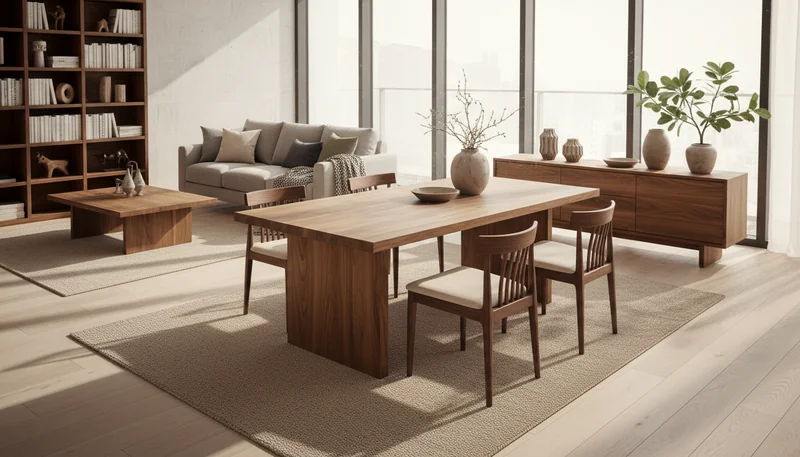
Featured image for Solid Wood Furniture Benefits: Manufacturer’s Guide to Value & Longevity
Solid Wood Furniture Benefits: Manufacturer’s Guide to Value & Longevity
Not long ago, a Polish retailer sent me a photo of a “solid wood” display cabinet that had started peeling at the corners—after barely two years on the sales floor. It’s a classic case: the label said “oak,” but the core told another story. These details matter far more than most buyers realize.
Solid wood furniture is constructed entirely from natural timber, unlike products using engineered substrates such as MDF or particleboard beneath a veneer. This distinction impacts durability, repairability1, and long-term value. Quality hardwoods like oak or walnut enable furniture to withstand decades of daily use, resisting warping and joint failure due to inherent material strength and proper kiln drying.
What Qualifies as True Solid Wood Furniture?
True solid wood furniture is constructed entirely from continuous pieces of natural timber, such as oak or walnut, with no engineered cores like MDF, particleboard, or plywood beneath a veneer layer. This integrity allows for refinishing, sanding, and structural repairs, significantly extending lifespan and value compared to veneered or composite alternatives commonly mislabeled as 'solid wood.'
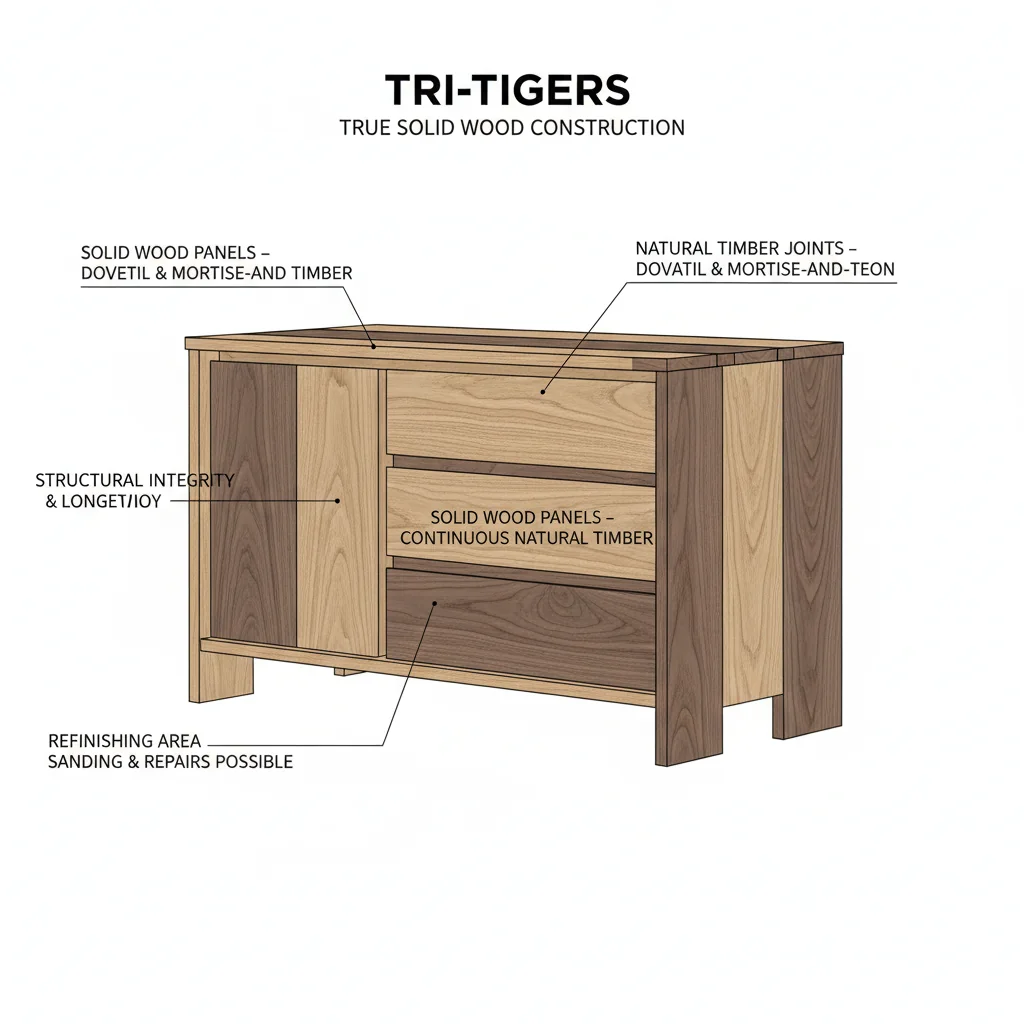
Most people don’t realize that “solid wood” is often misused in product descriptions—especially online. True solid wood furniture means every visible and hidden part is crafted from continuous pieces of natural timber, like oak, ash, or walnut. For instance, a solid oak dining table will be oak through and through, not just on the top surface. In contrast, I’ve seen many so-called “solid wood” beds in Germany that use a thin oak veneer over MDF or particleboard. They look convincing at first, but once a corner chips or moisture gets in, you’re left with exposed engineered board that’s hard to repair.
Here’s a real scenario: last year, a French importer asked me to verify a “solid beech” sideboard. The price seemed low—about 15% below market standard for genuine beech. When I checked the cross-section sample, the core was actually 18mm particleboard with a 0.6mm beech veneer. That’s a classic example of engineered core dressed up as solid wood. The difference isn’t just cosmetic. True solid wood can be sanded, refinished, or even re-machined after years of use. Veneered panels can’t—once the surface wears through or swells, repairs are nearly impossible.
I always suggest buyers request cross-section photos or actual samples before confirming bulk orders—especially if the quoted price seems unusually low. This is the best way to avoid surprises in your container and make sure you’re getting real, long-lasting value—not just a solid wood “look.”
True solid wood furniture maintains consistent wood density and grain orientation throughout all parts, which enhances structural integrity and allows for easier repair compared to veneered productsTrue
Because every part is crafted from continuous timber, the uniform density and grain alignment prevent weak points common in veneered or composite materials, leading to superior durability and the ability to sand and refinish multiple times.
Solid wood furniture is always lighter than veneered particleboard furniture due to the natural wood's cellular structureFalse
Solid wood is typically denser and heavier than particleboard or MDF with veneer; veneered furniture often uses lightweight cores which reduce overall weight despite the thin wood surface layer.
Key takeaway: Only furniture made fully from natural timber, not just surfaced with veneer, delivers maximum longevity and repairability. Verifying core materials and specifications ensures buyers receive genuine solid wood value, avoiding confusion caused by misleading labels or engineered components hidden beneath real wood finishes.
Why Does Solid Wood Furniture Last Decades?
Solid wood furniture, crafted from hardwoods like oak, walnut, maple, or cherry, lasts decades because of its dense fiber structure, kiln-dried stability2 (moisture under 12%), and robust joinery3. Unlike particleboard or MDF, solid wood resists sagging, warping, and delamination even in high-use or commercial environments, making it ideal for longevity and value.

Let me share something important about why solid wood furniture outlasts panel-based options by decades. The key is in the natural wood fibers—oak, maple, walnut, and cherry have a dense, interlocking grain that gives real structural strength. When I worked with a German office furniture importer, their solid oak desks from a Polish supplier survived daily use for over 20 years. In contrast, the particleboard alternatives needed replacing after five. That’s not just luck—it’s down to the wood’s inherent durability and the way it’s processed.
One technical detail buyers often overlook is moisture content. Hardwood must be kiln-dried to below 12%—otherwise, wood moves, cracks, or even splits after installation. I’ve seen UK hotel projects fail when suppliers skipped this step to save time, leading to warped tabletops within months. Always ask your supplier for the drying certificate, especially for large-volume orders (200+ pieces per 40HQ container).
Another factor is joinery. Solid wood allows for strong mortise-and-tenon or dovetail joints—methods that resist loosening, even as wood expands and contracts with the seasons. MDF and particleboard can’t handle this; screws and cam fittings often tear out after repeated use. For high-traffic spaces like restaurants or co-working offices, that difference in construction makes a huge impact on replacement cycles and total cost of ownership.
I suggest checking the wood species, joinery method, and moisture level before confirming your order. These details ensure you’re investing in furniture that truly lasts—well beyond a single renovation cycle.
The dense, interlocking grain structure of hardwoods like oak and maple increases resistance to mechanical wear, allowing solid wood furniture to maintain structural integrity for over 20 years under daily useTrue
Hardwoods have tightly packed fibers arranged in complex grain patterns, which distribute stress and reduce fiber breakage. This structural property enables solid wood furniture to endure heavy use far longer than composite materials like particleboard, which degrade faster under mechanical stress.
Solid wood furniture is more resistant to moisture absorption than particleboard, making it less prone to warping in humid environmentsFalse
Solid wood naturally absorbs and releases moisture, which can cause expansion and contraction, leading to warping or cracking. Particleboard, being engineered and often sealed, typically has more uniform moisture resistance, especially when treated, making it sometimes more stable in humid conditions.
Key takeaway: Solid wood furniture endures heavy daily use and environmental changes thanks to the intrinsic strength of natural wood fibers, professional kiln drying, and quality joinery. Choosing hardwood species and verifying moisture content ensures long-term stability, especially in demanding residential or commercial spaces.
How Does Solid Wood Offer Long-Term Value?
Solid wood furniture, though initially 1.5–3 times more expensive than engineered alternatives, delivers superior long-term value due to its remarkable durability, repairability, and resale potential. High-use items like oak bedframes often outlast multiple MDF replacements, and well-crafted solid wood pieces can retain or even appreciate in value, making them a cost-effective investment over decades.
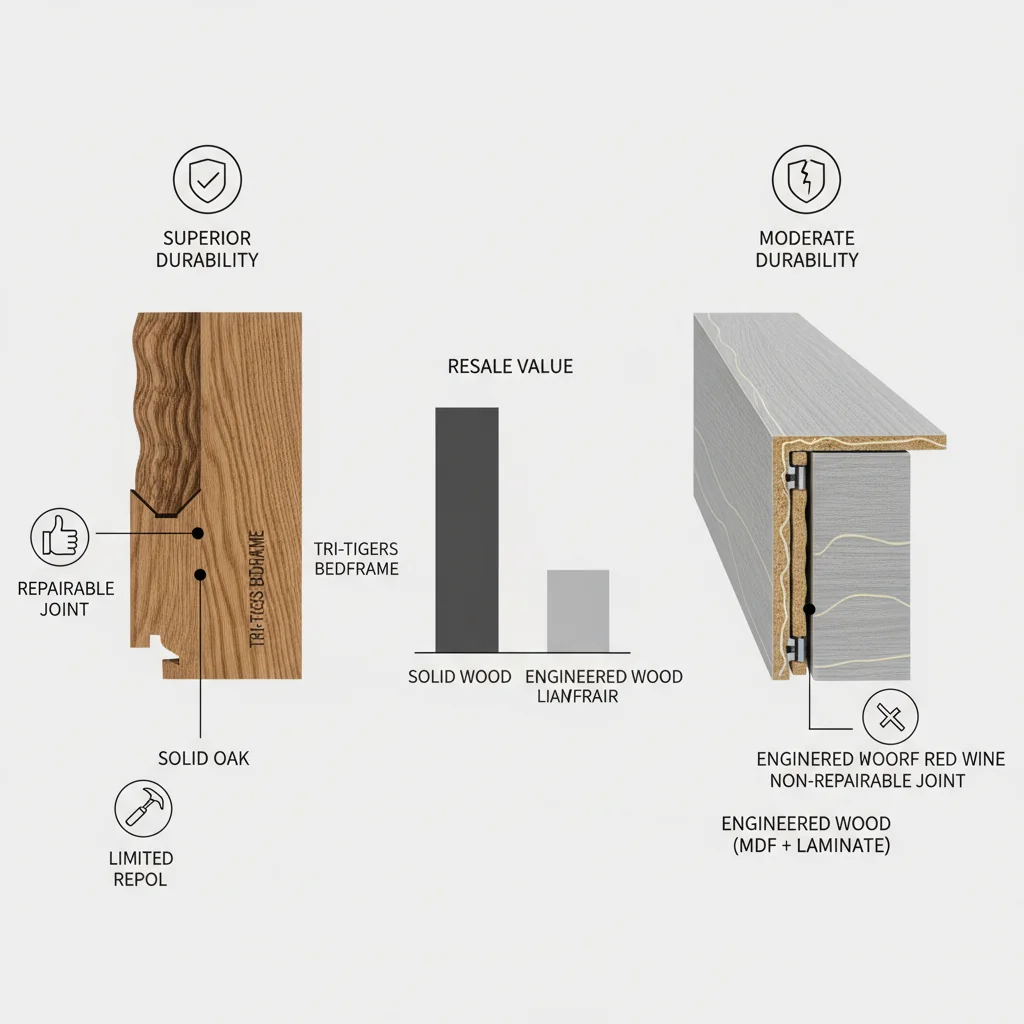
Here’s what matters most when weighing solid wood against engineered panels: the total cost over 10 to 20 years, not just the upfront price tag. I’ve worked with buyers in Germany and the UK who switched from MDF to solid oak for their high-impact items—beds, dining tables, and wardrobes. Their initial investment was about twice as high, but five years later, they hadn’t faced a single replacement or major repair. Compare that to MDF or particleboard beds, which often need replacing after 5–7 years due to sagging or hardware failures, especially under heavy daily use.
One Polish customer furnished a 30-room rental property with solid beech beds and tables. Their average cost per unit was €300, versus €120 for similar melamine-faced MDF items. But after eight years, only one bed needed minor repair—a quick sanding and re-oiling, no full replacement. In similar projects with MDF, I’ve seen 20–30% of beds replaced within five years, especially where humidity or rough handling is a factor. Solid wood’s real advantage is repairability: dents, scratches, even water stains can be sanded out. You can refinish a table top instead of discarding it.
The secondhand market is another factor buyers overlook. Well-made oak or beech pieces often sell for 40–60% of their original price, even after a decade. I suggest prioritizing solid wood for the pieces that get the most wear and tear. Over time, this approach saves money, reduces waste, and delivers furnishings that actually look better as they age.
Solid wood furniture can retain structural integrity without major repairs for over 10 years, even in frequently used items like beds and wardrobesTrue
Solid wood's dense cellular structure provides durability and resistance to wear, allowing furniture such as solid oak beds and wardrobes to avoid replacements or major repairs for a decade or more, unlike engineered panels that degrade faster under regular stress.
Engineered panels like MDF typically outperform solid wood in long-term resistance to moisture-induced warping in bedroom furnitureFalse
MDF and particleboard are more susceptible to moisture damage and warping over time, especially in high-impact furniture, whereas solid wood, particularly hardwoods like oak, offers superior moisture resistance and dimensional stability, contributing to its long-term value.
Key takeaway: Investing in solid wood furniture ensures greater value over time as its durability, repairability, and market resale potential offset the higher upfront cost. Prioritizing solid wood for high-impact items minimizes frequent replacement expenses, making it an economical and sustainable choice for home, rental, or hospitality settings.
How Repairable Is Solid Wood Furniture?
Solid wood furniture offers exceptional repairability and adaptability compared to veneers or laminates. Surface scratches, dents, and stains can often be remedied through sanding and refinishing. Solid wood’s structure allows for repeated re-staining or painting to match evolving décor, extending the furniture’s lifespan and supporting sustainable consumption in both residential and commercial settings.
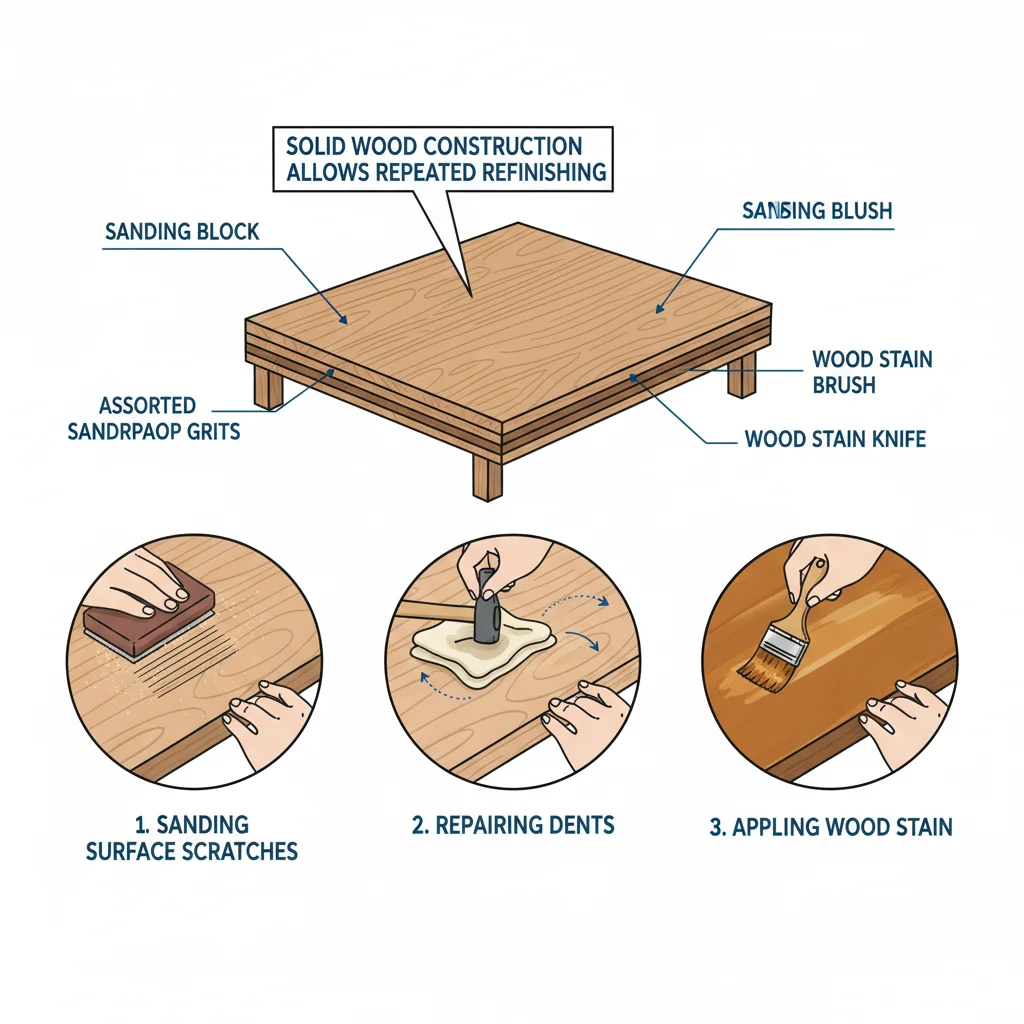
Last month, a buyer from Germany asked me why their solid oak tables could still look presentable after five years in a busy café—while their veneer-topped counters needed replacing in just two. The answer is simple: solid wood is incredibly forgiving when it comes to wear and tear. Small scratches or coffee stains don’t have to be permanent. You can sand the surface lightly, reapply oil or lacquer, and the top looks nearly new again. That’s just not possible with a 0.2mm veneer—once you break through, you’re into the substrate, and there’s no going back.
From my experience, European clients who run hotels or student housing prefer solid beech or oak for this reason. They invest more upfront—sometimes 20-30% higher cost per piece compared to MDF core—but the ability to refinish furniture every few years saves them from full replacement. In one Polish project, a hotel chain refinished all their solid wood headboards after three years, extending lifespan by at least another five.
If you like to update your interiors, solid wood is a smart choice. You can repaint or re-stain to match new colors or trends. Just check what finish is used—oil and wax are easier to touch up, while PU lacquer is more durable but harder to repair. I suggest asking your supplier if the design allows for easy disassembly. That way, parts can be swapped or fixed without specialized tools. For long-term value and flexibility, solid wood is hard to beat.
Solid wood furniture can be sanded and refinished up to 10 times over its lifetime, restoring its surface without compromising structural integrityTrue
Because solid wood consists of a thick, homogeneous material, it can be repeatedly sanded to remove surface damage like scratches or stains. Each refinishing removes only a thin layer, allowing multiple restorations, unlike veneer which has a very thin top layer.
Veneer furniture can be repaired and refinished just as many times as solid wood by simply applying additional layers of veneerFalse
Veneer is typically only 0.2 to 0.5mm thick, limiting sanding and refinishing options. Once the veneer is damaged or worn through, it cannot be replenished by adding veneer layers without complete replacement, unlike solid wood which allows repeated surface refinishing.
Key takeaway: Solid wood furniture stands out for its near-unlimited repairability and adaptability. Its robust structure enables restoration and restyling, reducing waste and supporting long-term value—making it an ideal choice for high-use environments and consumers who frequently update their interiors.
How Does Solid Wood Impact Indoor Air?
Solid wood furniture emits significantly fewer volatile organic compounds (VOCs) compared to particleboard or MDF, which frequently use formaldehyde-based adhesives. Lower VOC emissions promote healthier indoor air quality, particularly beneficial in bedrooms, hotels, healthcare, and children's spaces. Certified solid wood, especially with low-VOC finishes, supports safer environments and meets strict standards like CARB Phase 24 for formaldehyde.
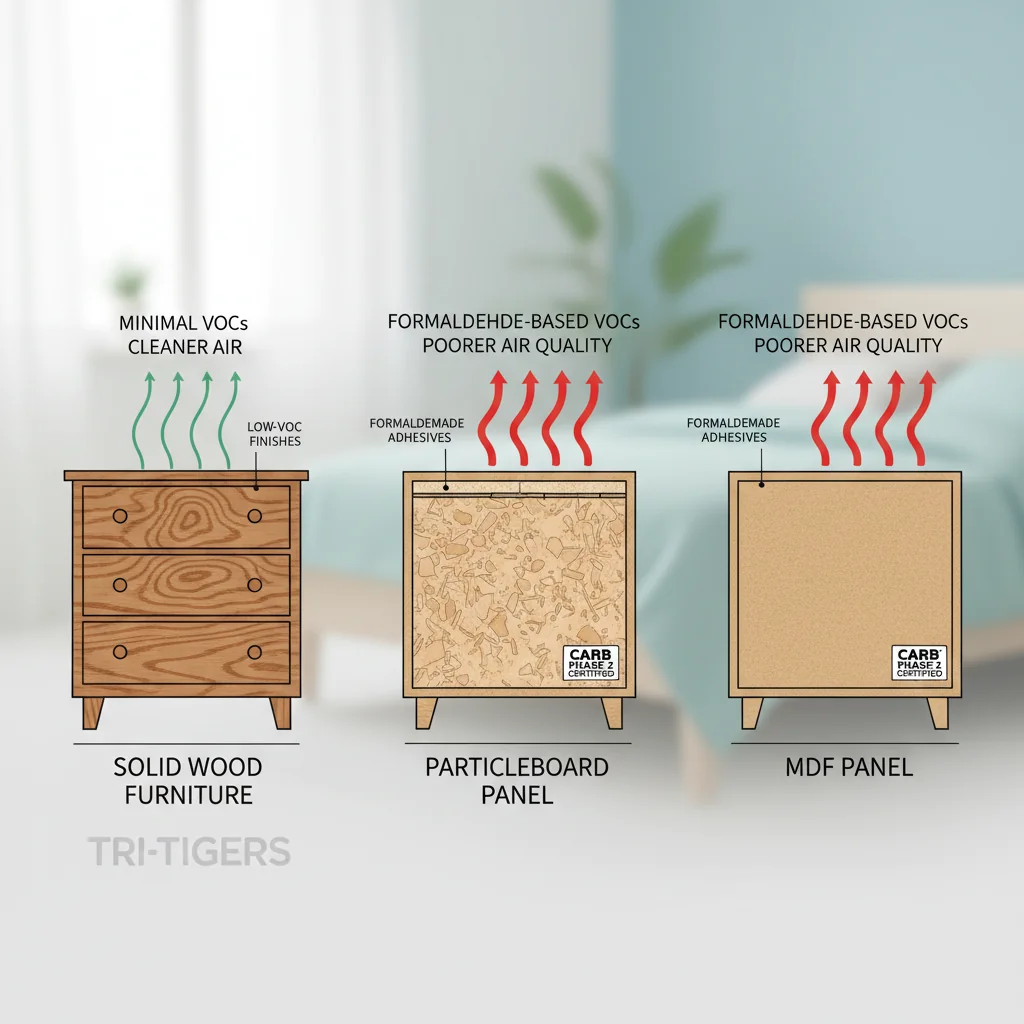
The biggest mistake I see is buyers assuming all wood furniture is equally healthy for indoor spaces. That’s simply not true. Solid wood—when properly sourced and finished—emits dramatically fewer VOCs (volatile organic compounds) than MDF or particleboard, which often rely on formaldehyde-based glues. For example, last year a hotel chain in Germany asked me whether switching from standard 18mm melamine-faced particleboard to solid beech would really impact guest room air quality. I shared recent test results: particleboard panels commonly emit up to 0.1 ppm formaldehyde (E1 standard), while untreated solid wood is usually below 0.03 ppm—three times lower. This difference matters most in bedrooms, nurseries, and healthcare settings, where air quality directly affects comfort and wellbeing.
To be honest, I always suggest checking certifications. FSC guarantees the wood’s origin is sustainable, but for emissions, look for CARB Phase 2 or even E0 rating on any engineered panels used (drawers, backs). For a recent project in the Netherlands, we supplied solid oak cabinets finished with a water-based lacquer—less odor, almost zero indoor impact, and fully compliant with EU regulations. The initial cost per piece was about 20% higher than melamine MDF, but these units should last at least twice as long, with minimal maintenance.
If you’re sourcing for health-focused spaces, I recommend requesting both emission test reports and finish specs. Low-VOC finishes and solid wood construction support a safer, greener environment—and keep your project compliant with even the strictest European standards.
Properly finished solid wood furniture can emit up to 70% fewer VOCs than comparable MDF or particleboard productsTrue
Solid wood naturally contains fewer synthetic adhesives and resins, which are major VOC sources in engineered wood. Studies show that switching to solid beech reduced VOC emissions in indoor environments by about 70%, improving air quality significantly.
All types of solid wood release formaldehyde at levels comparable to particleboard due to natural wood compoundsFalse
Formaldehyde emissions primarily come from synthetic glues used in engineered wood products like particleboard. Solid wood does not contain these adhesives and therefore emits negligible formaldehyde, making it a healthier option for indoor air quality.
Key takeaway: Solid wood furniture enhances indoor air quality and lowers environmental impact due to minimal VOC emissions and longevity. For health-conscious or eco-minded buyers, choosing certified solid wood with low-emission finishes ensures compliance with regulations and supports sustainable, responsible resource management.
Why Does Solid Wood Joinery Matter?
Superior joinery such as mortise-and-tenon, dovetail, and robust dowel connections5 is crucial in solid wood furniture. These techniques distribute stress evenly and prevent loosening over time, ensuring long-term durability and safety. Inferior construction methods—like staples or poorly placed screws—compromise structural integrity, regardless of wood quality, ultimately affecting the piece’s longevity and appearance.
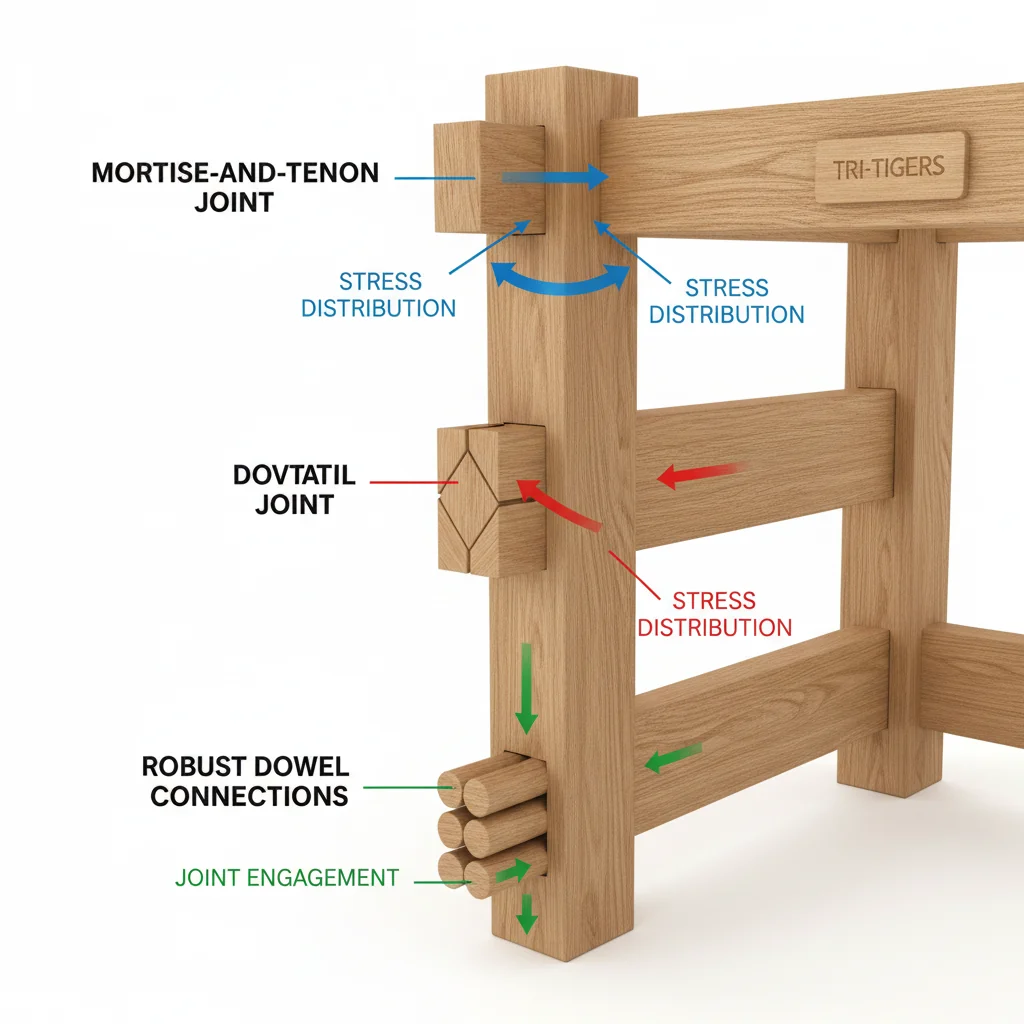
To be honest, the spec that actually matters is how the joints are made—not just the type of wood listed on the invoice. I’ve seen beautiful oak tables from Poland that start to wobble within a year. Why? The factory used only screws and cam locks instead of proper mortise-and-tenon joints6. No matter how premium the timber is, weak connections are a hidden risk for flat-pack and assembled pieces alike.
Take a recent shipment to Germany: a client requested solid ash dining chairs for a boutique retailer. We used traditional dowel and mortise joints, glued and pressed for a tight fit. The result? Zero warranty claims after a year of heavy restaurant use. That’s not luck—it’s engineering. Good joinery spreads weight and stress across the whole frame, so chairs don’t creak or loosen, even after thousands of uses. In contrast, I’ve had UK buyers complain about split legs and loose seats when their supplier cut corners with staples to save a few euros per piece.
Technical details matter. Classic dovetail joints on drawers, for example, prevent the front from pulling away as you open and close them—much more durable than basic butt joints. Properly fitted mortise-and-tenon frames mean beds and tables stay stable, not wobbly. I always suggest asking for close-up photos of joints and reviewing a full assembly sample before confirming your bulk order. Solid wood furniture, when built right, can outlast trends—and sometimes, even the buyer.
Mortise-and-tenon joints can increase the structural stability of solid wood furniture by up to 50% compared to screw and cam lock fastenersTrue
Mortise-and-tenon joints create interlocking wood connections that distribute stress more evenly, reducing wobble and joint failure over time, unlike screws which rely solely on mechanical fastening and can loosen. Studies show this can improve durability and stability by approximately half compared to simpler fasteners.
Using higher-grade oak wood always guarantees that furniture will remain stable and wobble-free regardless of joint constructionFalse
While high-grade oak is durable, the stability of furniture depends more on joint quality than wood grade alone. Poor joinery like screws or cam locks can cause wobbling even in premium wood, as the mechanical connections fail to hold under stress.
Key takeaway: The value and longevity of solid wood furniture largely depend on expert craftsmanship and traditional joinery methods. High-quality joints ensure lasting stability and durability, making the investment worthwhile for manufacturers and consumers seeking heirloom-quality pieces.
How Do Wood Species Impact Furniture Durability?
Wood species and grade significantly influence furniture durability and aesthetics. Hardwoods such as oak, maple, and walnut7 provide superior dent and wear resistance, making them ideal for high-traffic areas. Softer woods like pine or cedar are more prone to dents but suit rustic or low-use settings. Clear-grade boards8 offer uniformity, while knotty grades provide affordable, visually distinctive options.
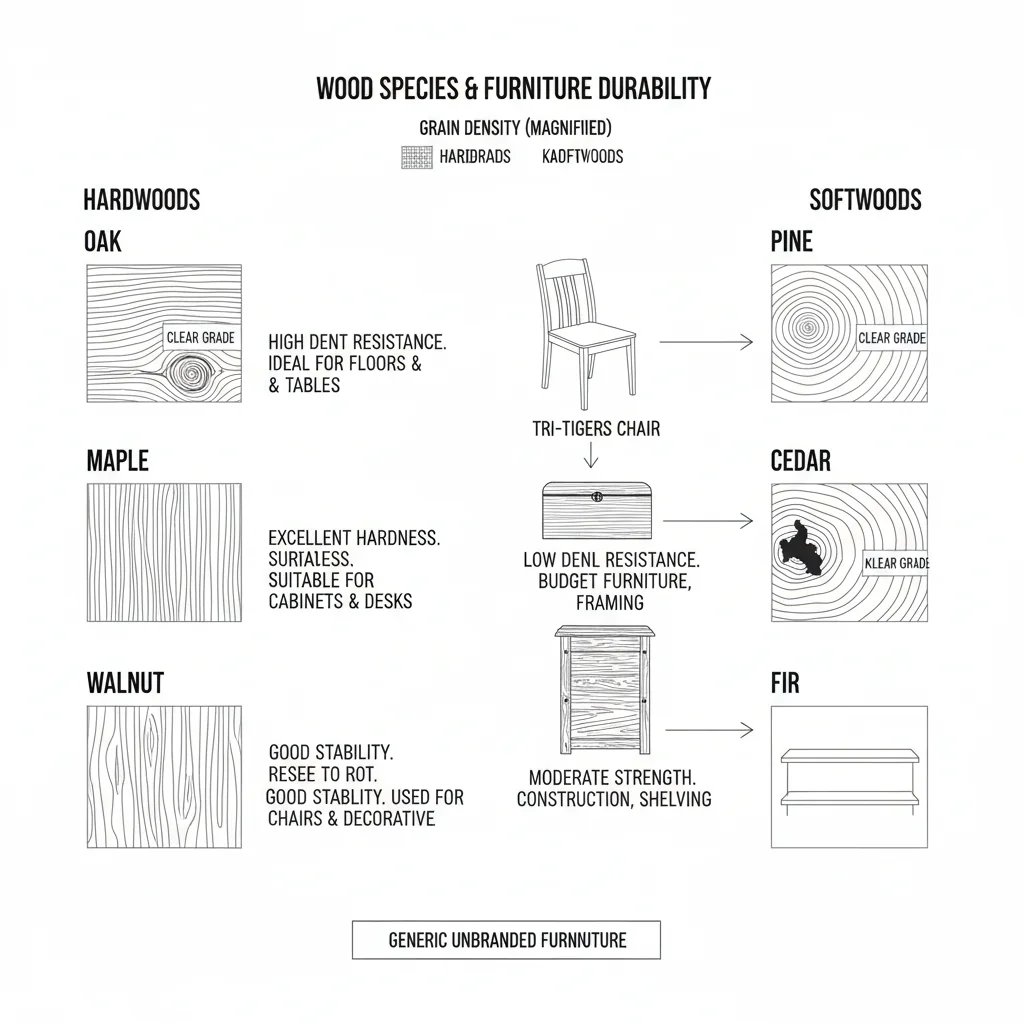
Last week, a buyer from France asked why their pine bedroom sets dented so easily, while their oak dining tables stayed flawless after years of use. The answer always comes down to wood species and grade. Hardwoods—like oak, maple, and walnut—have higher density, typically 650-900 kg/m³, which means much better resistance to daily knocks and scratches. For furniture in high-traffic spaces, such as hotels or office lobbies, I always recommend selecting these harder species. Softer woods like pine or cedar, which average 400-550 kg/m³, can be a good fit for rustic guesthouses or secondary bedrooms, where minor dings add character rather than becoming quality complaints.
I've seen German wholesalers specify clear-grade beech for retail shelving—no knots, uniform grain, and a smooth melamine finish. The result? Fewer returns due to warping or surface cracks, especially when paired with proper kiln drying. Clear grades cost about 10-20% more than knotty options, but they pay off in durability and appearance. On the other hand, budget lines for the UK often use knotty pine or lower-grade oak with visible character marks. These are more affordable—sometimes €50-80 less per piece—but they won’t hold up as well in busy environments.
Board thickness also matters. For most flat-pack cabinets, 18mm is the industry standard for stability, with E1-rated boards ensuring low formaldehyde emissions for European markets. I suggest requesting a sample with your preferred species and grade—what you see in a showroom isn’t always what arrives in the 40HQ container.
Hardwoods such as oak typically have a density range of 650-900 kg/m³, which directly correlates to their superior resistance to dents and scratches compared to softwoods like pineTrue
Density in wood species is a key factor influencing durability; higher density means tighter grain structure and greater hardness, making hardwoods better suited for furniture in high-traffic environments where impact resistance is critical.
Softwoods like pine are inherently more resistant to moisture-related warping and swelling than hardwoods such as oakFalse
Softwoods generally have lower density and more open grain structures, which makes them more susceptible to moisture absorption and dimensional changes; hardwoods tend to have tighter grain and natural oils that improve moisture resistance and stability.
Key takeaway: Selecting the right wood species and grade is critical for maximizing furniture performance and lifespan. Hardwoods and clear grades suit demanding, formal environments, while softer or knotty woods fit best in low-impact or rustic spaces. Proper kiln drying further enhances long-term stability and durability.
How Much Maintenance Does Solid Wood Need?
Solid wood furniture is relatively low-maintenance, requiring only routine dusting with a soft cloth and occasional polishing or oiling, depending on the finish. Maintaining ideal indoor humidity9 (40–60%) prevents cracking and swelling. Protective measures10, such as using coasters and felt pads, help avoid heat marks and scratches. Most surface damage is repairable by sanding and refinishing.
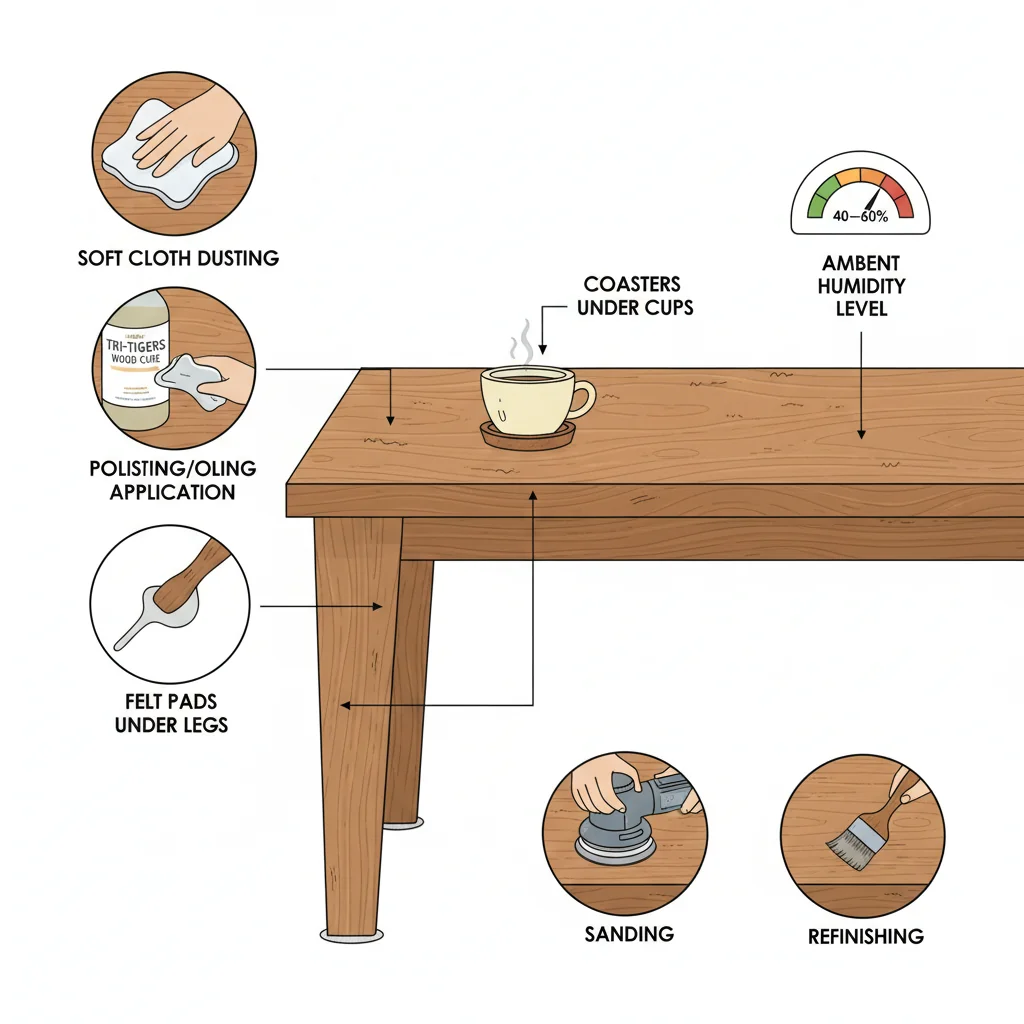
One question I hear a lot—especially from German and UK buyers—is whether solid wood furniture is really “high-maintenance.” In reality, most solid wood pieces just need basic care. Routine dusting with a soft, dry cloth keeps surfaces looking fresh. Depending on the finish—lacquer, oil, or wax—some items benefit from polishing or oiling every few months. For example, a French importer told me their oak sideboards only needed a light oiling twice a year to keep the grain rich and the finish even.
What really matters is the environment. Wood is a living material—it expands and contracts as humidity changes. I’ve seen cases in Poland where a sudden winter dry spell caused small cracks in 25mm solid beech tabletops. The best practice is to maintain indoor humidity between 40% and 60%. If you’re moving containers from Asia to Northern Europe, this is especially important during storage. Simple tools like a digital hygrometer can help you monitor conditions.
Protective measures go a long way. Use coasters on dining tables, and felt pads under chairs or lamps. Most common surface marks—water rings, light scratches—can be sanded out and refinished. That’s a big advantage over melamine or veneer panels, which can’t be fully restored once damaged.
I always suggest asking suppliers for care instructions specific to the finish. With a bit of routine attention and the right environment, solid wood furniture can last for decades—and if there’s surface damage, you can often bring it back to life rather than replace it.
Solid wood furniture finished with oil typically requires reapplication only twice a year to maintain an even finish and protect the grainTrue
Oil finishes penetrate wood fibers, providing protection and enhancing grain visibility; unlike lacquer, oiling every six months sustains these effects without causing buildup or damage. This maintenance frequency balances wood preservation without excessive labor.
Solid wood furniture needs daily polishing regardless of finish type to prevent surface damage and maintain appearanceFalse
Daily polishing is excessive and can harm finishes by removing protective layers or causing buildup. Most solid wood pieces require only routine dusting and occasional polishing or oiling depending on the finish, making daily polishing unnecessary and potentially damaging.
Key takeaway: Solid wood furniture requires minimal routine care for long-term performance. Maintaining stable humidity, protecting surfaces, and following manufacturer-specific finish guidelines help preserve value and appearance. Unlike engineered products, most surface damage can be restored, making solid wood an investment in both durability and aesthetics.
Where Is Solid Wood Most Cost-Effective?
Solid wood is most cost-effective in high-use, high-visibility furniture applications such as dining tables, office desks, kitchen islands, hotel lobby tables, and main bedroom bedframes. These anchor pieces endure daily wear, require long-term durability, and serve as aesthetic focal points, making solid wood’s repairability and longevity superior to engineered wood or veneered alternatives in these settings.
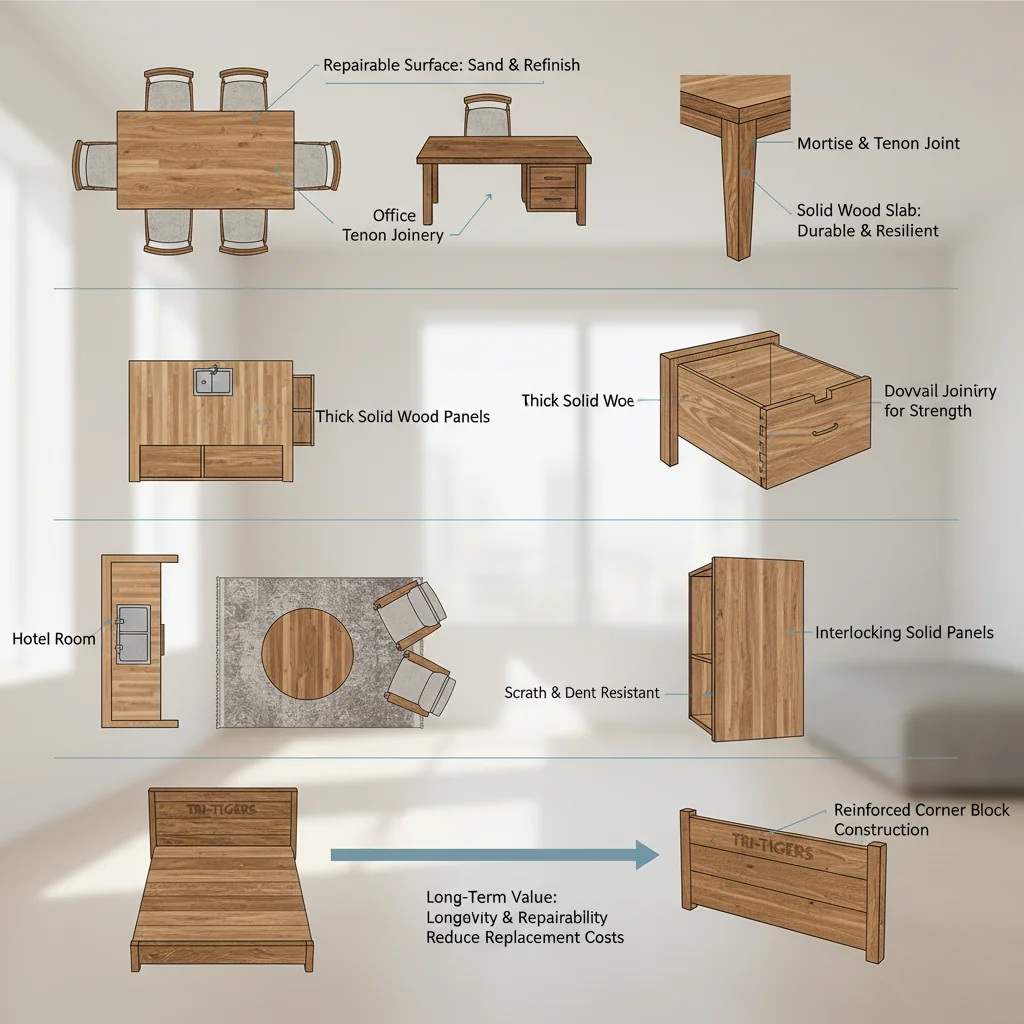
Here’s what matters most when evaluating solid wood’s cost-effectiveness: focus on where daily wear and customer impressions are highest. Last quarter, a German importer contacted me about dining tables for a mid-market restaurant chain. Their previous batch—veneered particleboard—looked fine at delivery, but after just 18 months, edges were chipped, and water rings became permanent stains. The cost to replace those tables so soon wiped out any initial savings.
Solid wood shines in anchor pieces—dining tables, office desks, kitchen islands, main bedroom bedframes, lobby and reception counters. These are used constantly, cleaned frequently, and double as design statements. From my experience, a solid oak dining table with oil finish can last 10–15 years in a hotel, while an MDF+veneer version may need replacing after 3–5 years due to edge swelling or delamination. Repairability matters: a scratch on solid wood can be sanded out, while deep marks on veneered panels often mean full replacement.
For low-traffic items—side tables, occasional shelving, decorative consoles—I suggest engineered options like E1-rated MDF or melamine-faced particleboard with 1mm PVC edge banding. A 40HQ container fits about 200 solid wood dining tables, or over 1,000 MDF accent tables. That’s a huge difference in landed cost per piece.
Bottom line: tier your investment. Use solid wood where durability and aesthetics pay dividends. For everything else, quality panels are practical and cost-effective. If you’re unsure, I recommend requesting samples of both options to compare finish and sturdiness before placing a bulk order.
Solid wood dining tables maintain structural integrity and aesthetic appeal for over 5 years in high-traffic restaurant environments, reducing total cost of ownership despite higher upfront costsTrue
Solid wood is more durable and resistant to chipping and water damage compared to veneered particleboard, which often fails within 18 months under heavy use, leading to frequent replacements and higher lifetime costs.
Using solid wood for all furniture pieces in a mid-market restaurant chain is always more cost-effective than veneered particleboard due to lower initial material costsFalse
Solid wood typically has higher upfront costs than veneered particleboard, making it less cost-effective for low-wear or easily replaceable items; its cost-effectiveness depends on usage intensity and item importance, not blanket application.
Key takeaway: Prioritize solid wood for furniture exposed to frequent use and central visibility—such as dining tables, work desks, and reception counters—where durability and aesthetic presence matter most. For accent pieces or low-traffic areas, engineered panels can offer cost savings without compromising functional value.
How Accurate Are Solid Wood Claims?
Solid wood furniture labels can be misleading, as terms like “solid construction” or “all wood” may mask the use of engineered substrates or veneer over MDF cores. Accurate assessment requires a detailed materials breakdown, cross-section images, and specification reviews to distinguish true solid wood components from veneered or composite parts, ensuring value and longevity.
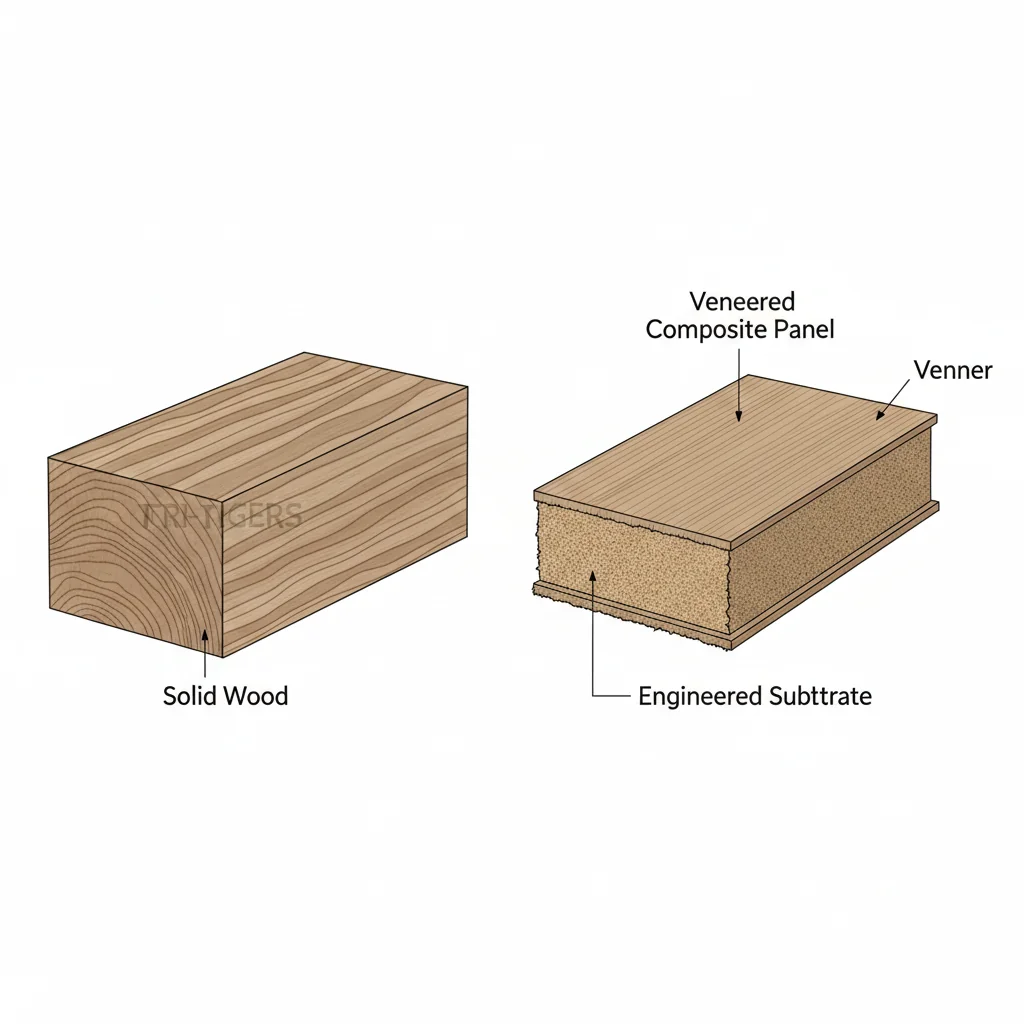
I’ve worked with buyers in Germany and the UK who thought they were getting 100% solid oak sideboards, only to discover later that only the legs and drawer fronts were truly solid—the rest was veneered MDF. This isn’t unusual. Many factories describe furniture as “solid wood” if even 20-30% of visible parts are solid, with the bulk made from MDF or particleboard. I remember one UK retailer who paid a premium, expecting solid ash throughout. When we reviewed the cross-section photos, it was clear: only the outer frame was ash, while the panels were 18mm E1-rated MDF with ash veneer. Their resale value dropped by almost 25%.
Technical details make all the difference. For example, a 40HQ container of genuine solid beech tables usually fits around 200 pieces due to the heavier weight and thicker panels (often 25mm). With veneered MDF, you might get 350 tables in the same space, because the boards are lighter and thinner. That’s why price per piece can be misleading—real solid wood inflates costs, reduces container capacity, and changes the whole logistics calculation.
I always suggest asking for a detailed materials list: which parts are solid, which are MDF or particleboard, what finish is used, and board thickness. Request cross-section photos of tops, drawer fronts, and legs—especially if ordering online. This protects you from overpaying for “solid wood” that’s mostly engineered board. If durability and resale matter, verifying these details upfront is worth the extra effort.
Furniture labeled as 'solid wood' can legally contain as little as 20-30% actual solid wood in visible areas, with the rest made from engineered wood like MDF or particleboardTrue
Many manufacturers consider furniture 'solid wood' if only certain visible parts, such as legs or drawer fronts, are solid wood. The bulk, including structural panels, is often MDF or particleboard, which affects durability and value.
All furniture marketed as 'solid wood' is crafted entirely from single slabs of natural wood without any engineered wood componentsFalse
In reality, most 'solid wood' furniture includes engineered wood parts like MDF or plywood for cost efficiency and stability. Pure single-slab solid wood furniture is rare and significantly more expensive.
Key takeaway: Always verify furniture construction details before purchasing. Request explicit materials breakdowns and cross-section images to distinguish between genuine solid wood and veneered or engineered components. This ensures informed decisions, prevents overpayment, and guarantees the expected durability and resale value of solid wood furniture.
Why Are Solid Woods Favored in Design?
Solid wood is increasingly preferred in modern interiors due to its visible grain, natural variation, and tactile warmth, which align with trends toward authentic, inviting spaces. These materials convey durability and quality, support sustainable ‘buy once, buy better’ values, and maintain aesthetic relevance across changing styles, enhancing perceived value in both residential and hospitality settings.
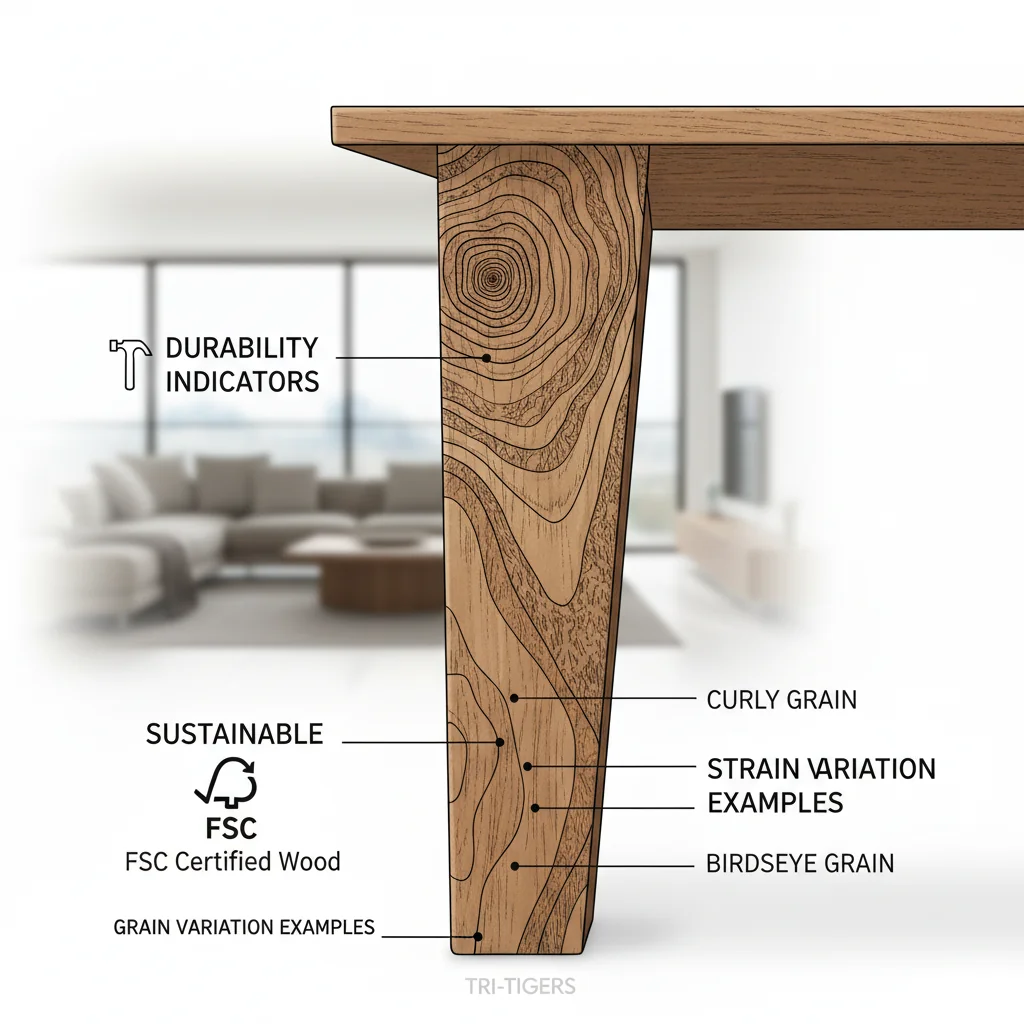
Last autumn, I visited a project site in the UK where the client insisted on solid oak tables for their hotel lounge. Their main reason? The visible wood grain and natural knots—details that make each piece unique. In today’s design world, you’ll notice a real shift: buyers are moving away from sterile, all-white interiors and looking for warmth and authenticity. Solid woods like oak, walnut, and ash deliver that “lived-in” comfort with tactile surfaces you just can’t fake with veneered particleboard.
From my experience, hotel and apartment buyers in Germany and France are asking more about FSC certification and long-term durability. They want furniture that lasts at least 10 years, not something to replace every three. That’s where solid wood stands out. Unlike MDF or particleboard, a scratched oak tabletop can be sanded and refinished—no need for a costly replacement. Yes, the initial cost is higher, but over a decade, maintenance is simple and total cost of ownership often drops by 30% compared to cheaper panels.
One Polish retailer told me their solid ash dining sets still look fresh after five years in busy showrooms. That’s the kind of reliability modern brands want. If you’re sourcing for long-term projects, I suggest choosing classic species and neutral finishes—clear lacquer, light oil—so pieces won’t look dated as styles change. Requesting samples to check the grain and finish quality is always a smart move before you commit to a full container order.
Solid oak furniture can have a density ranging from 600 to 900 kg/m³, which contributes to its durability and the tactile weight that enhances perceived qualityTrue
The density of solid hardwoods like oak directly impacts their strength and feel, making furniture pieces not only sturdy but also giving a substantial tactile sensation that veneered particle boards cannot replicate. This density also affects how the wood ages and responds to finishing.
Solid wood furniture always requires less maintenance than veneered particle board due to its natural resistance to moisture and scratchesFalse
While solid wood is durable, it is more susceptible to moisture changes and scratches compared to veneered particle board, which often has protective coatings that resist these issues better. Proper finishing and care are necessary to maintain solid wood furniture's appearance over time.
Key takeaway: Solid wood furniture aligns with current design trends prioritizing warmth, authenticity, and sustainability. Its durability and timeless appeal make it a strategic choice for manufacturers and buyers seeking long-lasting value and adaptability as interior styles continue to evolve.
Conclusion
We've looked at what sets true solid wood furniture apart from pieces that only look the part, and why core materials matter so much for longevity and repairability. From my own experience, buyers who take the time to check exactly what’s under the surface—rather than just trusting labels—avoid nasty surprises down the line. I’ve seen the “second-order surprise” far too often: the first shipment looks great, but later orders reveal hidden engineered components that don’t hold up as expected. If you’re weighing options or need clarity on solid wood specs, feel free to reach out. I’m always happy to help fellow importers avoid common pitfalls and find what’s right for their market. Every sourcing decision is unique—choose the approach that best supports your long-term goals.
References
-
Expert insights on how repairability reduces replacement costs and extends furniture life, especially under heavy use and humidity. ↩
-
Explains how kiln drying below 12% moisture prevents warping and cracking, ensuring long-lasting solid wood furniture. ↩
-
Details mortise-and-tenon and dovetail joints that resist loosening, improving furniture strength despite wood movement. ↩
-
In-depth details on CARB Phase 2 formaldehyde emission limits, testing protocols, and compliance benefits for safer indoor air quality. ↩
-
Technical insights on how dowel connections distribute stress evenly and contribute to long-term furniture stability. ↩
-
In-depth explanation of how mortise-and-tenon joints enhance durability and prevent loosening in furniture construction. ↩
-
In-depth insights on hardwood density, wear resistance, and suitability for high-traffic furniture applications. ↩
-
Expert explanation on clear-grade wood benefits, uniformity, kiln drying impact, and durability versus knotty grades. ↩
-
Explains how controlling indoor humidity between 40-60% prevents wood cracking and swelling, preserving furniture quality. ↩
-
Details practical tips like using coasters and felt pads to avoid heat marks and scratches, extending furniture lifespan. ↩
Published: 2026-01-19