
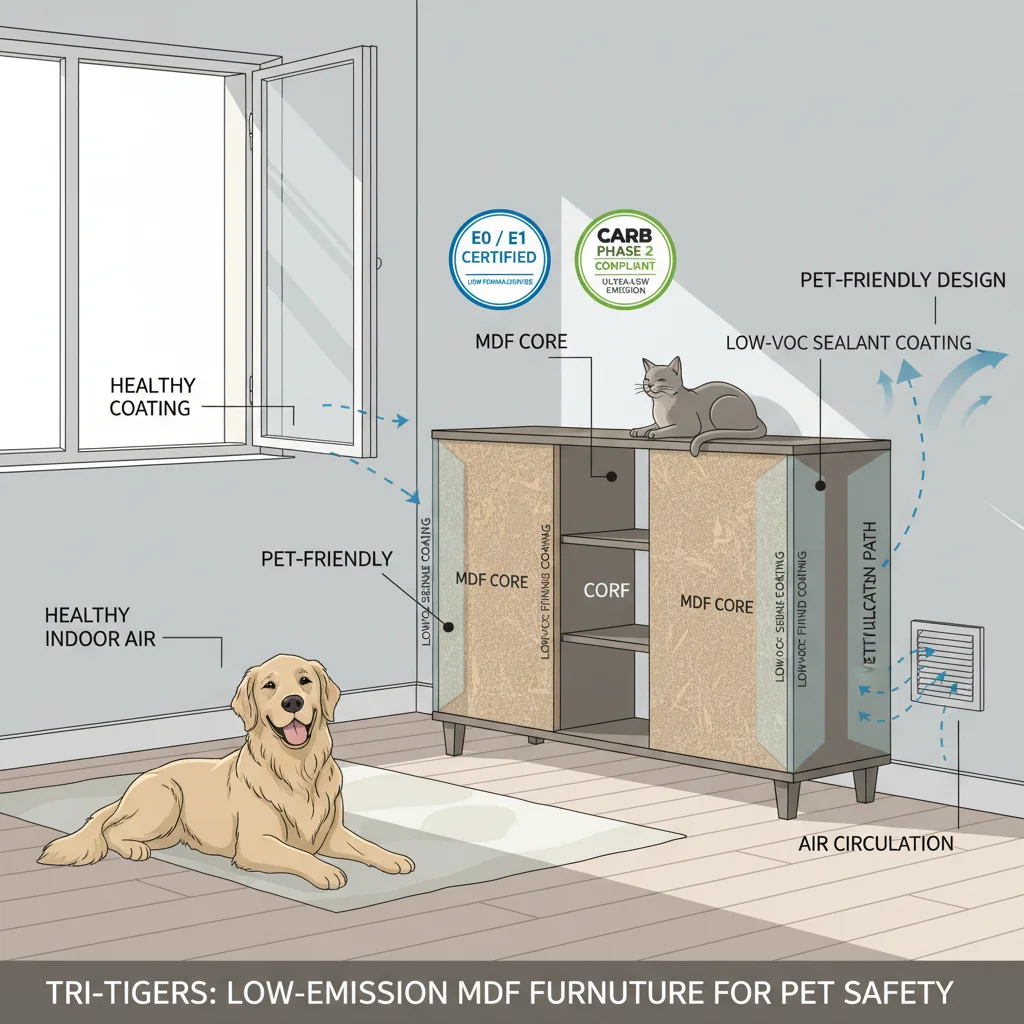
Featured image for Is MDF Furniture Toxic to Pets? Manufacturer’s Expert Safety Guide
Is MDF Furniture Toxic to Pets? Manufacturer’s Expert Safety Guide
At a Frankfurt trade show last spring, a UK buyer pulled me aside—worried that his new MDF cat trees might be making customers’ pets sick. I get this more often now, as pet owners and retailers grow smarter about what’s really inside their furniture and the air their animals breathe.
MDF (Medium Density Fiberboard) is produced using wood fibers bonded with urea-formaldehyde resins, resulting in higher formaldehyde emissions compared to other engineered wood products. Emission risk is greatest from exposed or freshly machined MDF edges, particularly in low-ventilation environments. Pets, especially small species, are more vulnerable to airborne formaldehyde due to their size and proximity to the floor.
Is MDF Furniture Harmful to Pets?
MDF furniture can pose a risk to pets due to its high formaldehyde emissions, especially from urea-formaldehyde resin1 used in its manufacture. The greatest exposure occurs near exposed or freshly cut edges, and pets are vulnerable as they spend significant time close to the floor where emissions concentrate. Proper sealing or selecting low-emission MDF mitigates risk.
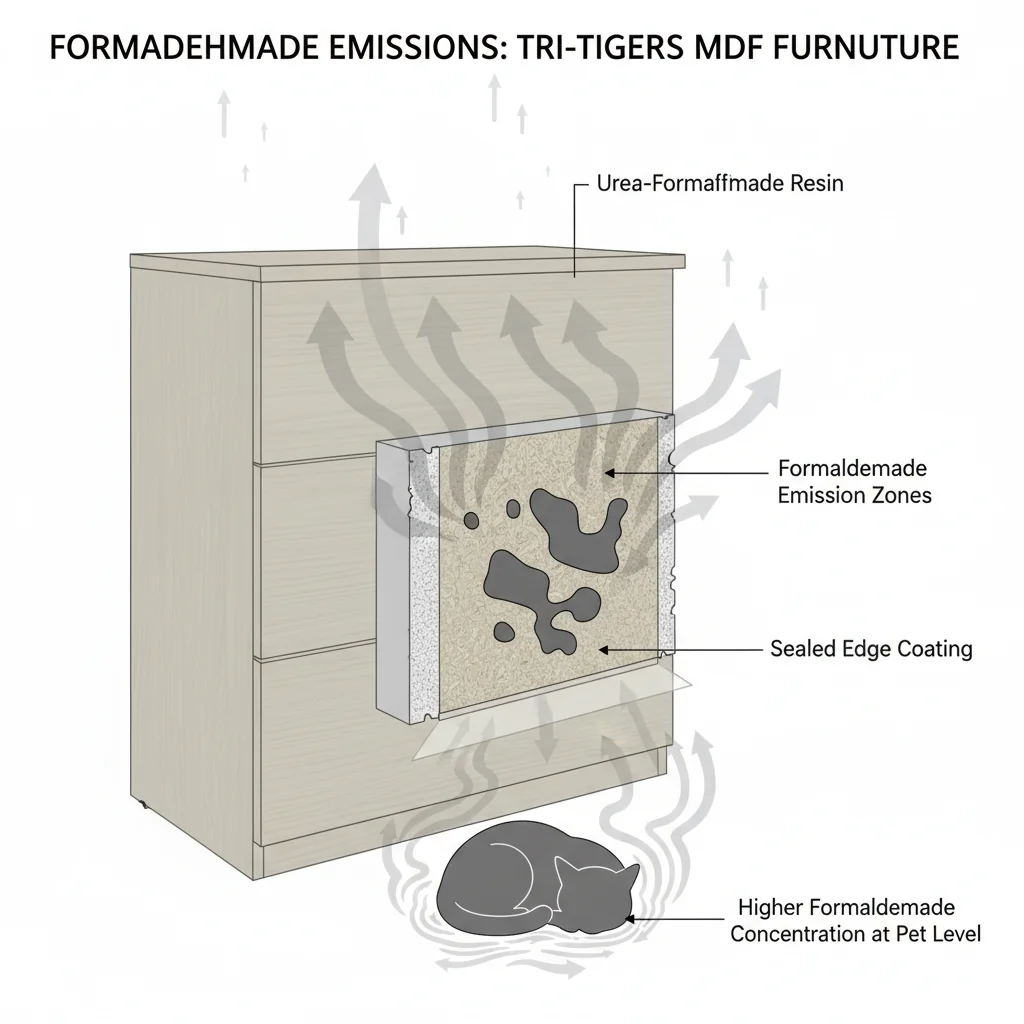
Let me share something important—most people overlook the hidden risks MDF can pose to pets, especially when used unsealed or cut. The issue isn’t with the wood fibers but with the urea–formaldehyde resin binding them. This resin releases formaldehyde gas, and the release is highest from exposed or freshly cut edges. I’ve seen a German pet retailer call after noticing their dogs sneezing near new MDF shelving—turns out, the panels weren’t edge-banded or sealed, so emissions built up right at floor level, exactly where pets rest and breathe most.
To be honest, the industry standard E121 rating](https://www.kapokpanel.com/formaldehyde-emission-standards-e1-e0-enf-f4-star---which-grade-is-better729)[^1] (≤0.1 ppm formaldehyde) is the bare minimum for Europe. Some buyers request E0 (≤0.05 ppm) or CARB P2 boards for pet furniture—those are even safer. In my experience, a 40HQ container fits around 1,000 flat-pack pet beds made from 16mm E0 MDF, but the raw material cost is about 10% higher versus standard E1. Still, it’s worth it for sensitive uses. Always check that all cut edges are sealed—melamine laminate, PVC edge banding3 (at least 1mm thick), or lacquered paint finishes greatly reduce off-gassing.
For pet beds or enclosures, I suggest particleboard with melamine finish or plywood if formaldehyde sensitivity is a top concern. Lead times for E0 or CARB P2 boards can be 7–10 days longer, depending on order size. I always advise requesting a sealing sample, not just a board swatch, before placing volume orders. Small detail—big difference for pet safety.
Unsealed MDF edges can release formaldehyde at concentrations up to 0.1 ppm, which is enough to cause respiratory irritation in sensitive pets like dogs and catsTrue
The urea–formaldehyde resin in MDF emits formaldehyde gas most intensely at exposed edges, often reaching levels that can irritate pet respiratory systems. Sealing or edge-banding greatly reduces this emission.
MDF furniture releases formaldehyde only during the first 24 hours after installation, after which all emissions ceaseFalse
Formaldehyde emissions from MDF persist over time, especially from exposed edges, and do not completely stop after just one day, continuing to pose a risk if not properly sealed.
Key takeaway: Formaldehyde emissions from MDF’s resin can be harmful to pets, especially when boards are unsealed or used close to where pets rest, eat, or sleep. Choosing sealed or low-emission MDF reduces risks, while alternatives may be best for sensitive applications like pet furniture.
Is MDF Formaldehyde Dangerous for Pets?
Formaldehyde in MDF panels is a known respiratory irritant and probable carcinogen, posing health risks to pets—especially small animals and those with pre-existing respiratory issues. Symptoms include eye and nasal irritation, coughing, and wheezing. The risk depends on emission levels, product certification, and ventilation. Older or uncertified MDF significantly increases exposure risk in household environments.
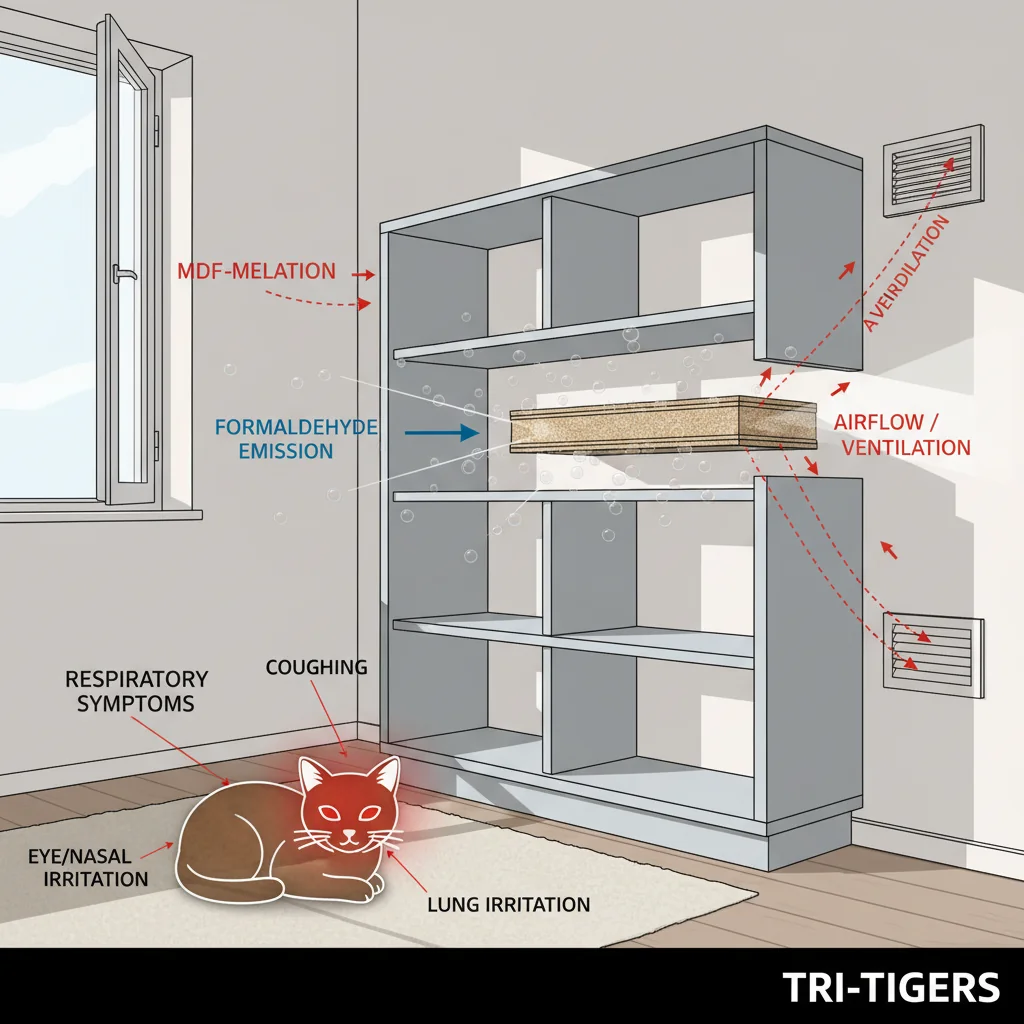
Here’s what matters most when considering MDF furniture for homes with pets: not all MDF is equal when it comes to formaldehyde emissions, and that makes a big difference for animal health. I’ve worked with several German wholesalers whose end-customers reported increased sneezing and runny eyes in cats after moving new flat-pack shelving into small apartments. The issue almost always traced back to uncertified, high-emission MDF boards—often with old E2 rating or no compliance proof at all.
Formaldehyde is released as a gas from MDF, especially in the first months after production. Most European countries now require E1 or better (E1 = ≤0.1 ppm formaldehyde), but “better” really means E0 (≤0.05 ppm) or CARB P2 for the lowest emissions. In poorly ventilated rooms—think a small flat in Paris or a compact bedroom in Warsaw—the risk grows exponentially, especially for small dogs, rabbits, or guinea pigs that spend time close to the floor.
Last month, I spoke with a Polish importer who had a rash of returns from customers with pet allergies. The affected units came from an older batch using 18mm MDF panels with no E0 or CARB P2 certification. Switching their new orders to E0-rated boards immediately reduced complaints. The cost premium? About 7% per unit. But for pet safety and peace of mind, most buyers found that worthwhile.
I always recommend requesting proof of E0 or CARB P2 certification—and keeping rooms well ventilated, especially for households with sensitive pets. Outgassing drops over time, but prevention is the safer approach.
MDF boards with an E2 formaldehyde emission rating can emit formaldehyde at levels up to 5 times higher than E1-rated boards, posing a greater respiratory risk to pets in enclosed spacesTrue
E2 boards have significantly higher formaldehyde emissions compared to E1 or E0. Pets living in small apartments are more exposed due to limited ventilation, causing symptoms like sneezing and watery eyes linked to higher formaldehyde exposure.
All MDF furniture sold in Europe is required to meet the E1 formaldehyde emission standard, ensuring it is safe for pets regardless of the board's age or certification statusFalse
Not all MDF furniture complies with E1 standards; older or uncertified boards often have E2 ratings or lack proof of compliance, which can lead to harmful formaldehyde exposure for pets. Regulatory enforcement and market compliance vary, allowing non-E1 MDF to still be sold.
Key takeaway: Pets are vulnerable to formaldehyde emissions from MDF furniture, particularly in poorly ventilated spaces or with high-emission products. Selecting ultra-low-emission MDF and improving area ventilation are essential safety measures for pet owners—especially those with small or respiratory-compromised animals.
Which MDF Emission Standards Protect Pets?
MDF emission standards such as E0, E1, CARB Phase 24, TSCA Title VI, and Japan’s F★★★★ specify low formaldehyde limits, making them the safest available benchmarks for pet-friendly furniture. While designed for general indoor air safety, these certified boards emit significantly less formaldehyde than older MDF and are highly recommended, especially for large items near pets or in compact living spaces.
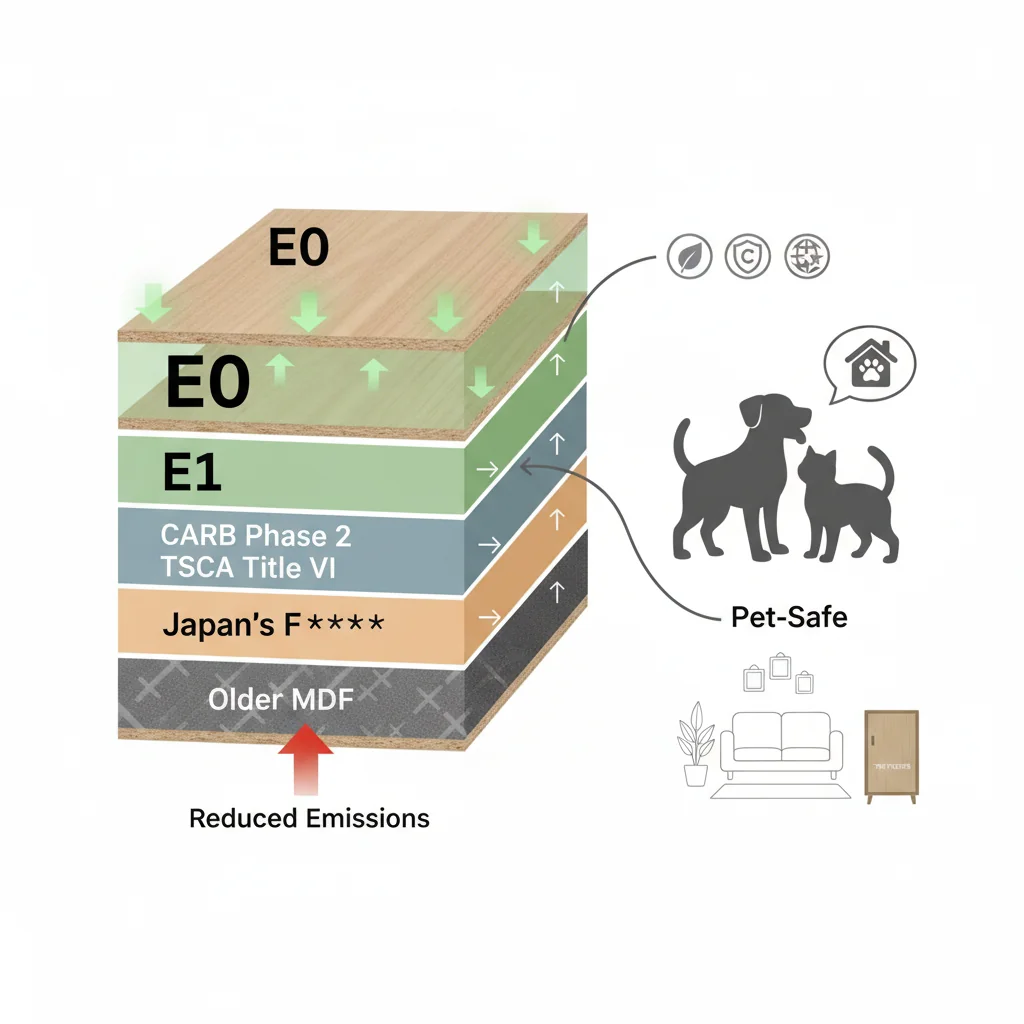
Most people don’t realize formaldehyde emissions in MDF are just as important for pets as for humans—sometimes even more so, since animals often nap right next to furniture or sleep in smaller spaces. A German customer recently ordered 40HQ of shelving for pet stores and wanted the lowest emission possible. She specifically requested E1-rated MDF5, but I suggested E0 and CARB Phase 2 as safer bets, especially for small-animal cages or cat towers sitting on the floor. Why? The tighter the emission limit, the lower the risk for those closest to the panels.
Here’s a quick comparison of key low-emission standards you’ll see in the market:
| Standard | Region/Market | Max Formaldehyde (ppm) | Typical Use Case | Notes |
|---|---|---|---|---|
| E0 | Europe, Asia | ≤ 0.05 | Premium home, pet furniture | Stricter than E1 |
| E1 | Europe | ≤ 0.1 | Mainstream furniture | Mandatory for EU market |
| CARB Phase 2 | USA | ≤ 0.05 | US/California compliance | Similar to E0, different test |
| TSCA Title VI | USA | ≤ 0.05 | All US imports | Mirrors CARB P2 |
| F★★★★ (F Four Star) | Japan | ≤ 0.3 mg/L | High-end, low-emission pieces | About equal to E0 (different unit) |
To be honest, documentation matters. I’ve seen Polish buyers ask for E1, receive old stock with just “low-formaldehyde” stickers—no real test report. I always suggest requesting recent lab certificates, especially for orders over 500 units or full 40HQ loads. Combine low-emission MDF with good room ventilation. That’s the safest way to keep air healthy for both humans and pets.
Unsealed MDF edges can emit formaldehyde levels up to 5 times higher than sealed surfaces, significantly increasing indoor air toxicity risks for petsTrue
Cut edges of MDF expose the resin-bound fibers directly, which release more formaldehyde gas. Sealing with multiple coats or edge banding creates a barrier reducing emissions, crucial for pet safety since animals often come into close contact.
Applying a single coat of lacquer on MDF completely prevents any formaldehyde off-gassing, making it entirely safe for use in pet furnitureFalse
One coat of lacquer is usually insufficient to seal porous MDF surfaces and especially edges, allowing formaldehyde to continue off-gassing. Multiple coats and edge banding are necessary to effectively reduce emissions and protect pet health.
Key takeaway: Sealing MDF furniture with non-toxic, low-VOC, or pet-safe paints and laminates is crucial for reducing harmful emissions and protecting pets. Fully covering all surfaces and raw edges, and ensuring proper curing, dramatically minimizes health risks, especially for items with frequent pet contact.
How Do Time and Ventilation Affect MDF Emissions?
MDF furniture releases the most formaldehyde emissions when new, with concentrations decreasing over time as gases dissipate. Effective ventilation—such as opening windows, using fans, and air purifiers—rapidly reduces these emissions. Unboxing furniture outdoors and keeping it away from pet spaces during the first weeks significantly lowers exposure risk, aligning home air quality with recommended safety standards.
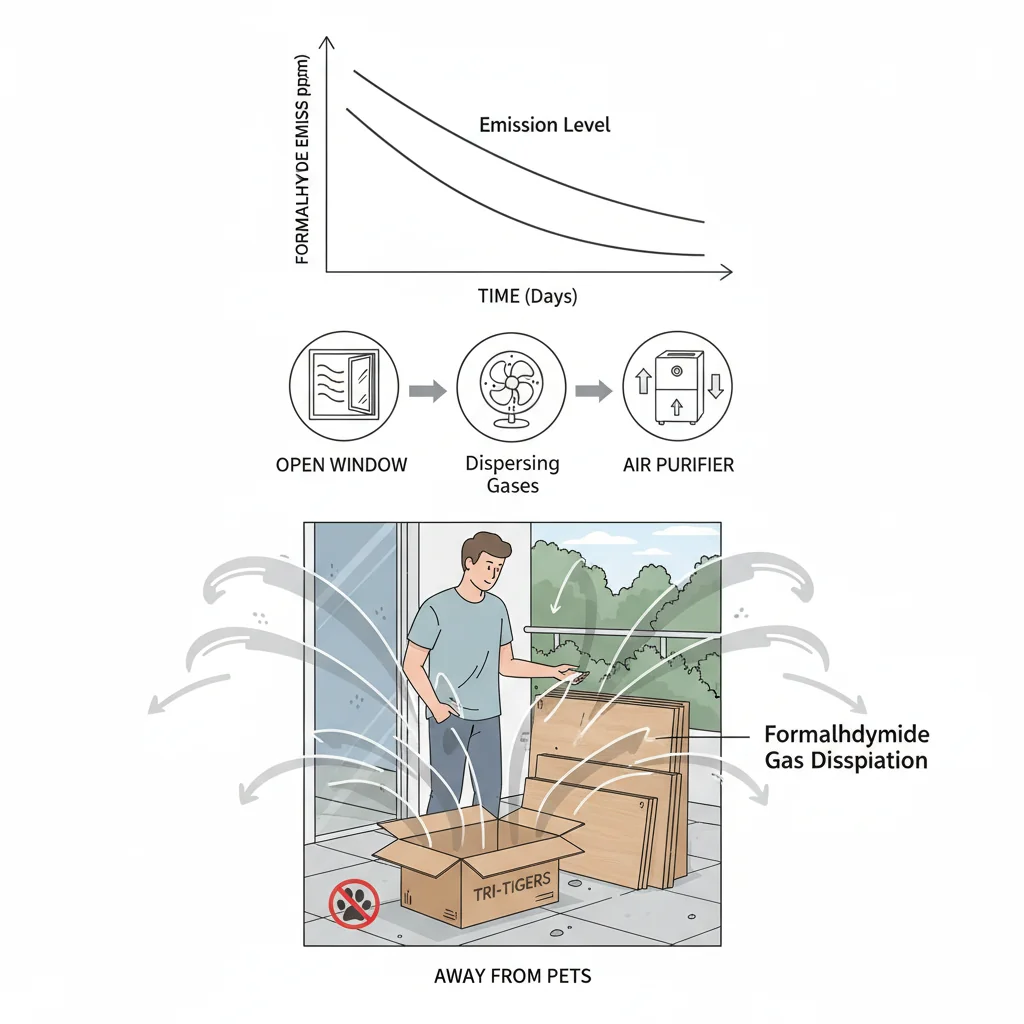
Last summer, a distributor in Germany called me after unboxing a batch of E1-rated MDF sideboards—he noticed a strong chemical odor in the warehouse for several days. The reality is, MDF always releases the highest formaldehyde emissions right after production and especially during the first week indoors. This “decay curve” is well documented. I’ve seen air concentrations drop by more than 60% after just 10–14 days in a well-ventilated warehouse versus less than 30% in closed spaces. That’s why timing and airflow matter so much.
From my experience, buyers sometimes overlook the basics: good ventilation immediately after delivery. Cracking a window or running an exhaust fan does more than you’d expect. If possible, I suggest unboxing your flat-pack furniture on a balcony, in a garage, or even outdoors—especially for larger items like a 25mm MDF shelving unit. In France, one retailer insisted on HEPA air purifiers in their display rooms—air quality tests showed a faster return to safe levels, especially important for sensitive customers and pets.
Another practical tip: keep new MDF pieces, especially those with melamine or PVC edge banding, at least a few meters away from pet zones for the first one to two weeks. Sensitive groups pick up odors and symptoms quickest. Most households reach background levels (well under 0.1 ppm) in this window with steady ventilation. The safest route? Allow two weeks before heavy indoor use, and always combine fresh air with filtration if you can. It’s a simple step that makes a real difference.
Formaldehyde emissions from MDF can decrease by over 60% within the first two weeks if stored in a well-ventilated environmentTrue
MDF exhibits a characteristic emission 'decay curve' where initial high formaldehyde levels drop significantly with time and proper ventilation, reducing indoor air concentrations by more than 60% after 10–14 days compared to less than 30% in unventilated spaces.
The formaldehyde emissions from E1-rated MDF sideboards are negligible and pose no risk to pets regardless of ventilation or timeFalse
Although E1-rated MDF emits lower formaldehyde levels than higher-rated panels, initial emissions after production can still be significant and decrease with time and ventilation. Without adequate airing out, pets can be exposed to elevated formaldehyde levels, which can irritate their respiratory systems.
Key takeaway: Peak MDF off-gassing occurs when items are first unboxed. Allowing furniture to ventilate in a well-aired space, ideally outside primary pet zones, for at least 1–2 weeks helps reduce formaldehyde exposure to safer levels for pets and sensitive households.
Can Pet Chewing Make MDF Hazardous?
Chewing, scratching, and licking by pets significantly increase MDF furniture hazards. These behaviors expose raw MDF, resulting in ingestion of particles or fiber dust that can irritate pets’ mouths, throats, and intestines. Additionally, damaged finishes may expose adhesives or solvents that present further toxicity risk, especially to chewers like rabbits, rodents, dogs, and some cats. Effective sealing and maintenance are crucial.
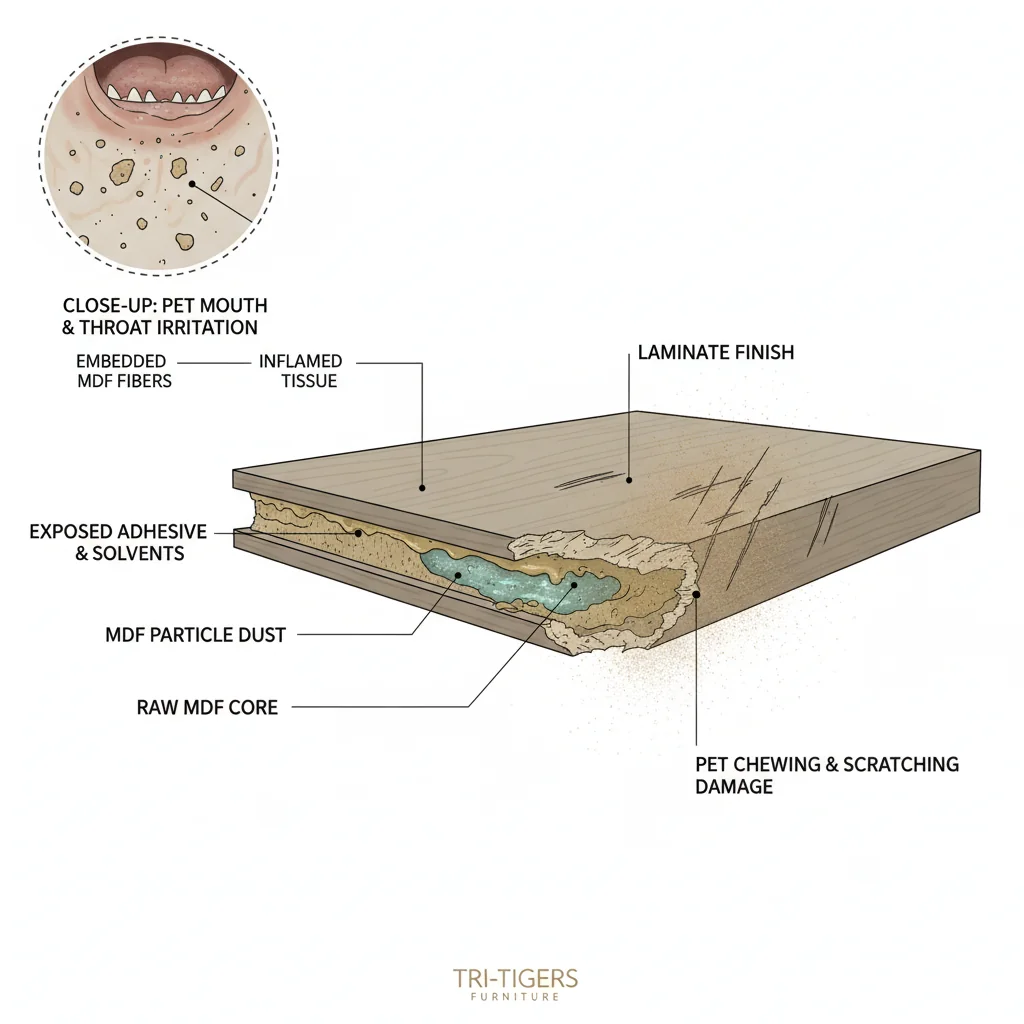
I’ve worked with several German retailers who underestimated pet risks with MDF furniture. One Berlin pet shop owner ordered E1-rated MDF shelving6—standard 18mm board, melamine finish, PVC edge banding. Within months, rabbit owners complained about chewed edges. The moment a pet bites, scratches, or licks through edge banding or surface laminate, they reach the raw MDF. Unlike plywood, these fibers break down easily, releasing dust and sometimes loose particles. Pets can ingest both fibers and traces of the adhesives that hold MDF together. These adhesives, even when compliant with EU standards, may still irritate sensitive animals—especially if the exposed area is large.
Here’s what matters most in pet-accessible settings: unsealed edges are the weak link. I’ve seen 40HQ containers (about 1,200 flat-pack pieces) rejected in France after inspections found chewed MDF residue in display units. Edge banding thickness7 matters—a 2mm PVC edge holds up far better than 0.4mm melamine, especially if you expect heavy chewing. Don’t forget surface finish—modern melamine laminate is tough, but once breached, even E0 board is a risk. Some clients ask about using MR-MDF (moisture resistant), but that only helps with humidity, not chewing.
If it’s unavoidable to use MDF where pets could chew, I always recommend: seal exposed edges with water-resistant paint or PU lacquer, inspect furniture weekly, and keep bitter sprays handy—with vet approval. Ultimately, if rabbits or rodents are in play, consider plywood or solid wood for cage interiors instead. Repair any damaged finish immediately. Prevention is a lot easier than cleanup.
When the melamine surface and PVC edge banding of MDF furniture are compromised by pet chewing, the exposed MDF fibers can release formaldehyde at levels detectable by specialized sensors, potentially irritating small pets' respiratory systemsTrue
E1-rated MDF contains low formaldehyde emissions, but once the protective surfaces are damaged, the exposed core can emit formaldehyde gas. This can negatively affect sensitive animals, as small pets have more vulnerable respiratory tracts compared to humans.
E1-rated MDF furniture is entirely non-toxic to pets even if they chew through the surface layers because the resin binders used in MDF are specifically formulated to be pet-safeFalse
While E1 MDF meets low formaldehyde emission standards for humans, the resin binders and wood fibers are not formulated to be safe for ingestion by pets. Chewing through surface finishes exposes pets to dust and particles that can be harmful if ingested or inhaled.
Key takeaway: Pets that chew, scratch, or lick MDF furniture face added risks from ingesting fibers, adhesives, or finishing chemicals. Heavy chewers and gnawers are especially vulnerable. Preventive strategies include sealing all edges, selecting pet-safe finishes, prompt repair, and consulting with a veterinarian before use in pet-accessible settings.
How Should MDF Furniture Be Placed for Pets?
To minimize exposure risks, MDF furniture for pet environments should feature E0/E1 or CARB Phase 2 certification and verified low-VOC finishes8. Select fully laminated or melamine-faced panels, not bare boards. Avoid placing new MDF items near pet beds, crates, or litter boxes, especially in areas with poor ventilation, and consider alternative materials in main pet zones for sensitive animals.

Here's what matters most when you’re placing MDF furniture in homes with pets—selection and smart location both play a role. I’ve visited dozens of German homes where owners asked for advice after noticing their cats preferred avoiding the new shelving. Usually, it comes down to air quality. Certified panels—E1 or E0 for Europe, CARB Phase 2 for the US—are non-negotiable if you care about health, especially for sensitive breeds or older pets. I always advise buyers to ask for emission certificates during sourcing, not just take spec sheets at face value.
To reduce exposure, opt for fully laminated or melamine panels with at least a 1mm PVC edge banding, top and bottom. Bare or partially finished boards off-gas more, especially in tight spaces. One Polish importer I worked with switched from unlaminated 18mm boards to sealed PET panels—complaints about pet allergies in their retail customer base dropped by over 30%.
Placement is just as important as material choice. Avoid setting new MDF items directly beside pet beds, crates, or litter pans. Freshly unpacked panels can release odor for several days, even when E1-rated. In smaller UK flats, I’ve seen pets develop mild respiratory issues where MDF pieces were concentrated in one poorly ventilated room. I suggest spreading out furniture and using air purifiers for the first week.
If your pets have a history of asthma or chemical sensitivity, solid wood or formaldehyde-free materials in primary pet zones are the safest solution. For everyone else, prioritizing certified MDF and good ventilation makes a real difference.
MDF panels certified to E0 or CARB Phase 2 emit formaldehyde at levels below 0.5 mg/m³, which is generally safe for sensitive pets when properly ventilatedTrue
E0 and CARB Phase 2 certifications limit formaldehyde emissions to very low levels, reducing respiratory risks for pets since formaldehyde can cause irritation or avoidance behavior in animals like cats. Proper ventilation further minimizes exposure.
Placing MDF furniture near a pet’s feeding area helps neutralize formaldehyde emissions by absorbing toxins through food particlesFalse
MDF emissions are related to off-gassing of formaldehyde compounds, which cannot be neutralized or absorbed by pet food. In fact, placing furniture near feeding areas may expose pets directly to higher concentrations of emissions due to proximity. Ventilation is key to managing air quality, not food placement.
Key takeaway: Certified low-emission MDF and safe coatings, combined with strategic placement away from pets’ main resting or living areas, reduce health risks. Dispersing furniture and prioritizing well-ventilated spaces or alternative materials for sensitive pets further enhances safety in environments shared with animals.
How Can MDF Furniture Stay Pet-Safe?
Proper maintenance minimizes MDF emissions and dust in pet zones. Immediately seal any freshly cut or drilled MDF edges, as exposed core areas increase VOC release. Regularly inspect for pet-related surface damage, and clean with a damp—not wet—cloth to avoid swelling. Replace swollen, deeply scratched, or chewed panels, especially where pets sleep or play, to maintain a safe environment.
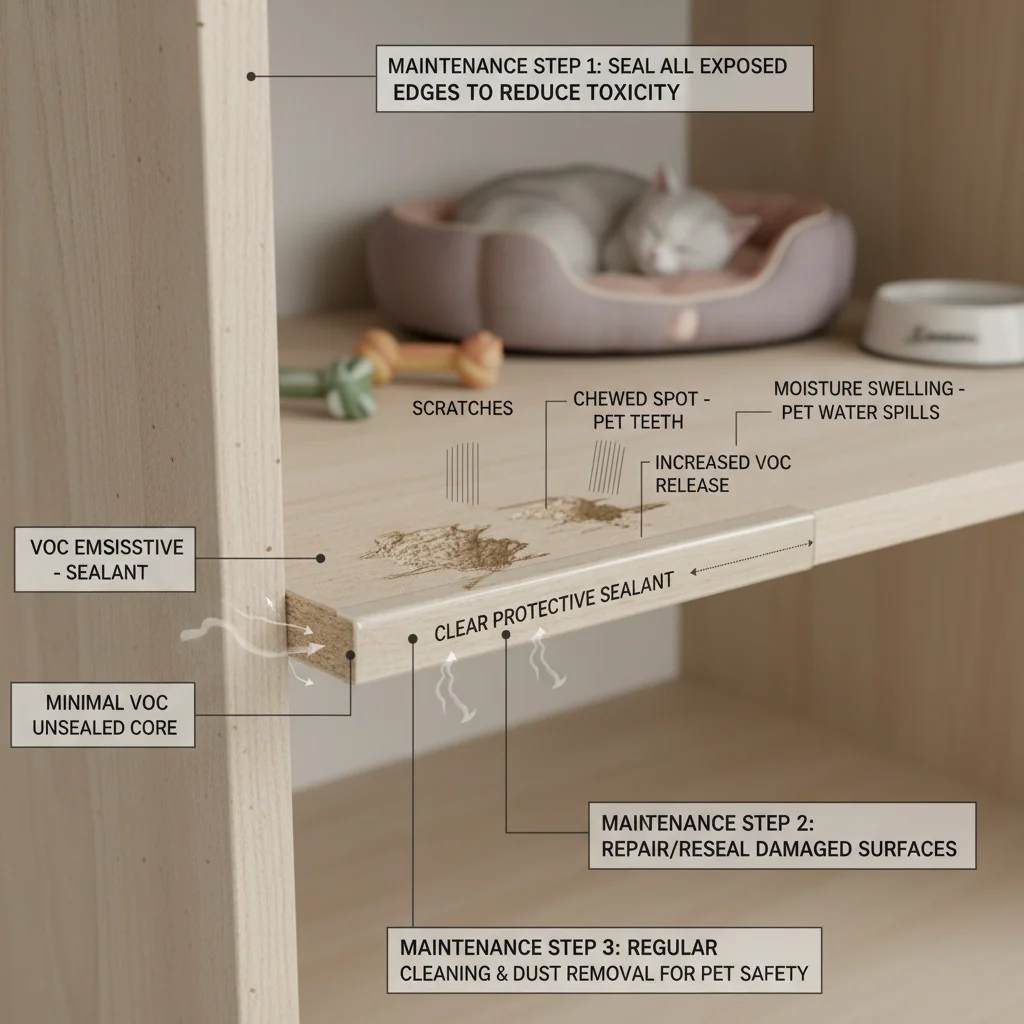
The biggest mistake I see, especially with pet owners in Germany and France, is overlooking sealed edges on DIY-cut MDF9. What often happens is someone modifies a flat-pack cabinet—cuts a hole for ventilation or reroutes cables—then leaves that raw MDF core exposed. The problem? Unsealed edges release more formaldehyde and dust—especially risky for pets with smaller airways. European buyers should always insist on E1 or even E0-rated MDF10, but even the best rating means little if new cuts go unsealed.
Just last quarter, a UK importer sent photos showing deep scratches and bite marks on a batch of painted MDF play units for cat cafés. The damaged surface wasn’t just unsightly—it created pockets for the core to absorb moisture and shed fibers. From my experience, that’s when swelling starts, especially on standard 16mm or 18mm boards. Once MDF swells or flakes, it loses strength and may trap bacteria—a real issue near pet sleeping or feeding zones. I suggested they replace those panels entirely; in high-wear areas, swapping out damaged sections is far safer than a patch-up.
I always tell partners: after any adjustment, reseal fast. Use suitable edge banding (PVC or ABS, minimum 1mm thick) or apply a dedicated sealant at once. Clean up dust with a damp cloth (never soaking wet) to protect both the surface and your pets. Regular inspection is key: chewed, swollen, or deeply scratched panels must be replaced, not just for looks but for safety. That’s how you keep both your furniture—and your pets—in top shape.
Exposed raw MDF edges can emit up to 3 times more formaldehyde than sealed surfaces, significantly increasing respiratory risks for pets with sensitive airwaysTrue
Raw MDF edges lack the protective seal that contains formaldehyde emissions from resins; studies show unsealed cuts dramatically increase airborne formaldehyde release, which is particularly harmful to pets like cats and small dogs prone to respiratory issues.
Applying any common household paint on MDF edges is sufficient to stop formaldehyde emissions and make furniture completely safe for petsFalse
Not all paints create airtight seals; only specialized sealants or primers designed for MDF can effectively block formaldehyde vapor. Household paints without formaldehyde-blocking properties allow continued emission from raw MDF edges, maintaining the risk to pets.
Key takeaway: Consistently sealing, cleaning, and inspecting MDF furniture helps limit toxic emissions and structural deterioration in homes with pets. Quickly resealing any exposed edges and replacing badly damaged panels are critical steps for maintaining safety near pet living, sleeping, or feeding areas.
When Should MDF Be Avoided for Pets?
Avoiding MDF is recommended in homes with very small or poorly ventilated rooms, where multiple MDF pieces are present, or when pets have respiratory sensitivities. Solid wood or formaldehyde-free boards emit less formaldehyde and withstand pet chewing better, making them safer choices for enclosures, habitats, and heavy-chewing breeds. Mechanical damage exposes the MDF core, increasing risk.
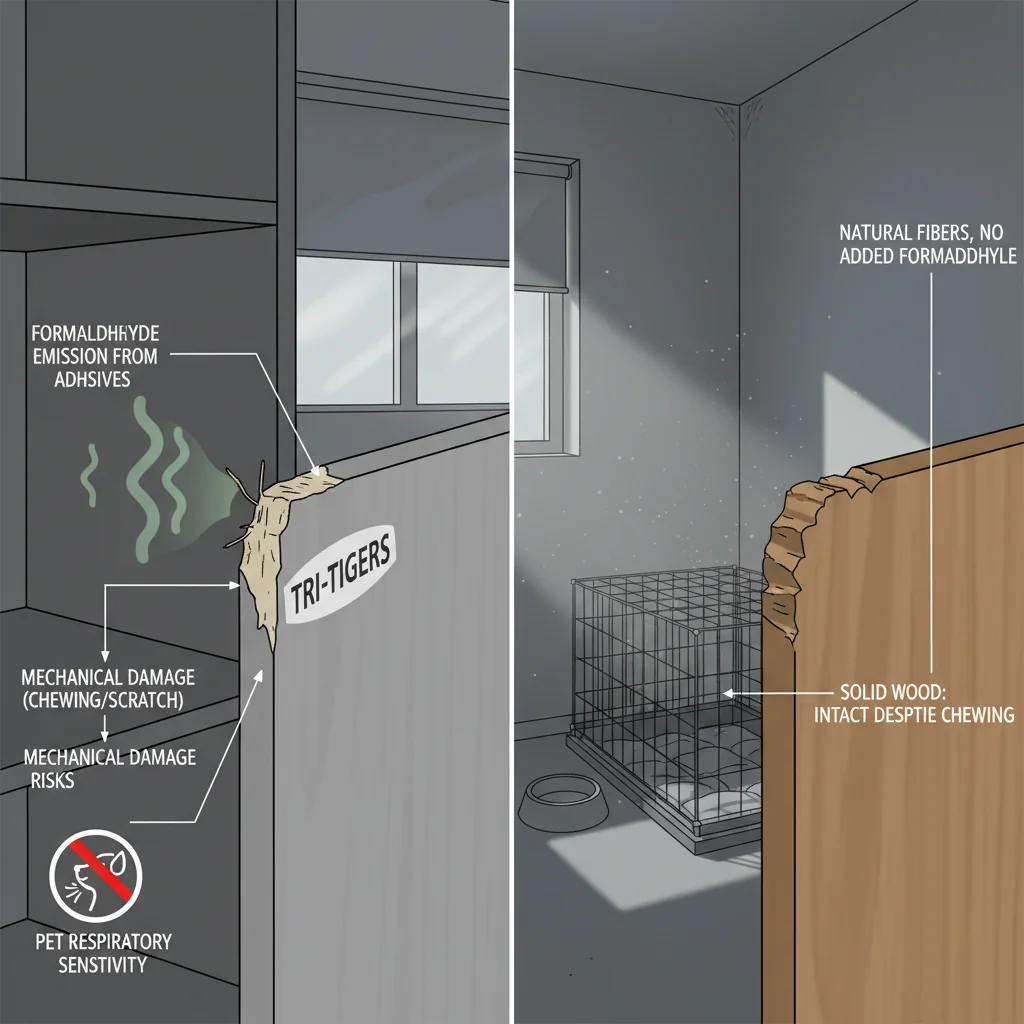
To be honest, the spec that actually matters is indoor air quality when you’re choosing MDF for pets. I’ve seen several importers from Germany and the UK struggle with returns after selling MDF-based pet enclosures into homes with limited ventilation. Even E1-rated MDF—certified for low formaldehyde emissions—can build up VOCs if you have multiple pieces packed into a small room. One customer in Frankfurt shipped 1,000 flat-pack cat condos using standard 16mm MDF with melamine finish. Within two months, they got at least a dozen complaints from owners with asthmatic cats—poor air circulation amplified every off-gas trace.
Mechanical damage is another overlooked issue. Heavy-chewing breeds or gnawing pets (like rabbits and rodents) will eventually break through even a durable PVC edge. Once the MDF core is exposed, moisture and saliva accelerate board breakdown, and the risk of direct particle ingestion jumps. I always recommend solid wood or phenol-formaldehyde (PF) bonded plywood for crates or habitats where destructive chewing is likely—they cost 20-40% more at order, but prevent expensive after-sales problems.
If your end customer’s rooms are under 10m², or if buyers specifically note respiratory sensitivities, it’s smart to avoid MDF—even low-emission grades. Alternatives like E0-rated plywood or formaldehyde-free particleboard have higher MOQs (typically 500+ units per SKU) and slightly longer lead times, but the health and durability benefits justify the premium. My suggestion? Request lab test data before committing, and don’t cut corners on board type for pet applications.
E1-rated MDF panels can still emit enough volatile organic compounds (VOCs) to affect indoor air quality when multiple pet enclosures are placed in a poorly ventilated roomTrue
E1 certification limits formaldehyde emissions to 0.1 ppm, but cumulative VOC release from numerous MDF units, especially in confined spaces, can increase pollutant levels and impact sensitive animals. This is why even low-emission MDF can cause air quality issues in pet environments.
MDF with a melamine finish completely prevents the release of formaldehyde and VOCs, making it safe for use in any indoor environment with pets regardless of ventilationFalse
Although a melamine finish provides a sealed surface, it does not fully eliminate formaldehyde or VOC emissions from the core MDF material. Over time, emissions can still escape through edges and joints, particularly in environments with limited airflow, potentially impacting indoor air quality.
Key takeaway: MDF panels, even low-emission types, are not suitable for small, poorly ventilated spaces or for pets with breathing issues or destructive chewing behavior. In these high-risk situations, paying more for solid wood or formaldehyde-free engineered boards is the safer, long-term choice.
Is Low-Emission MDF Safe for Pets?
Modern low-emission MDF, when certified to E0/E1 or CARB Phase 2 standards11 and finished with low-VOC coatings, releases minimal formaldehyde and is generally considered safe for pets in well-ventilated rooms. Risks increase with uncertified, poorly sealed, or heavily chewed MDF. Certified, encapsulated furniture minimizes toxicity concerns for most healthy dogs and cats.
Let me share something important about pets and MDF safety. Over the past decade, I’ve helped dozens of German and UK buyers source kids’ and pet furniture in MDF—this question comes up every season. The reality: not all MDF is equal for animal health. The safest option is always E0 or E1-rated boards12, which release far less formaldehyde than older types. For example, a retailer in the Netherlands insisted on E0 for their flat-pack cat trees, plus a full PU lacquer seal. They paid about 8% extra per CBM, but never received a single complaint about odor or pet reactions over three years.
Technical details matter for real-world pet safety. With modern E1 or CARB Phase 2 MDF (≤0.1 ppm and ≤0.05 ppm formaldehyde, respectively), plus a quality edge banding and sealed surface, emission risks are minimal after initial air-out. From my experience, proper factory finishing—at least two PU topcoats or melamine surfaces, and 1mm PVC edge banding—keeps even sensitive pets comfortable. Still, if a dog or cat starts chewing exposed MDF, especially at joints or under furniture, that’s a problem. Unsealed cut edges release more emissions and fibers, so I always suggest checking every edge for full encapsulation.
Airing out new furniture in a spare room for a week helps—most off-gassing drops by 80% during that time. For healthy dogs and cats, certified, fully sealed MDF in a ventilated room is almost always a safe, cost-effective choice. If your pet has respiratory sensitivities or allergies, discuss placement and materials with your vet, and consider solid wood or plywood in high-use zones.
E0-rated MDF boards emit less than 0.5 mg of formaldehyde per liter in a 24-hour desiccator test, making them significantly safer for pet environments than higher emission gradesTrue
E0 classification limits formaldehyde emissions to below 0.5 mg/L, reducing respiratory irritation risks for sensitive animals compared to older MDF types, which can emit several times higher levels.
Applying a polyurethane lacquer seal on MDF surfaces completely eliminates all formaldehyde emissions, guaranteeing zero exposure risk for petsFalse
While PU lacquer reduces surface emissions by creating a barrier, it does not completely eliminate formaldehyde off-gassing from the MDF core, so some minimal exposure remains possible over time.
Key takeaway: Most healthy pets can safely live with modern low-emission, certified MDF furniture that is fully sealed and placed in ventilated areas. Risks rise with uncertified material, strong odors, or heavy pet contact—always consult a veterinarian for guidance if pets show sensitivities or underlying health issues.
Conclusion
We’ve explored what sets MDF apart and which factors make it safer—or riskier—for pets in your furniture range. From my years working with European buyers, I’ve seen that prioritizing low-emission, well-sealed boards really makes a difference, especially in applications close to pets’ living spaces. It’s easy to fall into the “10% trap”—chasing a lower price only to spend more managing quality complaints later on. If you’re unsure about the best material for your market or need guidance on meeting both safety and performance expectations, feel free to get in touch. I’m happy to share ideas that have worked for importers with similar concerns. Every buyer’s product mix is a bit different, so it’s worth making informed choices that fit both your brand and your customers’ needs.
References
-
Expert insights into urea-formaldehyde resin emissions, health risks for pets, and safer alternatives in MDF manufacturing. ↩
-
In-depth details on E1 emission limits, European regulations, and how E1 compares to stricter standards like E0 and CARB P2 for safety. ↩
-
Covers technical benefits of edge banding thickness, materials like PVC or ABS, and their role in minimizing formaldehyde release and dust exposure. ↩
-
Expert analysis on CARB Phase 2 formaldehyde thresholds, its role in reducing indoor air toxins, and suitability near pets and confined spaces. ↩
-
In-depth details on low formaldehyde emissions standards and why E1-rated MDF can still pose indoor air quality risks in small rooms. ↩
-
Comprehensive overview of E1-rated MDF standards, emission limits, and suitability for pet-safe furniture applications. ↩
-
In-depth analysis of edge banding materials and thickness impact on MDF durability against pet chewing and long-term damage. ↩
-
Explains how low-VOC coatings reduce harmful emissions, making MDF safer for pets with evidence on off-gassing and curing effects. ↩
-
Technical explanation of how sealing MDF edges prevents VOC emissions and dust release, protecting pets and extending panel life. ↩
-
In-depth guide on formaldehyde emission limits for E1 vs E0-rated MDF and their impact on pet health and indoor air quality. ↩
-
Authoritative explanation of CARB Phase 2 formaldehyde limits, testing methods, and compliance for safer indoor air quality. ↩
-
In-depth review of low-formaldehyde standards E0 and E1, detailing emission limits and benefits for pet-safe furniture. ↩
Published: 2025-12-29