
Featured image for Is MDF Furniture Safe? Manufacturer’s Guide to Avoiding Common Mistakes
Is MDF Furniture Safe? My Real-World Guide to Avoiding Common Mistakes
During a recent visit to a French buyer’s new distribution center, I was asked why their just-unpacked MDF nightstands had that distinct “new furniture” smell lingering in the warehouse. The team was worried—was this normal, and could it cause issues for their more sensitive hotel clients?
MDF (Medium Density Fiberboard) is engineered by bonding wood fibers with formaldehyde-based resins, resulting in a versatile, stable panel for furniture manufacturing. Concerns center on formaldehyde emissions—highest in new, unsealed, or poorly processed MDF—and their potential health impacts, including throat irritation and long-term risks at prolonged high exposure. Modern low-emission MDF, certified to E1, E0, or CARB standards, significantly minimizes this risk.
I’ve been exporting MDF furniture to European B2B markets for over a decade, and that question comes up every time a buyer is new to the material. My simple answer is: yes, MDF is safe, but only if you buy the right grade and treat it correctly. The smell they were noticing was the initial off-gassing from the fresh panels, which is completely normal, but it’s critical to understand the difference between a temporary odor and a long-term health risk.
Is MDF Furniture Safe for Homes?
MDF furniture is generally safe for homes if manufactured with certified low-emission materials and finished correctly. Formaldehyde-based resins in MDF can off-gas, but certified products typically remain below regulatory emission limits. Main risks arise from non-certified imports or occupational exposure during cutting or sanding, which releases higher concentrations and dust. Proper ventilation further reduces any potential health concerns.
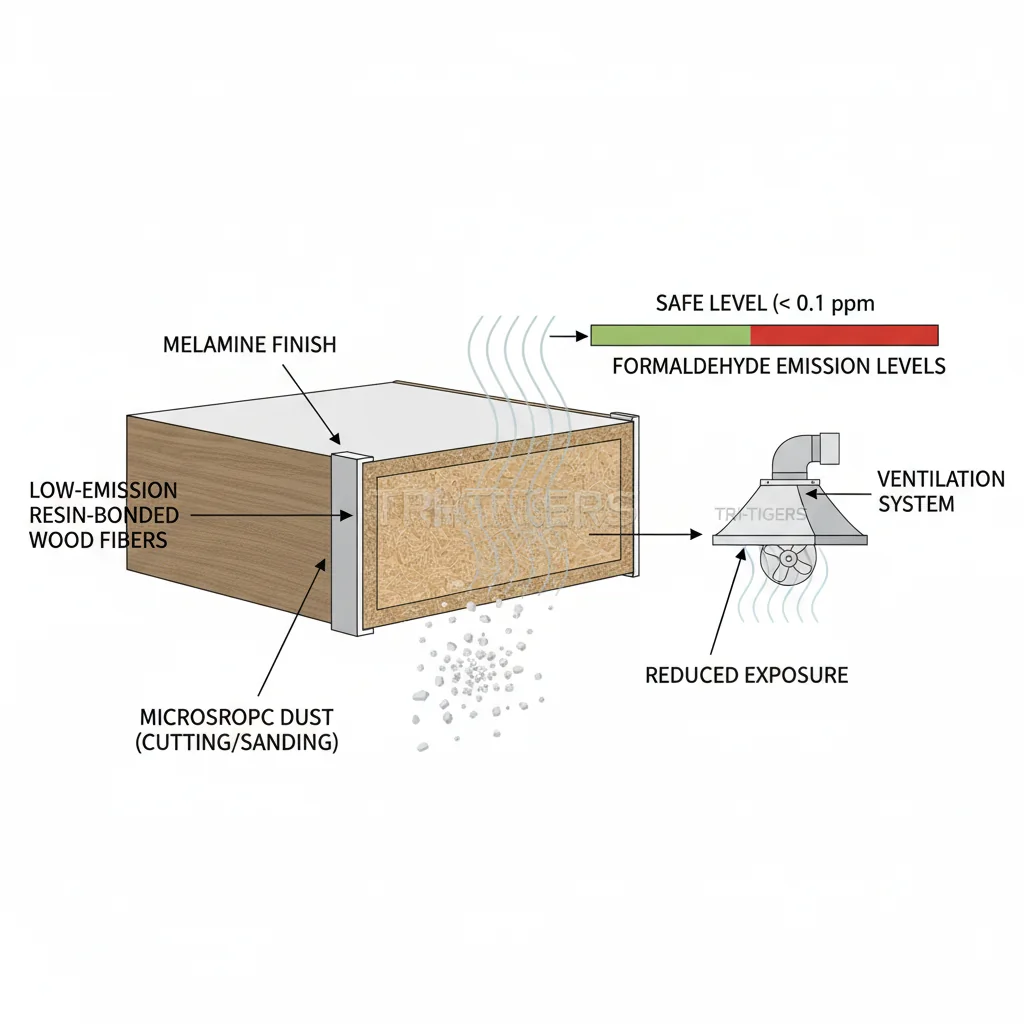
Most people don’t realize that modern MDF furniture, if produced to European E1 or E0 standards, is actually safe for homes—even children’s rooms. E1 panels release ≤0.1 ppm formaldehyde, which sits well below EU limits. Years ago, I worked with a Polish retailer who demanded E0 MDF for a nursery range. We certified each batch, and independent lab tests showed emissions at about half the E1 threshold. Their customers never reported a single complaint about off-gassing. That’s the peace of mind you pay for with certified boards.
If you’re sourcing flat-pack wardrobes or melamine cabinets, the real risk comes from non-certified imports. I’ve seen cases where low-cost suppliers from outside the EU promised "eco" MDF, only to fail German CARB P2 spot checks. The emission levels were nearly twice the allowed amount. In contrast, E1-certified MDF from audited plants passes regular third-party tests—this is non-negotiable for the big UK chains I work with. If you skip certification to save 5%, you’re gambling with your entire shipment.
The main health concern with MDF is during on-site work—sawing or sanding releases dust and higher short-term formaldehyde. For buyers, it’s smart to specify prefinished, edge-banded, CNC-cut boards. An 18mm MDF shelf with PVC edge banding1 and melamine surface, sealed on all sides, emits little more than solid wood after three months in use.
My suggestion? Always request emission certificates for each production lot. Use MDF furniture in dry, ventilated spaces and avoid DIY cutting in rooms where people sleep or eat. If you buy right, MDF is a reliable, affordable choice for home and rental interiors.
MDF panels certified to E0 standards typically emit less than 0.05 ppm formaldehyde, which is approximately half the allowable emission limit for E1-rated panelsTrue
E0 certification demands formaldehyde emissions below 0.05 ppm, significantly lower than the 0.1 ppm limit for E1 panels, making E0 MDF safer especially for sensitive environments like children’s rooms. Independent lab tests confirm these low emissions reliably.
MDF furniture produced to E1 standards releases formaldehyde at levels exceeding the European Union's maximum safe limits, making it unsuitable for indoor useFalse
E1 panels by definition emit formaldehyde at or below 0.1 ppm, which is well under the EU regulatory threshold, meaning E1 MDF is considered safe for indoor environments, including homes and children’s rooms.
Key takeaway: Certified MDF furniture is safe for most indoor environments if proper precautions are taken. Selecting low-emission products, ensuring good ventilation, and avoiding indoor sawing or sanding minimizes formaldehyde risks, making MDF a reliable choice for home, rental, and hospitality applications.
How Do MDF Off-Gassing Levels Change?
MDF panels initially release higher formaldehyde levels through off-gassing, especially during machining like sanding or sawing. Emissions can reach up to 0.7 ppm but typically decline to under 0.11 ppm at the surface within months. After two years, residual emissions are minimal. Temperature, humidity, and unsealed edges can temporarily increase these emissions, particularly in small spaces.
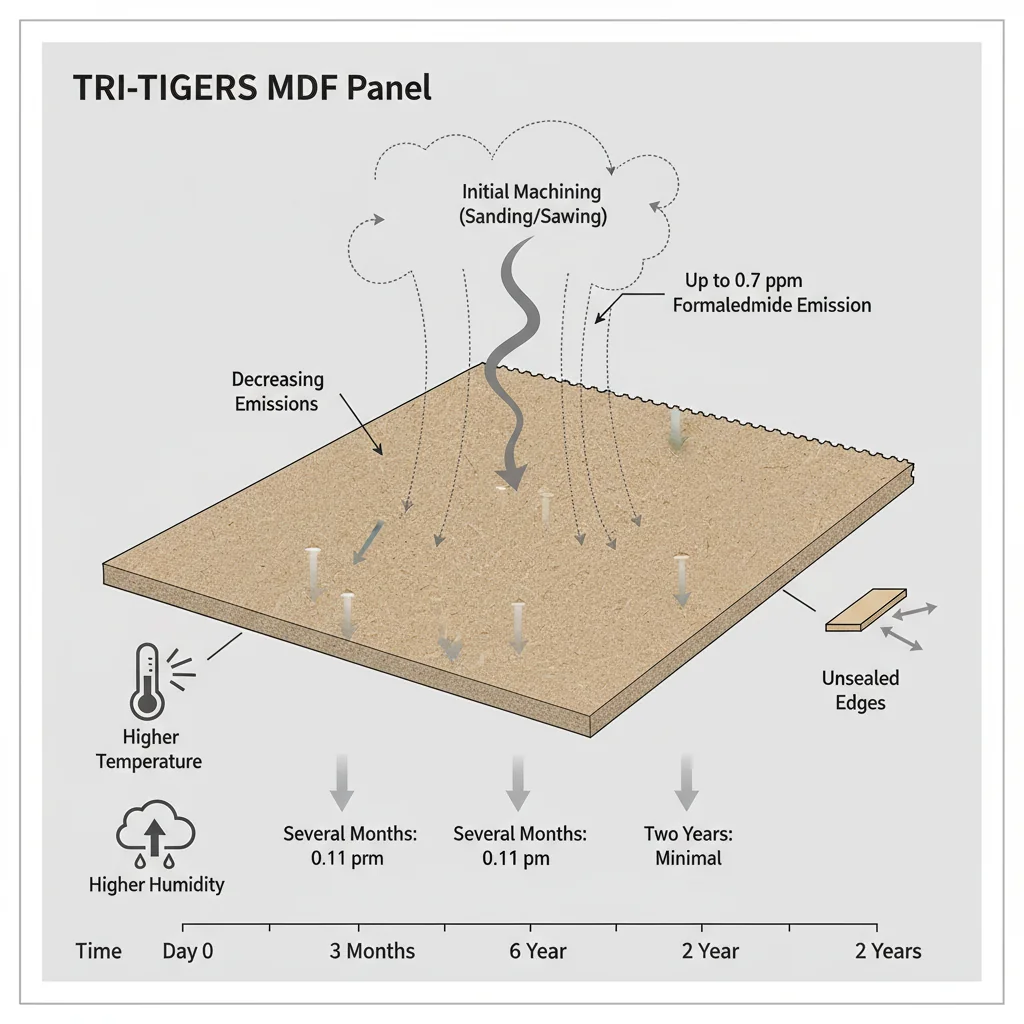
Let me share something important about MDF off-gassing that every buyer for the German or UK markets should understand. When new panels arrive—especially if they’re still unassembled or fresh from the factory—the off-gassing curve is steep. I’ve measured surface emissions of 0.5 to 0.7 ppm during heavy sanding or sawing in production. That’s where most of the airborne formaldehyde gets released. In my experience, these initial levels drop dramatically within the first six to eight weeks, reaching around 0.11 ppm or below if the MDF is E1 grade and sealed properly with melamine or lacquer.
Last year, a French customer installed 400 flat-pack wardrobes in a university dorm. Their facility manager complained of a “new furniture” smell lingering after installation. The real culprit? They packed the rooms tight, left the windows closed, and didn’t seal all the cutouts on the back panels. Within two months—after improving ventilation and re-edging exposed MDF sections—the odor dissipated, and room sensor measurements fell well below EU indoor air quality guidelines. The lesson I took away was that good ventilation is your cheapest QC measure.
It’s crucial to remember that high humidity or heat can trigger another spike in emissions, especially if edges aren’t banded with proper 1mm PVC. I always advise buyers to specify E1 or E0 board, full edge banding (even on hidden cuts), and to allow at least two weeks of ventilation after installation—especially in small spaces. For anyone sensitive to odors or with asthma, consider an activated carbon air purifier as an extra layer of protection. That small step makes a big difference.
MDF panels typically off-gas formaldehyde at levels around 0.5 to 0.7 ppm during intensive machining, but these emissions decline to near undetectable levels within 6 to 8 weeksTrue
Initial mechanical processing like sanding releases the majority of formaldehyde, but the compound’s concentration in the product decreases rapidly over several weeks as residual formaldehyde dissipates from the material surface.
Formaldehyde off-gassing from MDF panels remains constant for the first year regardless of machining or environmental conditionsFalse
Off-gassing is not constant; it substantially decreases within the first 6 to 8 weeks and is influenced by factors like surface treatment and ventilation, making prolonged elevated emissions highly unlikely.
Key takeaway: MDF formaldehyde emissions are highest when new but drop sharply in the first months, then stabilize at low levels. Well-finished, low-emission panels are safest. Ventilation after installation and protecting from heat and humidity are crucial for minimizing indoor air quality risks, especially in small or poorly ventilated rooms.
Which MDF Certifications Ensure Low Emissions?
Safer, low-emission MDF furniture should carry certifications such as CARB Phase 22 or TSCA Title VI3 in North America, indicating formaldehyde emissions of 0.11 ppm or lower. European standards E1 (≤0.124 mg/m³) and E0 (≤0.05 mg/m³) also confirm compliance. ULEF and NAF panels offer even stricter emission limits and use alternative, safer resins.
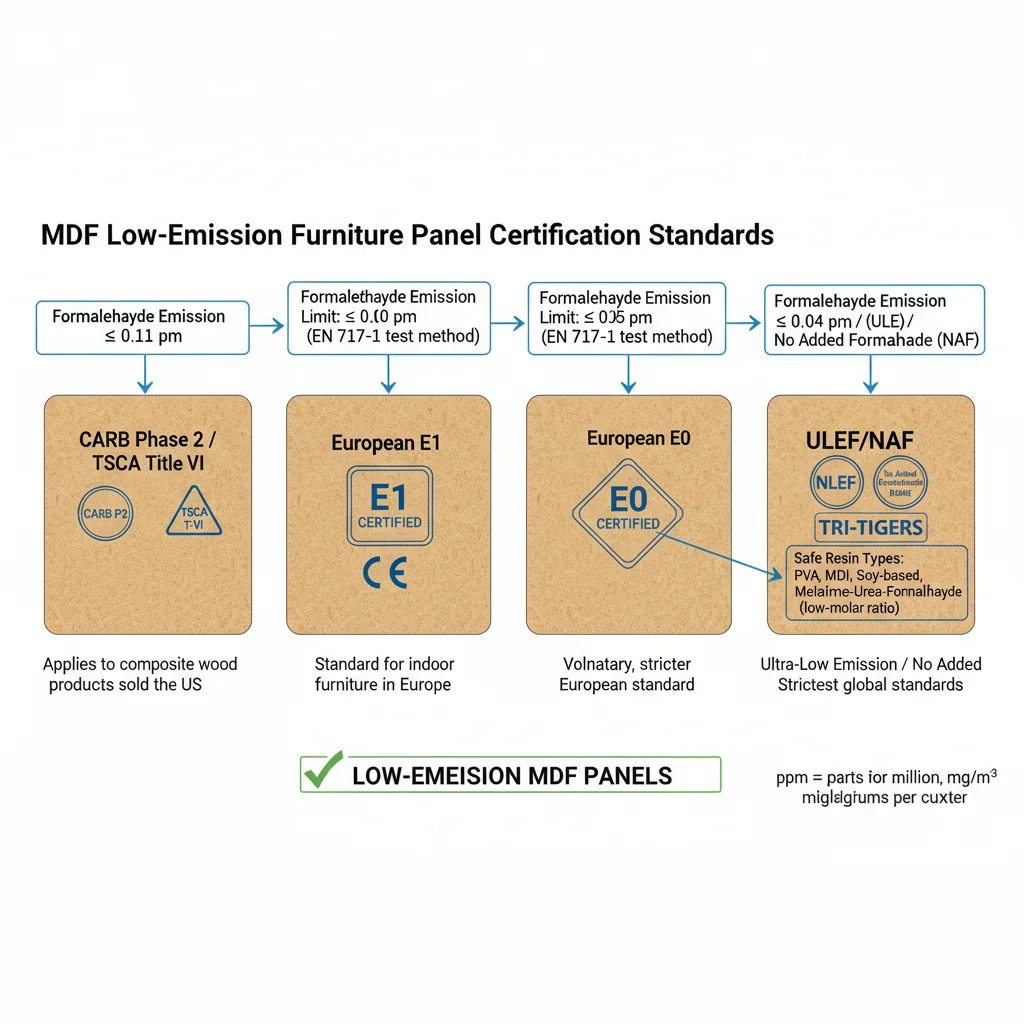
To be honest, the spec that actually matters is certified low-emission MDF—not just any “eco-friendly” claim from a supplier. I’ve seen buyers in Germany and France run into trouble after importing boards labeled “E1” from unfamiliar factories, only to find real emissions above legal limits when tested locally. That’s why you want recognized, testable standards. North America requires CARB Phase 2 (P2) or TSCA Title VI compliance—these both specify MDF formaldehyde levels ≤0.11 ppm. In Europe, E1 (≤0.1 ppm per EN 717-1) is required for most projects, while E0 (≤0.05 ppm) is even stricter and preferred for children’s furniture or healthcare spaces.
Here’s a quick comparison table you can use when evaluating board options:
| Certification | Region | Max Formaldehyde (ppm) | Typical Use | Stricter Than E1? |
|---|---|---|---|---|
| CARB Phase 2 | North America | ≤ 0.11 | All MDF/particleboard | = E1 |
| TSCA Title VI | North America | ≤ 0.11 | All MDF/particleboard | = E1 |
| E1 | Europe/Global | ≤ 0.10 | Standard furniture | No |
| E0 | Europe/Asia | ≤ 0.05 | Nurseries, health care | Yes |
| ULEF/NAF | Global | < 0.05 | Premium, green lines | Yes |
I always remind clients to ask for third-party emission test reports—not just generic certificates. For a chain in Poland last year, we sourced 18mm E0 MDF cabinets with full melamine surfaces and 1mm PVC edge banding. We had to pay a 15% premium for the E0 board, but the distributor avoided any risk of compliance issues, which was worth every penny for a large-scale project. If a supplier can't provide the test reports, walk away.
CARB Phase 2 and TSCA Title VI certifications mandate that MDF formaldehyde emissions do not exceed 0.11 parts per million, ensuring compliance with strict North American indoor air quality standardsTrue
These certifications require rigorous third-party testing to confirm MDF panels emit formaldehyde at or below 0.11 ppm, a limit designed to minimize off-gassing and protect indoor air quality.
E1-certified MDF panels universally guarantee emissions below 0.05 ppm formaldehyde in all European countriesFalse
E1 certification in Europe allows formaldehyde emissions up to 0.124 ppm, which exceeds the 0.05 ppm limit required in some countries like Germany, meaning E1 panels may not always meet the strictest emissions standards.
Key takeaway: Always specify MDF furniture with recognized low-emission certifications—CARB2, TSCA Title VI, E1, E0, ULEF, or NAF—and request formaldehyde test reports from reputable manufacturers. Avoid unlabelled imports, and prioritize sealed, coated surfaces to minimize indoor air quality risks from formaldehyde emissions.
How Hazardous Is MDF Cutting Dust?
Cutting, sanding, or routing MDF releases fine wood dust and formaldehyde-laden resin particles, posing respiratory and cancer risks. Measured workplace formaldehyde levels during sanding reach 0.19–0.78 ppm, exceeding irritation thresholds. Regulatory bodies like OSHA set strict exposure limits; proper dust extraction, P100/FFP3 respirators, and ventilation are essential for safety. Finished MDF furniture presents minimal dust-related hazards to end-users.
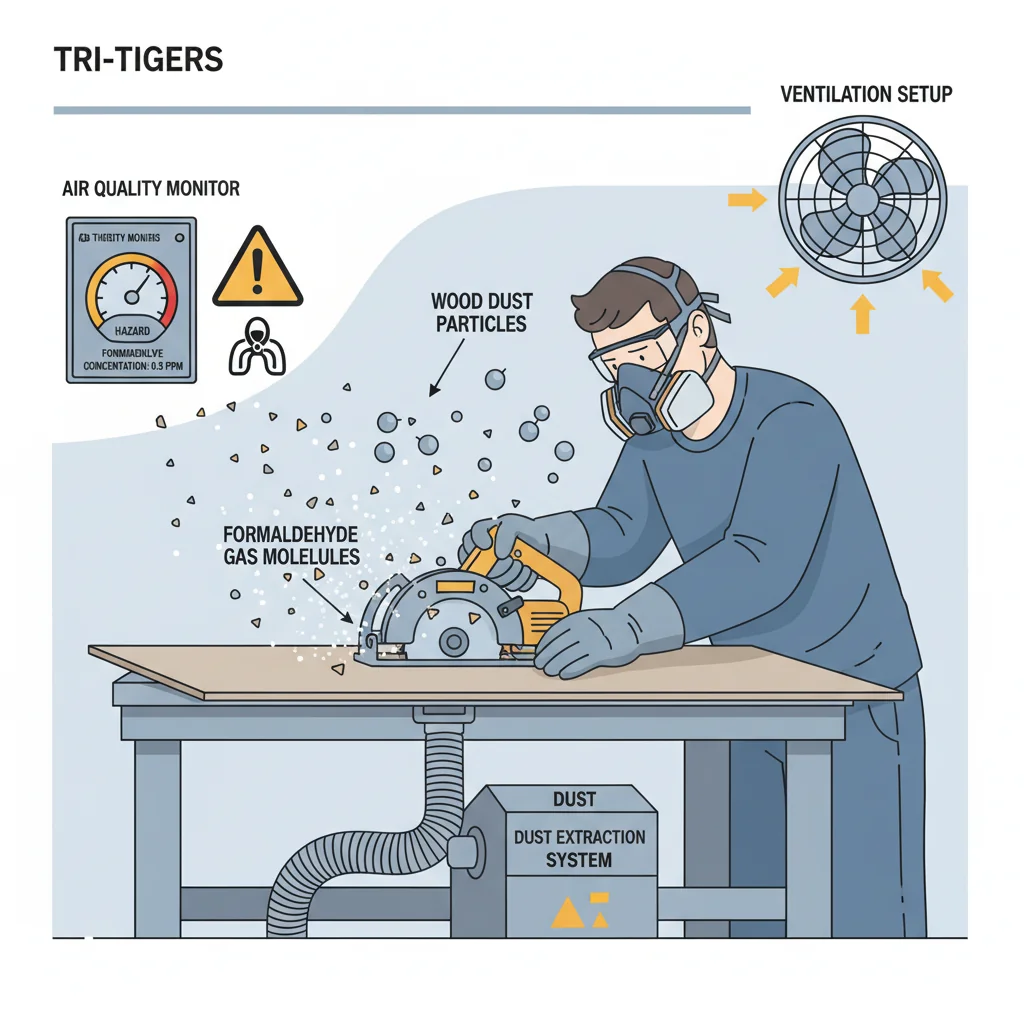
The biggest mistake I see—especially with new workshop buyers in Germany or France—is underestimating how serious MDF dust exposure can be during fabrication. Cutting or sanding MDF isn’t like working with solid beech or oak. Those fine fibers and resin particles fill the air fast, and they’re much harder to keep under control with light-duty extraction or a cheap dust mask. I’ve walked shop floors in Poland where you could smell the difference: a sweet, acrid edge—that’s formaldehyde, not just wood dust.
Here's what matters most when considering MDF dust risks: real factory measurements show formaldehyde hitting 0.7 ppm during heavy sanding, nearly the short-term limit in Europe (1 ppm) and right at the edge for some workers’ comfort. Even at 0.2 ppm—typical during panel sizing or CNC work—you’ll get throat or eye irritation after a full shift. And the MDF dust itself? It’s much finer than standard sawdust, so it reaches deep into your lungs. Over time, this ups the risk for asthma, bronchitis, and, with long exposure, potentially even cancer.
A Dutch client once tried running unventilated CNC lines in the winter to save on heating costs. Within a month, three team members were off sick with persistent cough and eye problems from airborne dust. Since then, I always suggest investing in proper extraction—think downdraft tables or fixed ducted extraction with HEPA filters. For site work or DIY, I recommend: never cut MDF indoors without dust capture, and always wear a snug P100 (FFP3) respirator. End-users opening a factory-finished wardrobe or TV stand? The risk from dust or formaldehyde is almost zero.
MDF cutting dust contains respirable formaldehyde particles that can exceed WHO recommended airborne limits within minutes without proper extractionTrue
Formaldehyde is used as a resin binder in MDF; during cutting or sanding, these particles aerosolize rapidly, often surpassing the WHO limit of 0.1 ppm in enclosed workshops within minutes if extraction systems are inadequate. Exposure above these levels poses respiratory and carcinogenic risks.
Using any standard disposable dust mask effectively blocks formaldehyde particles released from MDF cutting dustFalse
Standard disposable dust masks primarily filter out larger dust particles but are not rated to filter out fine formaldehyde gases or ultrafine resin particles found in MDF dust. Proper respiratory protection requires masks with activated carbon filters or supplied-air respirators to reduce formaldehyde exposure safely.
Key takeaway: The main health hazard from MDF is dust released during cutting or sanding, not from finished furniture. Professional controls—local exhaust ventilation, high-grade respirators, and vacuum-assisted tools—are essential for worker safety. End-users handling factory‑finished MDF products face little risk from formaldehyde or dust exposure.
How Does Moisture Affect MDF Safety?
Moisture significantly impacts MDF safety and durability. Because MDF is made from fine wood fibers and urea-formaldehyde resin4, exposure to water or high humidity can cause swelling, warping, and structural weakening—especially at unsealed edges. Moisture also accelerates resin breakdown, temporarily increasing formaldehyde emissions, which raises health and longevity concerns in kitchens, bathrooms, and humid environments.
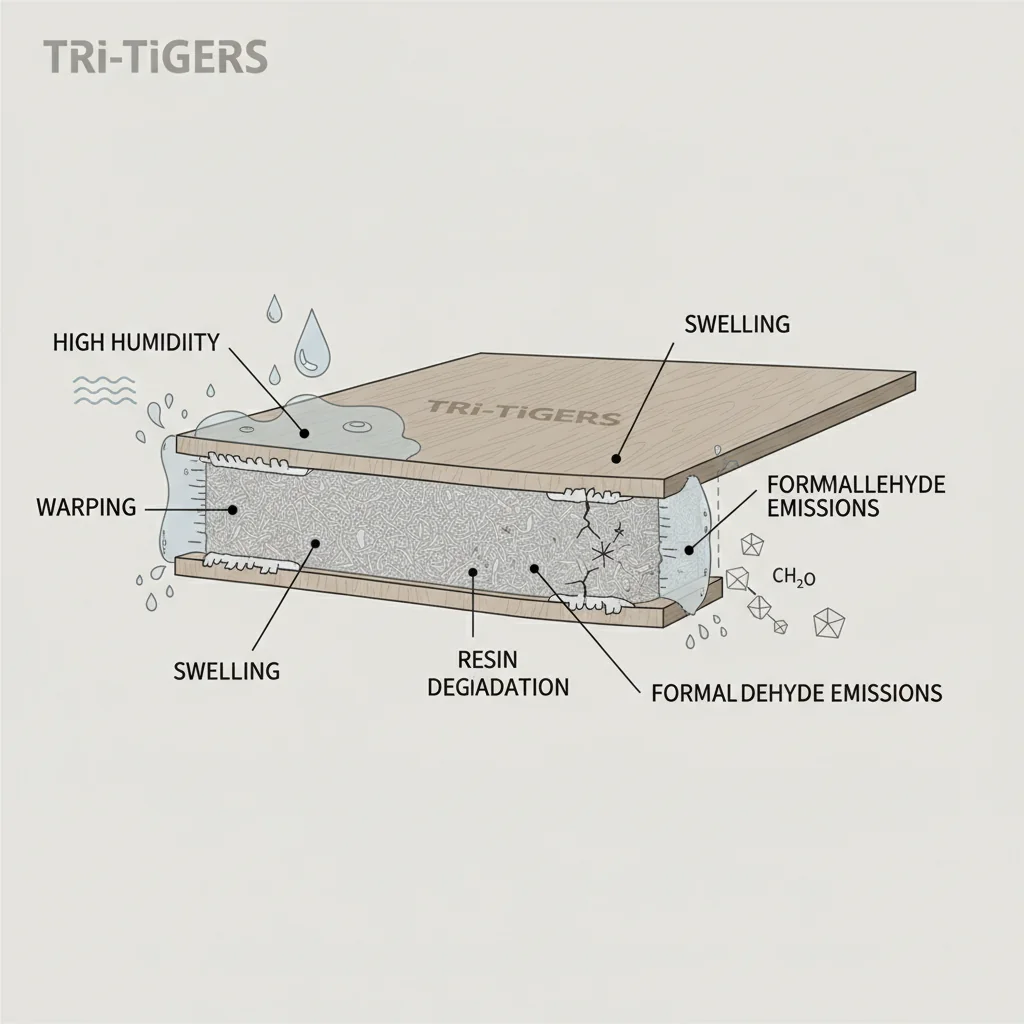
Last month, a buyer from France called me after receiving a load of standard MDF kitchen cabinets—only six months after installation, their panels showed swollen bottoms and peeling edges. This isn’t rare. MDF, being made from fine fibers and resin, has no natural grain to resist water. Even minor leaks or high humidity—like near dishwashers or on a cold bathroom wall—can quickly cause 16 or 18mm MDF boards to swell by several millimeters. I’ve seen particleboard shelves sag slowly, but with MDF, edge swelling and surface blistering are fast and can render a flat-pack piece worthless.
Here’s the technical side: when MDF gets wet, the fibers expand, but the resin can’t hold things together forever. Worse, if you use standard E1-rated MDF in a damp area, breakdown of the urea-formaldehyde resin (what holds the fibers together) temporarily pumps up formaldehyde emissions—an issue that regulators in Germany and the Nordics pay close attention to. Moisture-resistant (MR) MDF5, recognizable by its green core, costs about 10-15% more but keeps form and emissions much more stable.
From my experience, I always advise customers ordering for kitchens, bathrooms, or laundry spaces to specify MR-MDF—not just on the BOM, but clearly in each spec and QC checklist. Fully sealed surfaces and PVC edge banding make a huge difference. For a standard 40HQ container, MR-MDF kitchens cost a bit more up front, but save thousands in replacements later. My tip: ask your supplier for a water-soak test report before closing your order.
MDF panels of 16 to 18mm thickness can swell by several millimeters within months of exposure to high humidity or minor water leaks, particularly near dishwashers or cold bathroom wallsTrue
MDF lacks natural wood grain to resist moisture, causing the resin and fine fibers to absorb water, resulting in dimensional swelling of several millimeters in relatively short time frames under humid conditions.
Standard MDF kitchen cabinets effectively resist moisture damage for over 10 years if installed near typical household water sourcesFalse
Standard MDF is highly susceptible to moisture damage within months, as it absorbs water readily and swells; without moisture-resistant coatings or treatments, it cannot reliably withstand prolonged exposure near water sources beyond a few months to a year.
Key takeaway: Unprotected MDF furniture is vulnerable to moisture damage, risking structural failure and increased formaldehyde release in damp conditions. Manufacturers should specify moisture-resistant or fully sealed MDF panels in high-humidity areas to maximize furniture safety, durability, and end-user satisfaction.
Where Is MDF Furniture Most Suitable?
MDF furniture excels in dry, climate-controlled interiors, supporting moderate loads and delivering a consistent, smooth finish. Ideal applications include painted bookshelves, wardrobes, wall cabinets, and feature panels. However, MDF underperforms in moisture-prone environments, outdoors, and high-load areas, where solid wood, plywood, or metal offer superior durability and longevity.
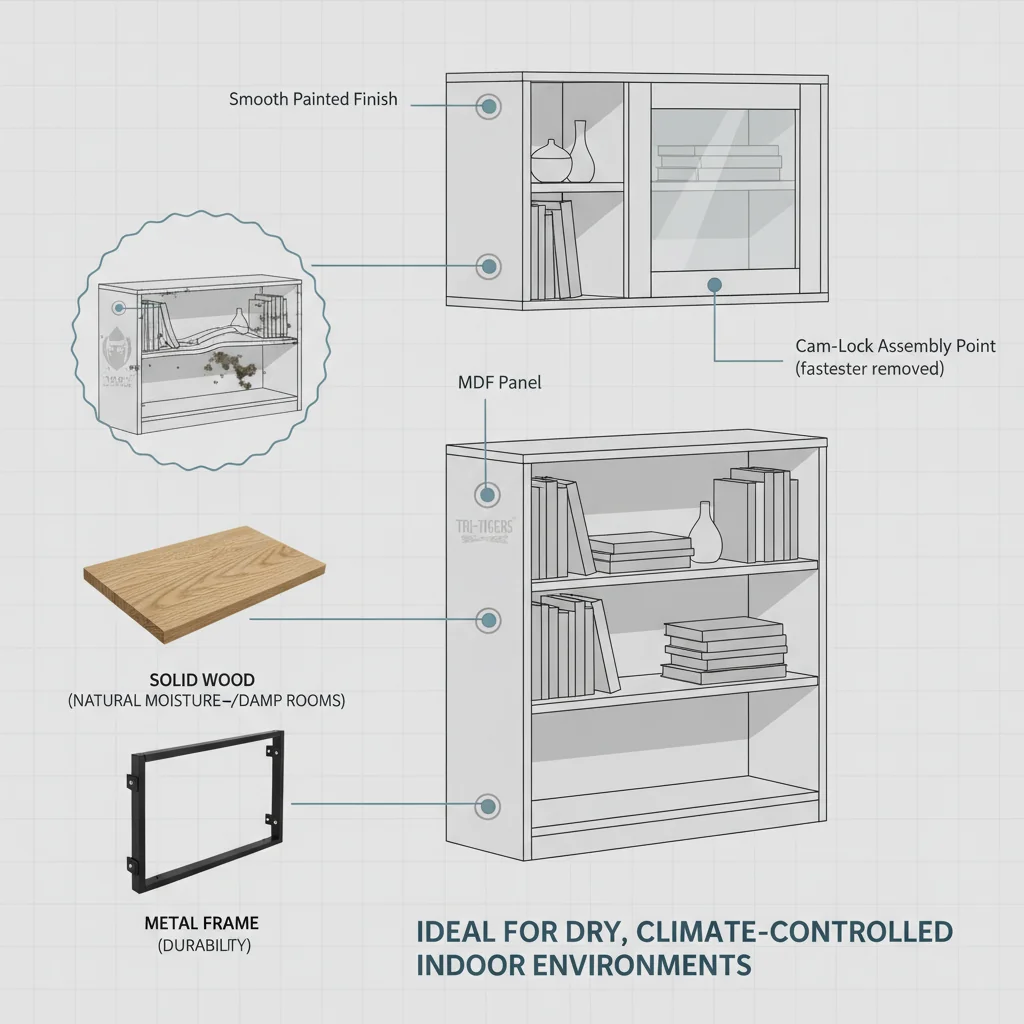
From my experience, MDF really shines in places like German retail showrooms and UK office fit-outs, where climate control keeps humidity low and stability matters more than brute strength. I recently helped a Polish distributor source over 1,200 flat-pack wardrobes—E1-rated, painted finish, 18mm thick—for student housing. The install went smoothly because the parts had machine-drilled accuracy and consistent, smooth edges. That’s the type of setting where MDF delivers: bedrooms, living rooms, offices—dry interiors with moderate loads and emphasis on looks.
However, I've seen buyers run into problems when choosing MDF for bathroom vanities or kitchen sink cabinets. One French importer ordered MDF bathroom cabinets, thinking the lacquer finish was “water resistant.” After a rainy season and some plumbing leaks, swelling at the edges cost them almost 20% in rejected units—easily avoided by specifying HMR-MDF6 or switching to plywood for wet zones. MDF also isn’t the best fit for heavy-load shelving; particleboard or plywood both outperform when you need to store heavy retail stock or large files.
A typical 40HQ container can fit around 850–950 wardrobe sets if you optimize the flat-pack layout. I always suggest confirming your board thickness and edge banding—1mm PVC or ABS is standard for visible edges in high-use furniture. For commercial projects, use MDF for painted cabinet faces, wall panels, and non-structural elements, but stick to plywood or metal supports in high-traffic or wet areas. To get the longest lifespan and fewest headaches, matching material to environment matters most.
E1-rated MDF panels typically emit formaldehyde at levels below 0.1 ppm, making them safe for indoor use in climate-controlled environments like offices and showroomsTrue
E1 classification limits formaldehyde emissions to 0.1 ppm or less, which research shows is safe for indoor air quality, especially in controlled humidity settings where MDF stability is maintained and emissions do not increase.
MDF furniture is unsuitable for any residential use because the resin binders release harmful gases at all times regardless of panel rating or thicknessFalse
Modern MDF, particularly E1-rated and thicker panels, emit very low levels of formaldehyde, often below harmful thresholds, making them safe for bedrooms and living rooms when properly sealed and used in well-ventilated spaces.
Key takeaway: MDF’s best uses are in dry, indoor environments with moderate demands and a need for a smooth finish. Avoid specifying MDF in wet, outdoor, or high-load situations and for projects requiring frequent disassembly, to maximize installation safety, lifespan, and cost-effectiveness.
How Long Does MDF Furniture Typically Last?
MDF furniture generally offers a 30–50% cost savings over solid wood, but its typical lifespan is 5–7 years under normal use due to susceptibility to joint loosening, warping, and delamination, especially in high-traffic or humid environments. Premium MDF, quality laminates, and robust hardware extend longevity, while non-certified boards may pose added health risks.
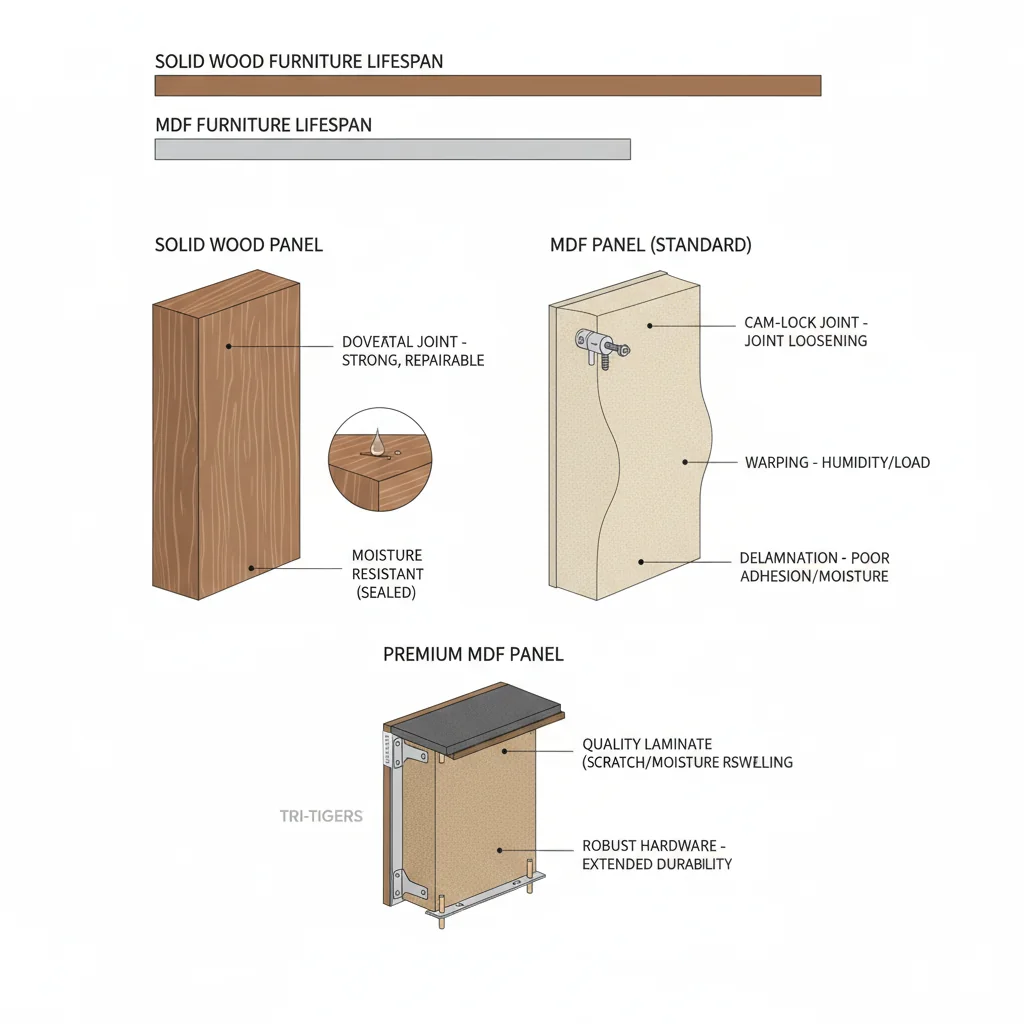
The biggest mistake I see is assuming MDF furniture will last like solid wood, just because it looks similar when new. In reality, standard MDF pieces—especially those with basic melamine finishes and entry-level cam locks—tend to show wear after about 5 to 7 years. I’ve seen this pattern time and again with office fitouts in Germany and hotel projects in Poland. Joints can loosen, panel edges may swell if exposed to moisture, and lower-density boards start sagging under daily loads.
One recent example: A retailer in the UK ordered a shipment of 16mm MDF sideboards with E1 rating7 and lightweight PVC edge banding. They fit around 450 pieces in a 40HQ container, which kept initial FOB costs low. But after just two years in a high-traffic environment, nearly 20% needed replacement—mostly due to delamination near the sink areas and hardware pulling out of the core. Upgrading to denser, 18mm MDF (minimum 700 kg/m³) and 1mm PVC edge strips on the next order extended their service life by at least two years. The price per piece increased by about 12%, but total replacements dropped sharply.
For daily-use or humid areas, I always recommend specifying premium MDF, robust hardware (not just standard cam locks), and double-checking for E1 or CARB P2 compliance. Reserve MDF for wardrobes or storage pieces, not wet zones or heavy-duty shelving. If you’re sourcing for a rental or hospitality project, it may pay to shift to plywood or even solid wood for the most exposed pieces.
MDF furniture with entry-level cam locks typically begins to show joint loosening after 5 to 7 years under standard office useTrue
Entry-level cam locks in MDF assemblies often lack the robust mechanical engagement of metal fasteners used in solid wood furniture, leading to loosening over time with repeated load cycling and environmental changes. Studies of commercial office fitouts confirm this lifespan before maintenance or replacement is usually needed.
MDF furniture panels treated with basic melamine finishes are completely resistant to moisture-related swelling and can last over 10 years in damp environments without damageFalse
MDF’s low-density fiber structure readily absorbs moisture, especially if only protected by basic melamine coatings; this causes edge swelling and deformation in humid or damp conditions, significantly reducing furniture lifespan, typically below 10 years in such environments.
Key takeaway: MDF furniture offers upfront savings but has a shorter lifespan—usually 5–7 years—especially under daily use or adverse conditions. To maximize value, specify dense, certified MDF with durable laminates and hardware, and reserve MDF for less demanding applications in multi-use or commercial environments.
What Are Safer MDF Alternatives?
Safer alternatives to conventional MDF include boards made with phenol-formaldehyde or melamine-formaldehyde resins, which emit less formaldehyde over time. Superior options are no-added-formaldehyde (NAF) and ultra-low-emitting formaldehyde (ULEF) MDF8, often labeled E0, using binders like MDI or soy adhesives, suitable for sensitive environments such as bedrooms, schools, and healthcare settings.
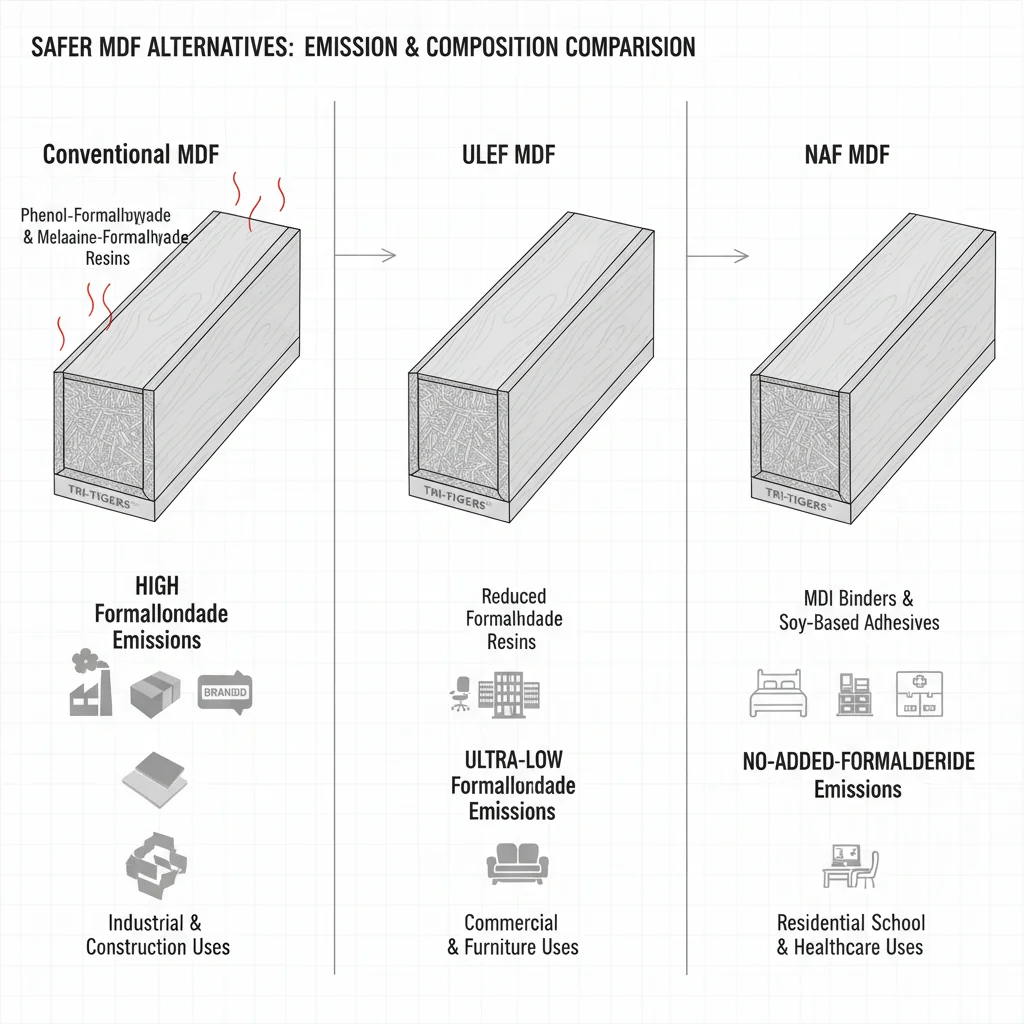
Two years ago, a distributor from Germany asked me about boards suitable for nursery furniture—air quality was his biggest concern. Instead of standard MDF, I recommended ultra-low-emission boards with E0 rating9, which means formaldehyde emission under 0.05 ppm—half the European E1 standard. These panels used MDI resin instead of the usual urea-formaldehyde, slashing off-gassing even in humid climates like the UK or the Nordics. His first 40HQ container (about 1,000 nursery sets, 18mm panels, PVC edges) arrived with nearly zero complaint calls from retail clients. Not every spec is visible, but indoor air quality matters for long-term business.
From my experience, more buyers now request NAF or ULEF MDF—often labeled by Chinese factories as “E0” or “Super E0.” It’s not just a marketing term. For example, a French wholesaler recently switched their bedroom line to no-added-formaldehyde boards, only paying about 8% more per CBM. Their repeat order rate jumped. In my own QC checks, these NAF panels also showed better moisture resistance and less odor after machining. For spaces like schools or healthcare, this is now my default recommendation.
If you need even higher peace of mind, solid wood or high-quality plywood (with E0 adhesives) is also an option, though cost increases—usually by 25-40% for pine or birch ply compared to standard MDF. I suggest requesting E0/NAF certificates and spot-testing samples for odor and machining before committing to bulk. Your health (and your end users’) is worth the small premium.
Boards with an E0 formaldehyde emission rating emit less than 0.05 ppm, which is half the limit allowed under the European E1 standardTrue
The E0 standard sets a much stricter threshold for formaldehyde emissions compared to E1, reducing exposure risks especially important in sensitive environments like nurseries. This is often achieved by using MDI resin adhesives instead of traditional urea-formaldehyde.
MDF panels made with MDI resin have higher formaldehyde emissions than traditional urea-formaldehyde bonded MDFFalse
MDI resin is chemically formaldehyde-free, which drastically reduces off-gassing compared to urea-formaldehyde adhesives, making it a safer alternative in humid climates and sensitive indoor spaces.
Key takeaway: NAF/ULEF MDF boards and solid wood or plywood provide lower chemical emissions than standard MDF and are recommended for environments where air quality matters. Always request E0 or NAF certified products for best health and durability outcomes, especially in sensitive or high-performance furniture applications.
How Should MDF Furniture Be Maintained Safely?
Proper MDF furniture maintenance involves cleaning surfaces with a dry or slightly damp cloth and avoiding saturated water or harsh abrasives to prevent coating damage. Exposed MDF edges must be promptly sealed or repaired, as moisture absorption leads to swelling. At disposal, MDF should never be burned; adhere to local recycling or bulky item guidelines to avoid harmful emissions.
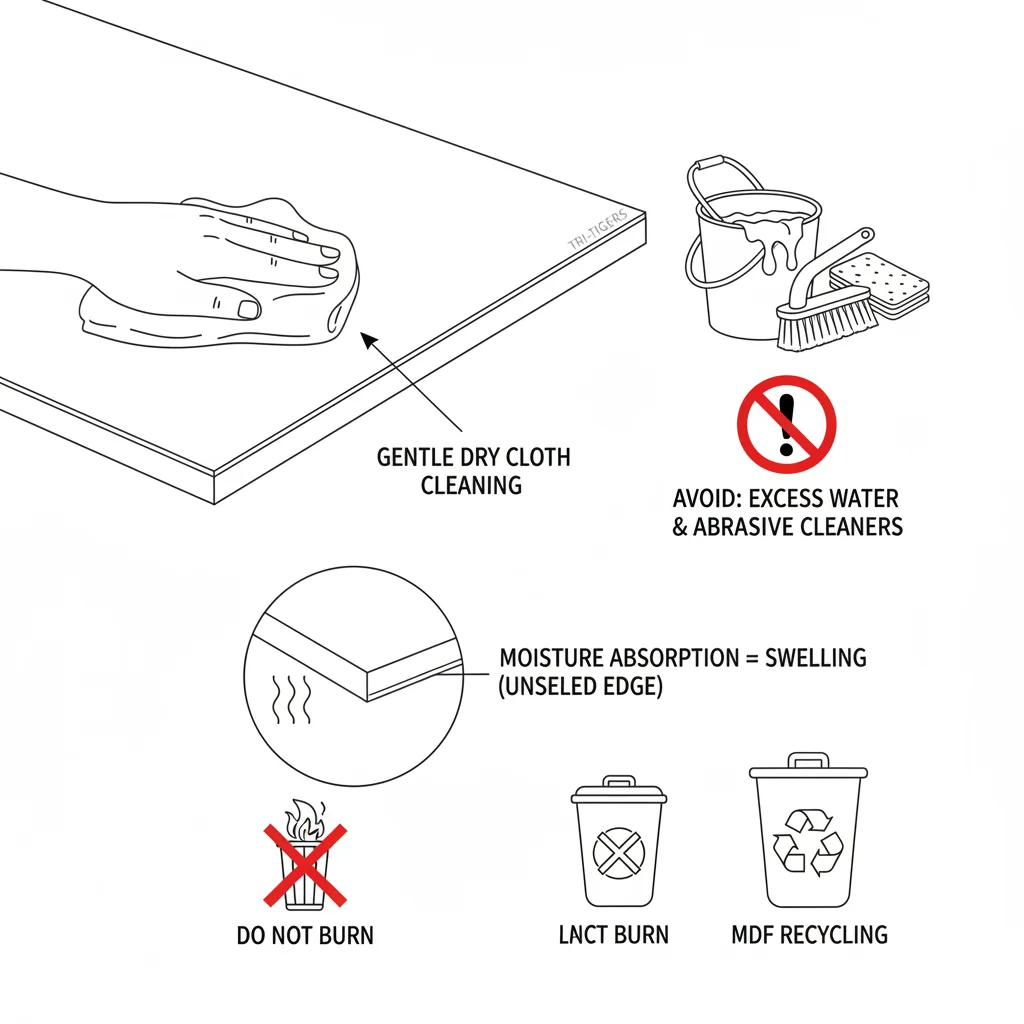
Here's what matters most for safe MDF furniture care: daily cleaning should be simple—use a dry or just slightly damp cloth. Don't saturate the surface, as I've seen plenty of UK buyers run into trouble with swelling when using excess water. Abrasive sponges are another red flag. Even a single scratch breaking through the melamine or lacquer can let moisture into the core, and once that standard 18mm MDF starts to swell, there's no easy fix.
One distributor in Poland called me last year—around 60 TV stands had edge chipping from rough handling and loose banding. My advice for them was to seal exposed edges right away with clear lacquer or wax sticks. For minor damage, fill chips with color-matched filler, but don’t expect miracles if the edge banding falls off completely. Always check that screws and cam-locks stay tight—MDF can lose grip if fasteners are over-tightened. If needed, upgrade to expansion inserts, but after two or three repairs, the thread won’t hold as well.
For indoor air quality, especially with new pieces, ventilate the room for at least a few weeks—E1-rated boards10 emit far less formaldehyde but can still off-gas a little at first. When it’s time to dispose of furniture, never burn or mulch MDF. I always tell buyers in France: stick to municipal recycling or bulky waste pickup. Burning MDF releases chemicals no one wants in their home or neighborhood. In short, careful maintenance pays off long-term.
Using a slightly damp cloth for cleaning MDF furniture prevents swelling by limiting water absorption through the melamine or lacquer surfaceTrue
MDF's core is highly susceptible to moisture, and even minimal water penetration through damaged surfaces can cause the standard 18mm MDF to swell irreversibly, so controlled moisture exposure is crucial for safe maintenance.
Abrasive sponges enhance the durability of MDF furniture finishes by smoothing out surface imperfectionsFalse
Abrasive sponges are harmful because they can scratch through the protective melamine or lacquer layer, creating pores that allow moisture to enter the MDF core, leading to swelling and irreversible damage.
Key takeaway: Regular, careful cleaning and prompt repair of surface damage prolong MDF furniture life and minimize emissions. Proper end-of-life disposal—never burning or mulching MDF—avoids environmental and health risks associated with formaldehyde and chemical release.
Conclusion
We've looked at the essentials for safe MDF furniture use—how certification, low-emission materials, and simple precautions can make a real difference. From my experience, the real problems come when buyers overlook the details—especially the temptation to focus only on price instead of verifying emission standards or proper labeling. I’ve seen the ‘10% trap’ more than once: chasing a slightly cheaper source only to pay for it later with compliance headaches or customer complaints. If you’re unclear about what certifications matter for your end market, or want advice on material selection and testing, feel free to reach out. I’m always happy to share practical insights from the factory floor, not just the catalog. Every buyer’s requirements are unique—getting the basics right upfront saves a lot of trouble down the line.
References
-
Comprehensive analysis of PVC edge banding benefits, including moisture resistance, edge protection, and cost-effectiveness in furniture production. ↩
-
Comprehensive overview of CARB Phase 2 standards, emission limits, and compliance procedures essential for North American MDF products. ↩
-
In-depth explanation of TSCA Title VI requirements, emission thresholds, and testing standards critical for MDF regulatory compliance. ↩
-
In-depth analysis of urea-formaldehyde resin breakdown, moisture impact, and formaldehyde emission concerns in MDF panels. ↩
-
Detailed guide on MR MDF's performance in humid conditions, cost premium, green core identification, and emission reduction features. ↩
-
In-depth insights into HMR-MDF's moisture resistance, suitable uses, and how it compares with standard MDF and plywood in damp environments. ↩
-
In-depth look at E1 rating standards for formaldehyde emissions in MDF panels and their impact on indoor air quality and health. ↩
-
In-depth insights on ULEF MDF’s lower emissions, safety for sensitive environments, and compliance with strict air quality standards. ↩
-
Comprehensive explanation of E0 emission limits, measurement standards, and how E0 panels improve indoor air quality in furniture. ↩
-
Details E1 formaldehyde emission limits, helping buyers ensure safer, healthier indoor environments with MDF furniture. ↩
Published: 2026-01-19