

Featured image for How to Maintain Plywood Furniture: Manufacturer’s Mistake-Proof Guide
How to Maintain Plywood Furniture: Manufacturer's Mistake-Proof Guide
A British wholesaler recently emailed me after a rainy week, worried his plywood kitchen cabinets were swelling at the corners—right after delivery to a new coastal project. It’s moments like these that remind me: with plywood furniture, what you don’t see on the outside can make or break its lifespan.
Plywood furniture is manufactured from multiple layers of wood veneer, glued together with grain directions at right angles to enhance strength and limit warping. While this layered structure provides considerable dimensional stability compared to solid wood, it introduces vulnerability at the glue lines1 and exposed edges. Moisture intrusion can lead to swelling, edge delamination2, and the breakdown of adhesive bonds—issues much harder to repair than surface scratches.
Why Is Plywood Furniture Maintenance Unique?
Plywood furniture requires special care due to its layered veneer construction, which provides dimensional stability but introduces vulnerable glue lines and exposed edges. If moisture penetrates these layers, edges may swell and delamination can occur—issues more severe than surface scratches. Sealing, edge-banding, and high-quality finishes reduce risk, making maintenance strategies distinct from those for metal or plastic furnishings.
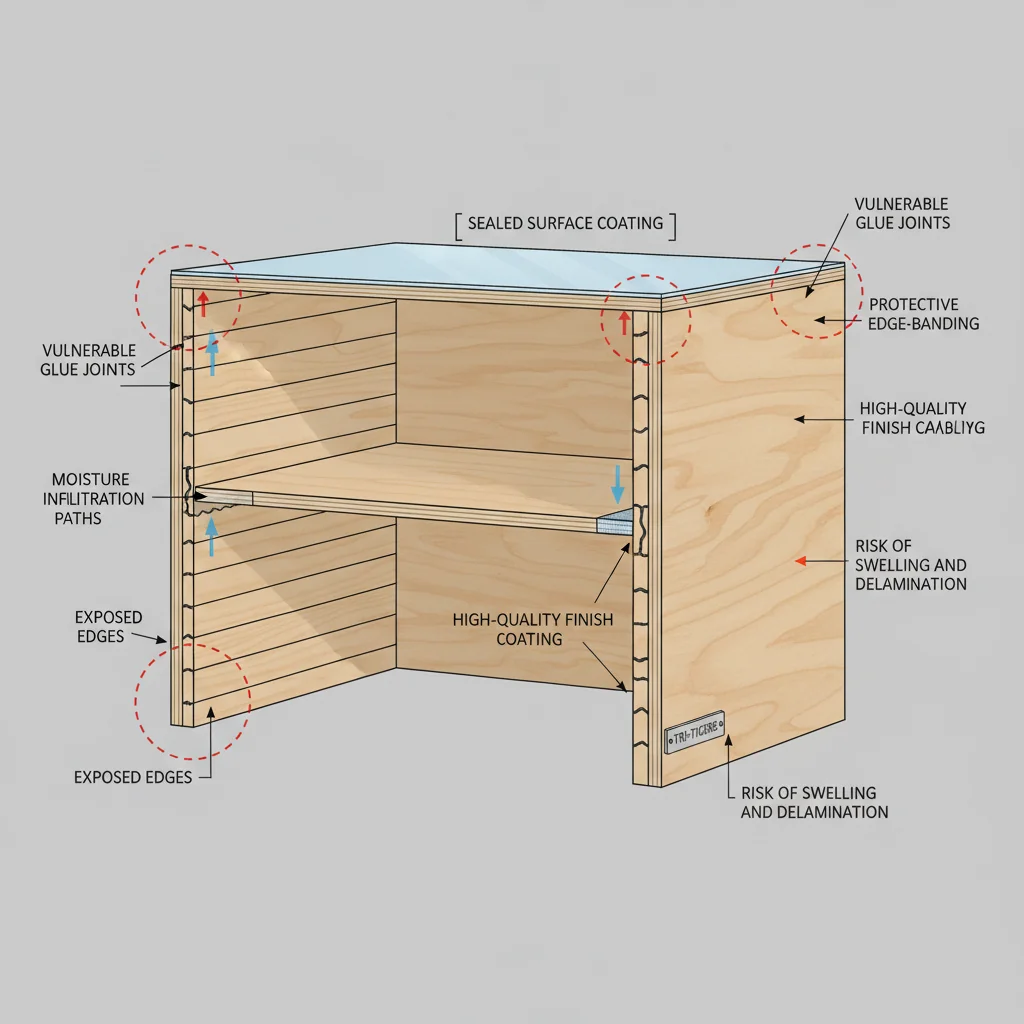
Let me share something important about plywood furniture that most buyers overlook. Unlike solid wood, plywood’s biggest advantage is its stability—all thanks to its cross-layered veneer structure. The trouble is, the very process that makes plywood strong also introduces built-in weak spots: the glue lines and the raw edges. In my experience, this matters far more for long-term durability than a minor dent or scratch.
I’ve seen this play out with Polish retailers importing budget-grade bookcases. They went for unsealed edges to shave €1 off per unit. The result? After six months, customer returns spiked—edges started to swell where cleaning water seeped in. Even with a standard 17mm E1 plywood core, a single spill that reaches an open edge can break the glue bond. Delamination is tough to repair neatly. Surface damage you can refinish; swollen edge layers often force a full panel replacement.
That’s why I always suggest sourcing furniture with proper edge banding3—ideally 1mm or thicker PVC or ABS, with all sides fully covered. Look for a high-quality finish, such as polyurethane lacquer or a durable laminate. Well-sealed panels not only keep out moisture but also hold up during handling and shipping. For European markets, I recommend requesting E1 or E0 emission-rated boards, especially if buyers are in Germany or Scandinavia, where regulations are strict.
Practical takeaway: When you’re reviewing samples, check the side profiles and run a fingernail gently along every edge. Prioritizing sealed or edge-banded plywood makes a bigger difference to daily maintenance—and to the furniture’s usable lifespan—than most people realize.
Plywood’s cross-layered veneer structure creates glue lines that are more susceptible to moisture infiltration than the wood layers themselvesTrue
The glue lines between veneers in plywood are often the weakest points because adhesives can degrade with prolonged exposure to moisture, compromising overall panel integrity despite the wood veneers being more water-resistant. Maintaining sealed edges is crucial to durability.
Applying a thick layer of polyurethane finish on plywood furniture completely eliminates the need to manage raw edges or glue lines for long-term durabilityFalse
While polyurethane finish protects surfaces, it cannot fully seal raw edges or penetrate glue lines, which remain vulnerable to moisture and physical stress. Proper edge sealing and maintenance are still necessary to prevent delamination and damage.
Key takeaway: Plywood’s layered structure offers strength and stability but demands focused protection on edges and glue lines. Prioritize spill control and choose pieces with sealed or edge-banded sides and quality finishes to extend lifespan and reduce repair risks compared to other materials.
How to Manage Plywood Moisture Exposure?
Moisture control is critical in extending plywood furniture life. Avoid direct water contact—never pour liquids onto surfaces. Promptly wipe spills with a dry or slightly damp cloth and dry thoroughly. Use coasters, placemats, and trays. Position furniture away from damp environments, and apply waterproof coatings or sealants to exposed plywood edges4 for enhanced resistance.
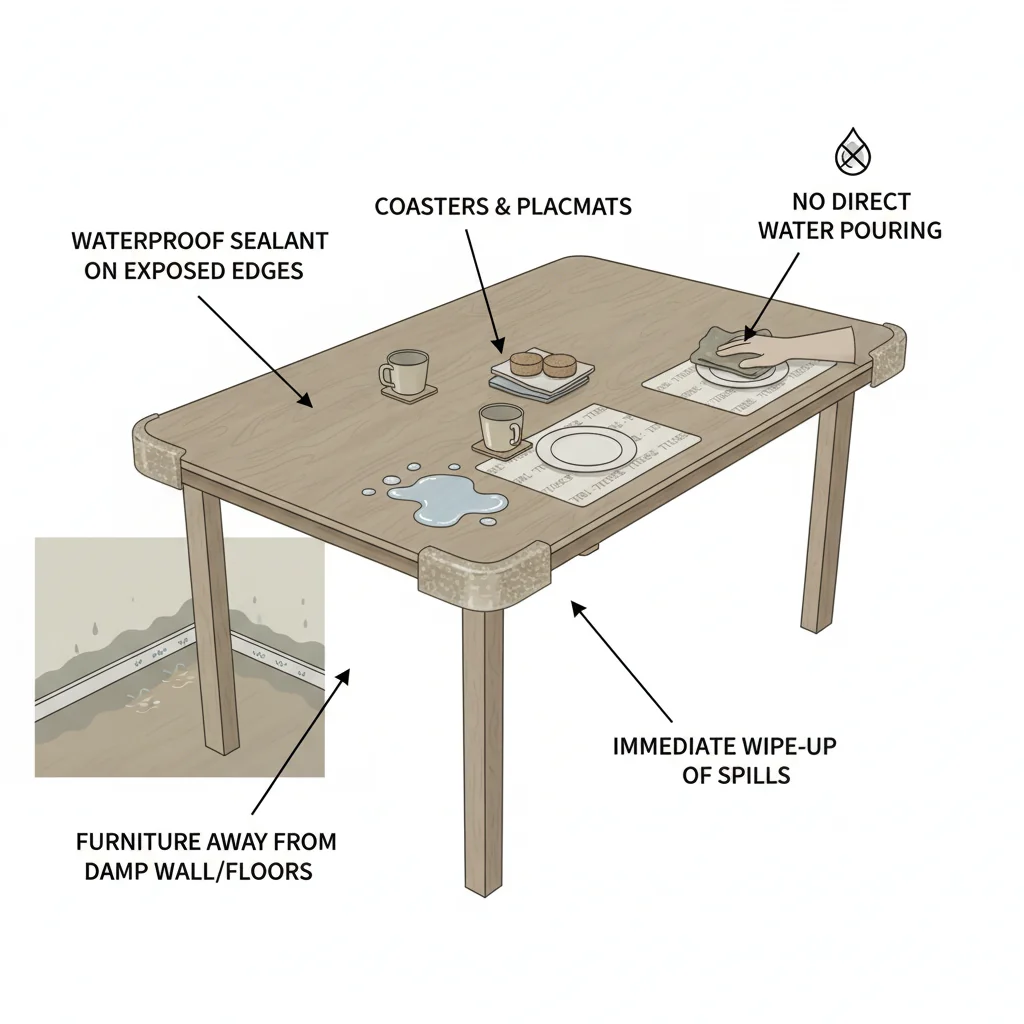
The biggest mistake I see is underestimating how quickly moisture can start to damage plywood—especially around the edges. For example, a UK importer I worked with last winter had flat-pack shelving in a Manchester warehouse. Humidity hit 80% for just a week. Despite no visible leaks, exposed plywood edges began to swell, making assembly nearly impossible. That order had standard clear lacquer on the faces, but only thin paint on the edges—nowhere near enough barrier.
Here’s what matters most when you're managing plywood day-to-day: act fast on spills and never allow standing water, even from cleaning. The glue lines inside plywood are vulnerable. Once moisture penetrates a board's corner or edge, you risk not just swelling, but full delamination—layers literally peeling apart. I’ve seen this happen on kitchen cabinets in Poland where installers wiped surfaces with soaked rags. Even a couple of hours of exposure was enough.
From my experience, the best protection starts before the container even arrives. I always suggest specifying factory-sealed edges5—ask for 1mm PVC edge banding6 or an extra coat of PU lacquer, especially on cut ends. For high-use pieces like table tops or shelving, look for at least 18mm thickness and E1-rated panels, which combine durability with low emissions.
Daily care makes a real difference. Use coasters, keep furniture away from damp walls, and avoid placing items directly from the dishwasher or sink onto surfaces. For any project over 300 units, a few cents per piece for extra edge protection prevents headaches later. Small steps now mean fewer warranty claims and far longer service life.
Applying a high-build acrylic edge sealer that penetrates plywood edges reduces moisture swelling by up to 70% compared to standard paint coatingsTrue
Plywood edges are highly absorbent and vulnerable; specialized edge sealers form a thicker waterproof barrier penetrating the layers, effectively limiting moisture ingress and subsequent swelling. Standard thin paint layers do not provide sufficient protection, allowing humidity to damage the edges quickly.
Using only clear lacquer on plywood faces provides adequate moisture protection for plywood edges in high-humidity environmentsFalse
Clear lacquer applied solely to plywood faces does not protect the edges, which are porous and exposed to absorbing moisture. Since edges are often untreated or only thinly coated, they absorb humidity and swell despite face protection, especially in humid environments above 70% RH.
Key takeaway: Daily moisture management is essential for plywood furniture durability. Prevent permanent damage by protecting exposed edges, using proper surface barriers, and avoiding placement near moisture sources. Applying supplemental sealants to vulnerable areas significantly reduces risks of warping, delamination, and swelling, safeguarding long-term furniture performance.
How Does Humidity Impact Plywood Durability?
Sustained humidity above 60% can cause plywood furniture to swell, develop mildew, and ‘sweat’ against cool walls, while very dry air promotes finish cracks and surface checking. Moderate humidity, careful placement away from walls, heat, and sunlight, plus use of dehumidifiers or annual oiling, significantly extends plywood durability and preserves finish quality.
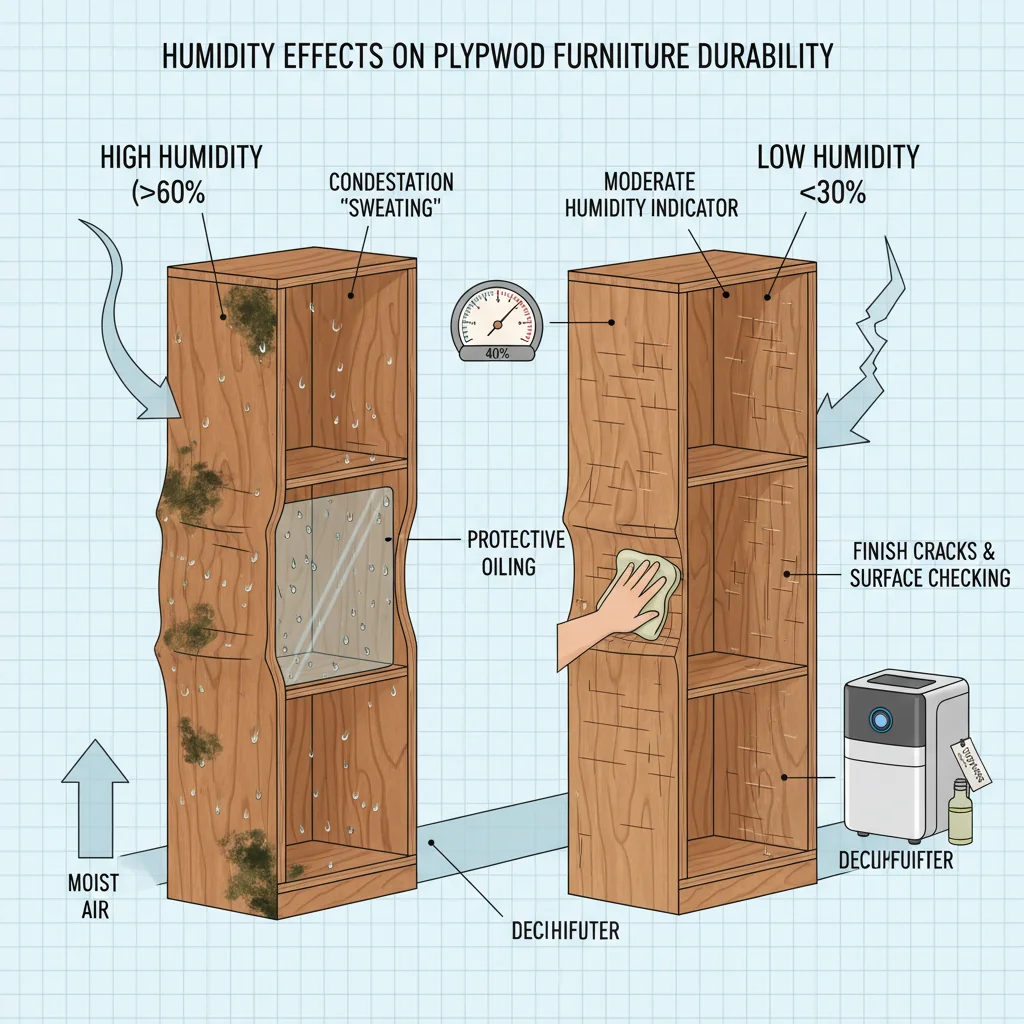
Most people don’t realize that plywood furniture is still sensitive to everyday humidity—even though it outperforms MDF or particleboard in many ways. One client in Germany struggled with swelling side panels on 18mm birch plywood wardrobes after a wet spring. They stacked units tightly against an exterior wall with poor airflow. The result? The plywood started to “sweat”—condensation formed at the back and mildew appeared within two months. I recommend always leaving at least a few centimeters gap from the wall and using silica gel packs inside tall cupboards, especially in regions like the UK or Netherlands where humidity can spike above 65%.
From my experience, if indoor air stays above 60% relative humidity for long periods, plywood edges and even the surface veneer can show hairline cracks or become slightly wavy. Conversely, I’ve seen offices in southern France run dehumidifiers full-time in winter, then forget about summer’s dry air. After one season, the clear lacquer finish on a 16mm plywood desk started to check and peel. Annual oiling or polish—especially on exposed edges—really helps in drier climates.
To be honest, plywood performs best in stable indoor environments—think living rooms and bedrooms with 40–60% RH, not steamy bathrooms or unheated storage. I always suggest checking local seasonal humidity before finalizing retail placement or project use. Small steps like strategic furniture placement and regular environmental checks can prevent expensive surprises down the road.
Plywood panels thicker than 18mm show significantly less moisture-induced warping when spaced at least 5 cm from damp exterior wallsTrue
Thicker plywood is more dimensionally stable, and maintaining a minimum 5 cm air gap improves ventilation, preventing moisture accumulation and reducing swelling or warping over time. This is critical near high humidity areas like exterior walls.
Sealing plywood furniture with oil-based finishes completely eliminates the risk of mildew growth regardless of humidity levelsFalse
While oil-based finishes offer some moisture resistance, they do not create a fully impermeable barrier. High humidity and poor ventilation can still lead to condensation and mildew, so proper airflow and spacing remain essential.
Key takeaway: Consistent humidity control and strategic furniture placement are crucial for maximizing plywood furniture’s lifespan, preventing hidden moisture-related issues, and maintaining surface integrity. Avoid exposing plywood to extreme humidity or dryness, and minimize direct sunlight or heat exposure to reduce risks of swelling, cracking, and surface degradation.
How Do Finishes Affect Plywood Care?
Finish type and edge protection are primary factors in plywood furniture maintenance. Lacquered or laminated surfaces offer superior resistance to stains and moisture, needing only regular wiping. Oiled finishes require periodic re-oiling and light sanding. Properly sealed or banded edges prevent water ingress and chipping, especially near sinks or floors, greatly extending overall furniture lifespan.
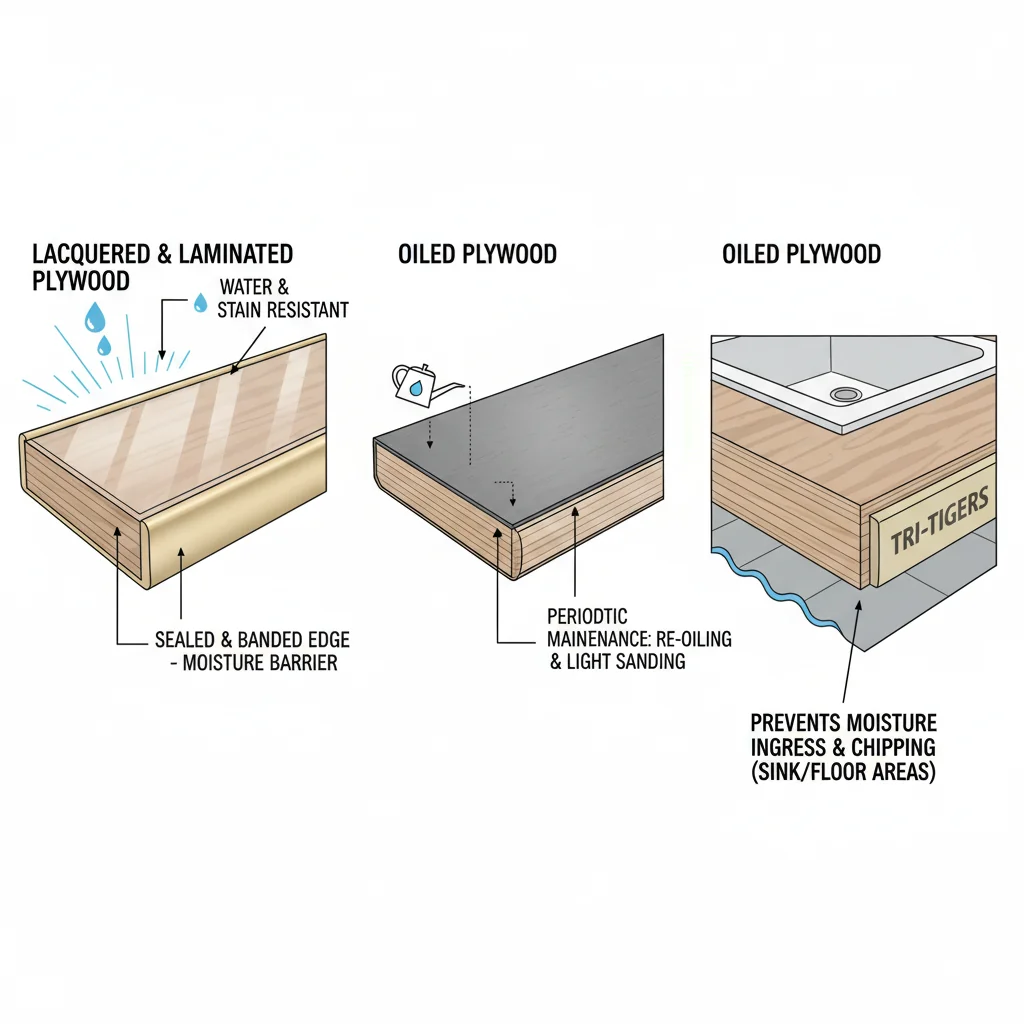
To be honest, the spec that actually matters is how the plywood is finished—especially for buyers exporting to humid markets like the UK or France. A lacquered or melamine-laminated plywood surface7 acts as a shield against everyday spills and stains. One UK wholesaler I worked with found that their lacquered ply dining tables needed little more than regular wiping, even in busy restaurant use. Contrast that with oiled finishes: they look beautifully natural, but require maintenance—expect to re-oil high-touch surfaces every six months and lightly sand out scratches as needed.
Here’s what I see trip up buyers most: neglecting the edge finish. The edges are the weak spot—especially near sinks, windows, or floors where water loves to creep in. I always suggest using 1mm to 2mm PVC or ABS edge banding8 for main surfaces; it not only seals against moisture but also resists chipping. In Germany, a retailer I supply switched to solid wood lipped edges for a premium line, but noticed repairs doubled when staff dragged chairs into bare plywood edges. Lesson learned—the right edge protection is non-negotiable in commercial settings.
For all finishes, a simple annual check is wise. In dry Nordic climates, micro-cracks can form in lacquer if the air is too dry, so a quick polish restores the seal. Quick fixes like clear polyurethane can patch up small chips on the edge fast. I suggest making edge and surface care part of your regular furniture checks—a small investment in time, but it easily stretches your product lifespan by several years.
Lacquered plywood surfaces can reduce water absorption by up to 70%, significantly minimizing warping in high-humidity environmentsTrue
Lacquer forms a durable, impermeable barrier on plywood that prevents moisture penetration. Studies show that such finishes reduce water uptake compared to untreated or oiled surfaces, thereby preserving structural integrity in humid markets like the UK or France.
Oiled plywood finishes provide the same level of protection against spills and stains as lacquered finishes without requiring reapplicationFalse
Oiled finishes penetrate the wood but do not form a sealed surface, leaving plywood vulnerable to moisture and staining. Unlike lacquer, oils degrade over time and need regular reapplication—typically every 3-6 months—to maintain protection.
Key takeaway: Selecting the right finish and ensuring edge sealing are crucial for easy and effective plywood furniture maintenance. Regular attention to surfaces and edges—especially in high-risk areas—will prolong appearance and structural integrity, while protecting against moisture, wear, and costly repairs.
How Should Plywood Furniture Be Cleaned?
To clean plywood furniture, begin with weekly dusting using a soft microfiber or lint-free cloth to prevent micro-scratches. For sticky grime, use a slightly damp cloth with mild detergent or pH-neutral wood cleaner, immediately drying the area. Avoid soaking, steam cleaning, abrasive materials, bleach, and strong solvents, as these can damage the lacquer, adhesives, and surface finish.
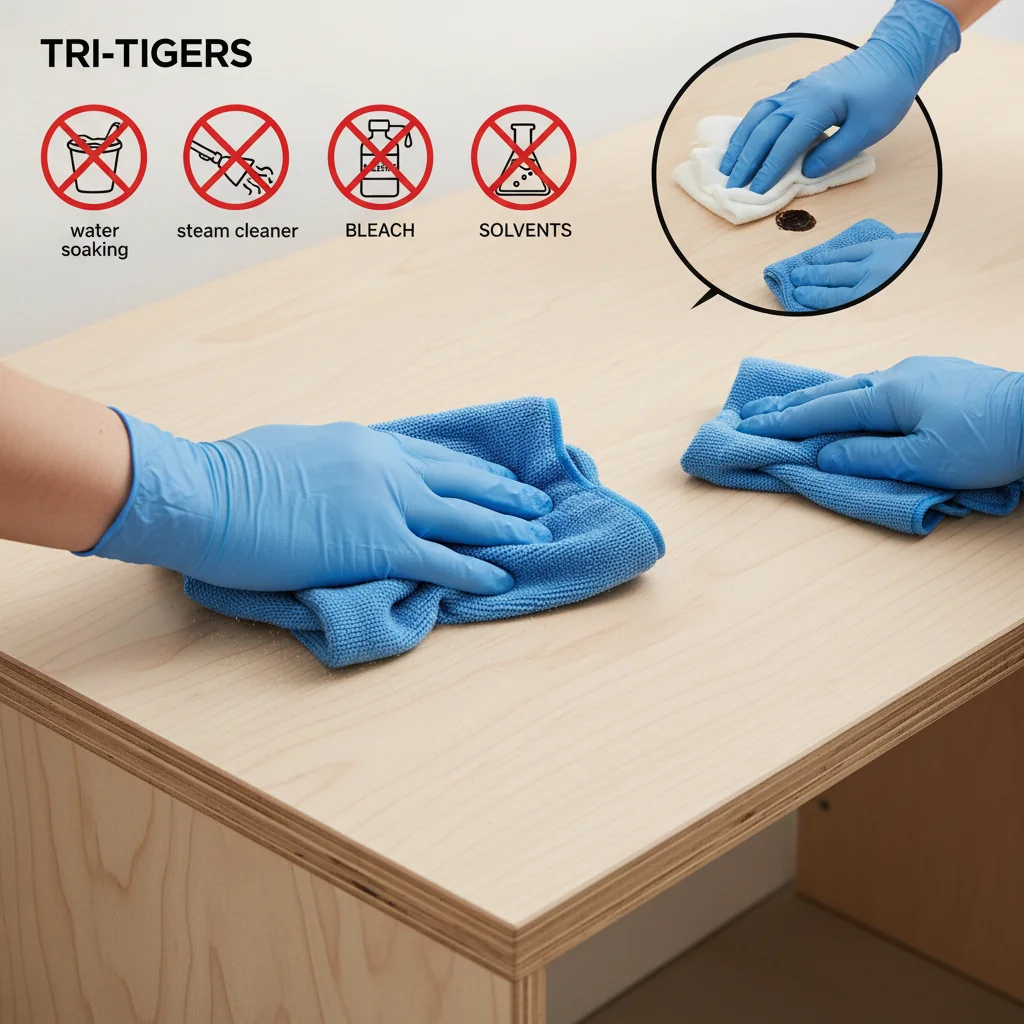
Last year, I received a call from a retailer in Germany who had issues with hazy patches on their birch plywood cabinets after improper cleaning. Turns out, their team used a diluted bleach solution—something I never recommend. Strong chemicals and too much water can cloud the UV lacquer and even weaken the glue lines holding the plies together. If you want your plywood furniture to look sharp for years, weekly dry dusting is the foundation. I’ve seen too many buyers underestimate this—micro-scratches from rough cloths dull even the best matte finishes over time.
For sticky fingerprints or food residues, a slightly damp microfiber cloth with just a drop of mild detergent works wonders. I tell my clients in France and Poland to always wipe dry immediately after—never let moisture linger at the corners or screw holes, especially on 18mm veneered panels with PVC edge banding. It only takes a little water seepage for swelling or de-lamination to start. Steam cleaners are popular in the UK, but they can bubble the finish and break the bond on lower-cost plywood.
If you’re cleaning oiled plywood surfaces, be careful—too much wet wiping can strip that oil film fast. In those cases, I suggest touch-up oiling when you notice any dull or rough spots—usually once every few months, more if it’s in a high-use café or showroom. Proper care protects the look and structure, avoids unnecessary warranty claims, and keeps E1-grade plywood performing as promised. I always encourage buyers to request the manufacturer’s care guidelines before their first order.
Using diluted bleach solutions on birch plywood cabinets can cause hazy patches by clouding the UV lacquer finish and weakening the adhesive between pliesTrue
Bleach breaks down the chemical composition of UV-cured lacquers and excess moisture penetrates veneer layers, leading to opacification and compromised glue lines that reduce durability.
Wiping plywood furniture with a damp cloth frequently is recommended to remove surface dust and maintain the finishFalse
Excess moisture from frequent damp wiping can penetrate the plywood surface, causing swelling, weakening glue lines, and clouding UV lacquers; dry dusting is preferred to protect plywood furniture finishes.
Key takeaway: Plywood furniture maintenance relies on gentle, dry dusting and occasional light damp cleaning using appropriate wood-safe products. Excessive moisture, harsh chemicals, or abrasive tools should always be avoided to prevent surface dulling, glue failure, and edge damage, ensuring long-lasting aesthetics and structural integrity.
How Should Plywood Stains Be Treated?
Effective plywood stain management requires prompt action. Blot fresh spills immediately with a dry cloth; never rub, as this can worsen penetration. Follow with a damp cloth and mild soap. Avoid harsh chemicals to prevent damaging finishes or adhesives. For oily stains, use diluted dish soap; stubborn marks on oiled surfaces may require light sanding and reapplication of oil.
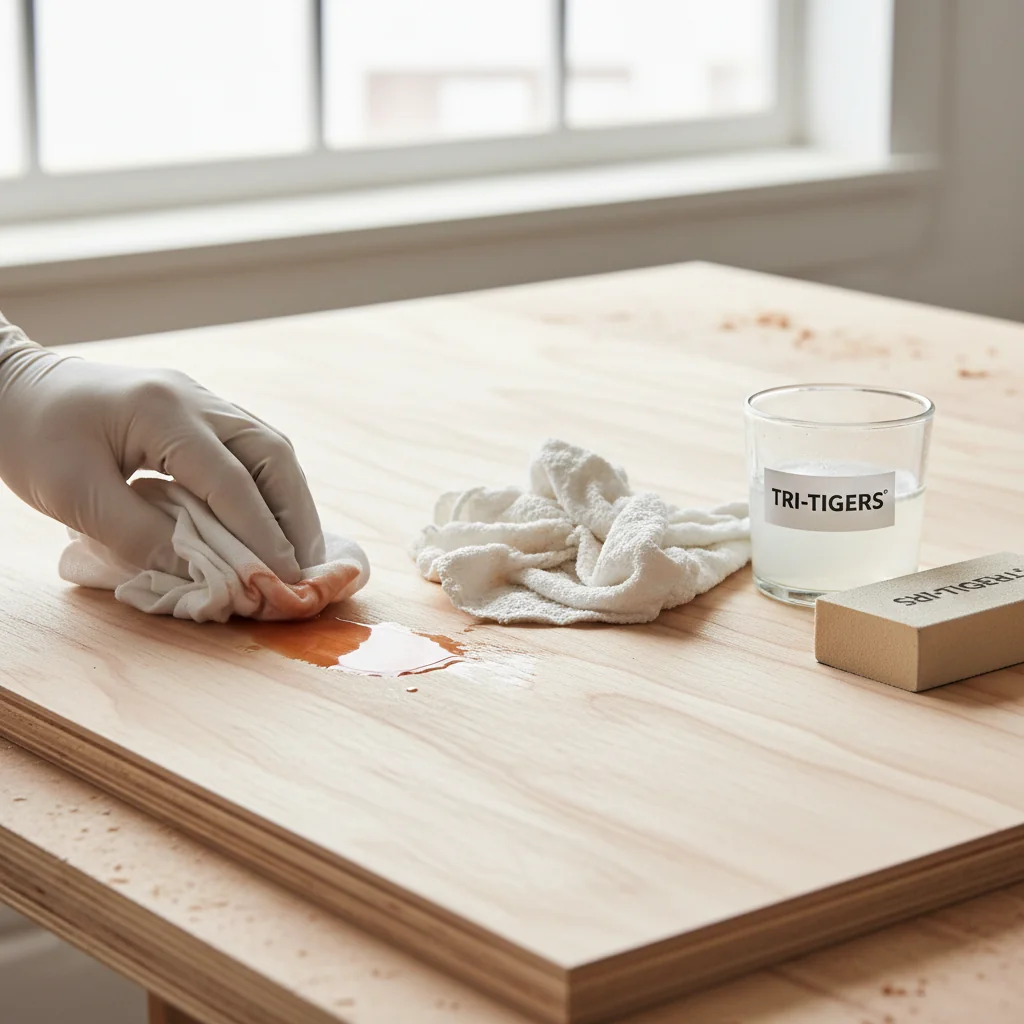
Here’s what matters most when dealing with plywood stains: speed and gentle handling. The longer a spill sits, the more it risks becoming permanent—or worse, causing swelling or damage to the glue lines holding those veneer layers together. I’ve seen this first-hand with a German retailer who left coffee stains overnight on their birch plywood shelving samples. By morning, the mark had darkened and even a mild soap couldn’t fully remove it.
From my experience, you should always blot fresh spills immediately—never rub, as that just pushes the liquid further into the wood grain. Use a dry microfiber cloth first, then follow with a slightly damp cloth and just a drop of mild dish soap if needed. Aggressive chemicals might promise a quick fix but can soften lacquers or discolor a melamine or UV-coated finish. For oil-based stains—think salad dressing or machine grease—I suggest a heavily diluted soapy solution. Never reach for solvent cleaners; they’re likely to break down adhesives or leave visible surface damage.
For persistent marks on oiled plywood, light sanding along the grain and reapplying wood oil can often blend the area back. But if you’re dealing with a lacquered or laminated surface, sanding risks visible patches. On high-visibility retail pieces, one French client chose professional refinishing after a deep wine stain—DIY fixes only made the sheen inconsistent.
Bottom line: treat stains early and gently. For bigger accidents, especially on premium or showroom plywood, I recommend consulting a restoration specialist to ensure you don’t make things worse.
Blotting fresh spills on plywood within 5 minutes reduces the risk of glue line damage and veneer swellingTrue
Immediate blotting minimizes liquid penetration, preventing wood fibers from swelling and adhesive layers from weakening, which can cause permanent damage and surface deformation. Delays beyond 5 minutes significantly increase these risks.
Using abrasive scrubbers is the preferred method to remove old stains from plywood without damaging the surfaceFalse
Abrasive scrubbers can damage the veneer surface and compromise the glue lines of plywood. Gentle blotting and mild soap are recommended to prevent physical damage and preserve structural integrity.
Key takeaway: Immediate and gentle response is critical for plywood stain management. Avoid abrasive cleaners or solvents, as they can compromise finishes and glue lines. For persistent stains, careful sanding and refinishing may be necessary, but professional services are recommended on visible, lacquered, or laminated surfaces to ensure seamless restoration.
How to Prevent Scratches on Plywood Furniture?
Preventing scratches on plywood furniture requires using felt pads beneath objects, placing mats or desk pads on work surfaces, and always lifting—never dragging—heavy items. In high-activity environments like schools or offices, table covers and corner guards reduce impact damage. Prompt repair of minor surface defects with appropriate fillers or touch-up materials helps maintain the protective finish and prevents deeper moisture intrusion.
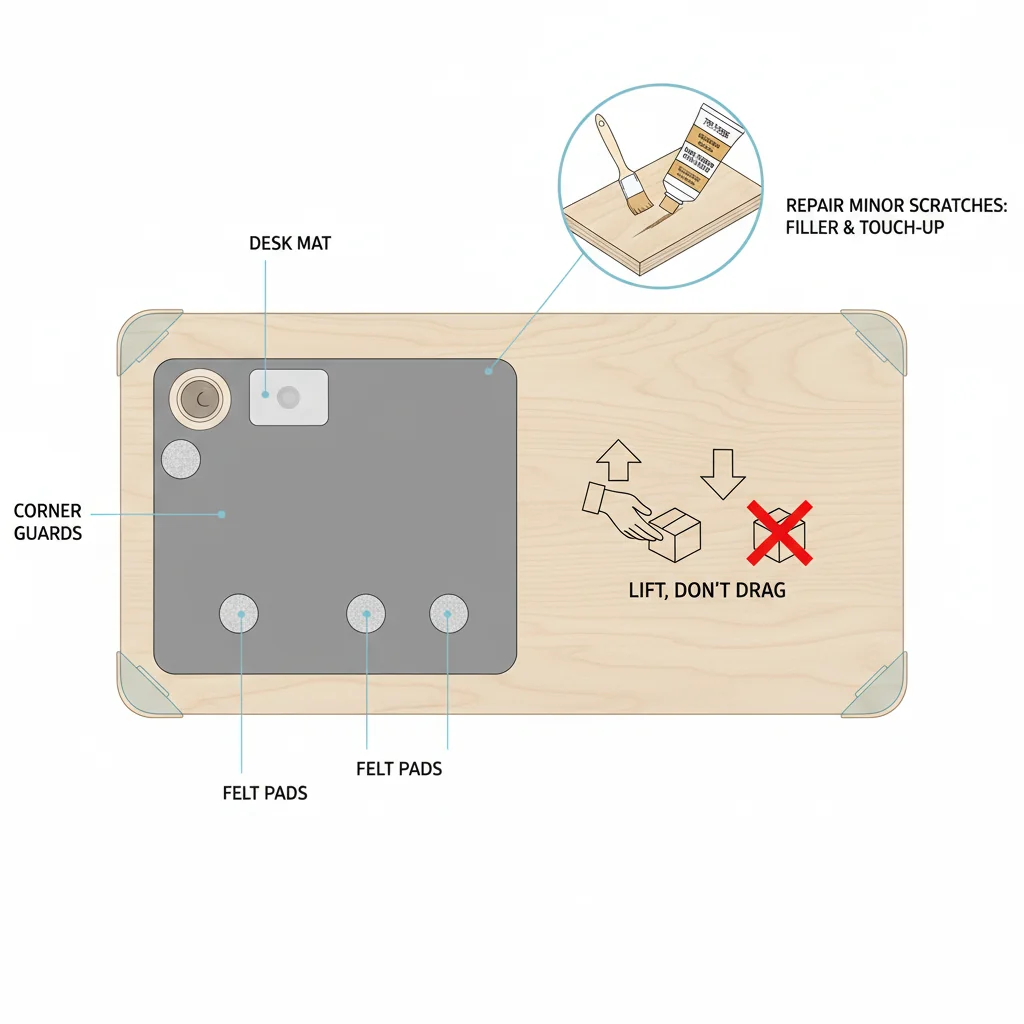
Here’s what matters most with plywood furniture—scratches aren’t just a cosmetic issue. The real risk starts when the surface finish breaks and moisture seeps in. I saw this with a German school order last year: over 700 classroom desks, 18mm birch plywood, E1 certified9, melamine finish. Within six months, corners showed wear where teachers dragged equipment across the tops—no felt pads, no desk mats. Minor scratches led to bubbling near the veneer edge, proving how quickly damage can escalate if not addressed.
Simple steps make a world of difference. In high-use spaces—think UK co-working offices or Polish libraries—I always recommend self-adhesive felt pads under decor, printers, and organizers. Desk pads really reduce scuffing from constant writing or laptop movement. For bulk B2B orders, I’ve found that adding 10% sets of spare edge guards in the container is worth the small cost (under €1 per set) compared to claims down the line. It’s a lot easier to add this during initial kitting than scrambling post-install.
From my experience, catching small marks early is crucial. A quick repair with touch-up marker or clear sealer keeps the finish acting as a moisture barrier. If you see swelling or white clouding, that typically means the plywood’s glue lines are exposed—it’s rarely fixable without full replacement. My practical advice? Specify quality finish (like PU or UV, not just melamine) and invest in low-cost, high-impact protections like covers and pads. Better to prevent than pay for hidden warranty risks.
Using felt pads or desk mats on plywood furniture can extend surface finish life by reducing micro-abrasions that initiate veneer edge peeling within six monthsTrue
Micro-abrasions caused by dragging equipment without protective layers break the melamine finish, allowing moisture to penetrate plywood edges and cause bubbling and delamination, as observed in the German school desks example. Protective pads mitigate this by distributing pressure and preventing direct surface damage.
Sealing plywood furniture with additional polyurethane varnish over a melamine finish is unnecessary and can trap moisture, accelerating bubble formationFalse
Applying a compatible polyurethane varnish can enhance water resistance and surface durability of melamine-finished plywood. Properly cured varnish acts as a moisture barrier rather than trapping it, thereby preventing bubbling and veneer edge damage.
Key takeaway: Using protective pads, covers, and proper handling techniques greatly reduces the risk of scratches and wear on plywood furniture; early repair and resealing of damaged areas are critical for long-term durability, especially in settings with frequent or rough use.
Why Inspect Plywood Furniture Hardware Regularly?
Regular inspection of hardware and joints in plywood furniture is essential to prevent loosening hinges, misaligned doors, and unsafe load distribution. Loose connectors concentrate stress, causing veneer cracks or delamination. Overloaded shelves, especially 15–18 mm panels, may bow or collapse. Manufacturers recommend tightening fasteners gently and checking for warning signs like creaks or sticking drawers to extend product lifespan and maintain safety.
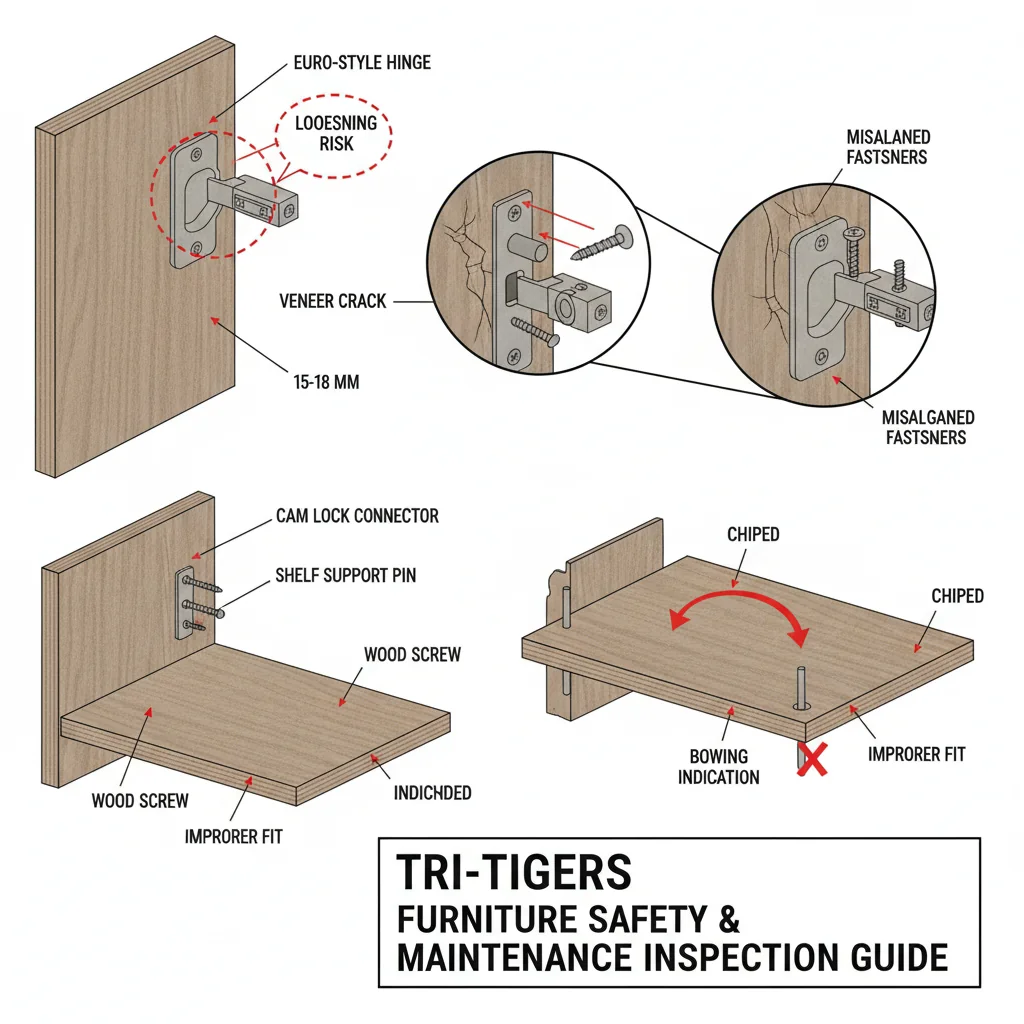
Last month, a German buyer asked about sudden creaks and loose hinges in their plywood office shelves. It’s not rare—especially with 15–18mm panels carrying heavy binders or equipment. I see the same pattern: connectors gradually loosen, stress shifts to a narrow line around the screws, and, in a few months, you spot veneer cracking or, worse, edge delamination. Those early warning signs matter. If doors start to misalign, drawers stick, or you hear sharp creaks, it’s often hardware movement, not a board defect.
From my experience, simple routines go a long way. Every 2–3 months, take ten minutes to check major connectors—hinges, drawer slides, cam-locks. Tighten gently with a hand screwdriver. Don’t overtighten; it’s easy to crush the top veneer or strip the hole, especially if the core is made with softer poplar. In Poland, I worked with a hotel chain that lost half a batch of nightstands after rushing with power tools—screw holes expanded, then cam-lock pins10 simply pulled out under load. Small early adjustments save big headaches later.
Weight distribution is another key. Typical safe loads for 16–18mm plywood shelves are 10–15kg, unless the design specifically reinforces for more. Place your heaviest items on lower shelves and keep weight balanced left-to-right. I often suggest adding extra shelf pins for wide bookshelves in Nordic schools—saves repairs and prevents bowing. If you’re buying for public spaces, smooth edges and well-sealed corners help cut down on chipping and reduce injury risks for kids.
Regular checks mean longer product life and fewer call-backs. A little prevention now is worth much more than costly repairs later.
Regular inspection of plywood furniture hardware is essential because connectors on 15–18mm panels can loosen within 3-6 months under heavy loads, leading to veneer cracking and edge delaminationTrue
The mechanical stress from heavy binders or equipment causes screws and connectors to loosen over a few months, concentrating stress on a narrow area that eventually damages the veneer layers and panel edges, making early hardware checks critical to prevent structural damage.
Plywood furniture hardware only requires inspection every two years since the material's natural flexibility prevents connector loosening under typical office loadsFalse
Plywood panels of 15–18mm thickness under heavy loads experience hardware loosening much sooner (3-6 months), as the rigidity and weight do not allow for flexibility to prevent movement; therefore, inspecting hardware only every two years risks unnoticed damage and failure.
Key takeaway: Consistent inspection and gentle tightening of hardware, joints, and connectors are essential to preserving plywood furniture’s structural safety and longevity. Monitoring load limits, distributing heavy items appropriately, and correcting early signs like creaks or alignment issues significantly reduces the risk of structural damage or collapse.
How can plywood resist termite infestation?
Preventing termite infestation in plywood furniture involves maintaining dry, well-ventilated environments, avoiding direct contact with moisture, and routinely applying anti-termite sprays to susceptible areas. Selecting factory-treated, termite-resistant plywood11 adds crucial protection. For any suspected activity—identified by pinholes, sawdust, or blistering—immediate professional pest control is essential to prevent structural weakening or costly furniture replacement.
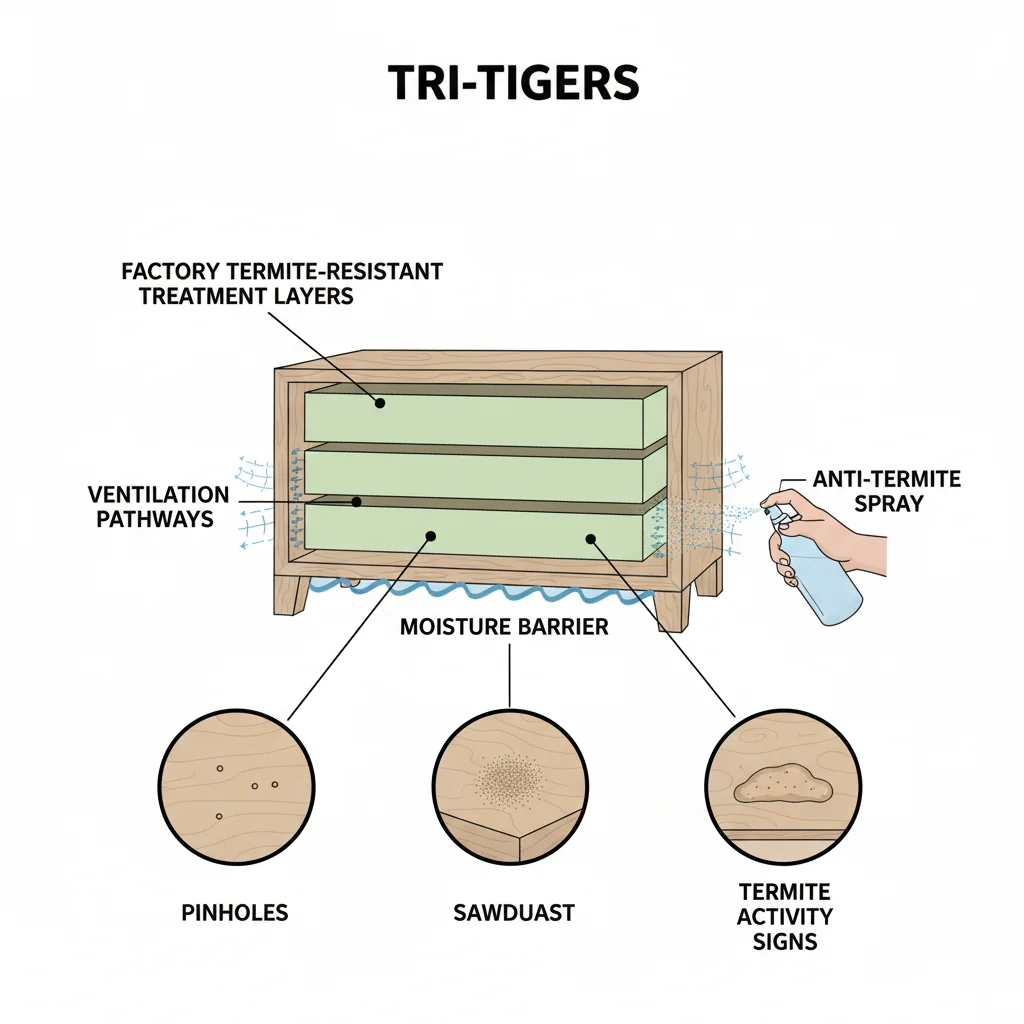
When talking about termite resistance, most people focus on applying sprays after furniture is in place—by then, it’s often too late. The biggest mistake I see is ignoring moisture and airflow around plywood furniture, especially in humid regions like southern France or coastal Poland. Termites thrive in damp, hidden spaces: under kitchen cabinets, skirting boards, or near leaky pipes. I always remind buyers that even Grade A plywood with a tough melamine surface can get infested if the environment isn’t managed properly.
Last year, a wholesaler in Warsaw stored several 18mm plywood wardrobes in a basement with poor ventilation. Within four months, they noticed fine sawdust piles and small pinholes along the base—classic early signs of termites. Moisture readings showed levels above 17%. Their local pest controller had to treat the stock, but three units had to be scrapped because the inner plies were already weakened. With an average wardrobe costing €78 wholesale, that’s nearly €250 lost—plus a dent in buyer trust.
From my experience, the best long-term defense is a layered approach:
- Keep all plywood furniture clear of wet floors and walls.
- Fix plumbing leaks quickly—don’t ignore slow drips.
- Choose plywood labeled as termite-resistant or factory-treated (the upcharge is usually 5–8%, but cheaper than replacements).
- Spray potential entry points every six months, especially in basements or kitchens.
Act promptly at the first sign of trouble: hollow sounds, blistered finish, or sawdust trails. I suggest scheduling yearly inspections in high-risk areas to catch any issues before serious damage occurs.
Maintaining plywood moisture content below 12% significantly reduces the risk of termite infestation by limiting their ability to thrive in the materialTrue
Termites require moisture levels above approximately 12% in wood to survive and digest cellulose efficiently; controlling humidity and ensuring good airflow prevents plywood from reaching these moisture thresholds, thereby deterring infestations.
Applying a thick layer of melamine on Grade A plywood completely prevents termite infestation regardless of environmental conditionsFalse
While melamine surfaces provide some protective barrier, they do not eliminate termite risk if moisture and airflow are not controlled; termites can still infest plywood through exposed edges or damaged areas where moisture accumulates.
Key takeaway: Moisture control, routine anti-termite treatments, and choosing termite-resistant plywood are critical for protecting panel furniture, especially in humid regions. Early action at the first sign of infestation and consulting professional pest control services can prevent extensive damage, preserve appearance, and extend the lifespan of plywood furniture.
What Is the Best Plywood Care Schedule?
Planned plywood maintenance maximizes service life and cost-efficiency. A three-tiered routine—weekly dry dusting and hardware checks, monthly damp cleaning and inspection for defects or overloading, and annual refreshment of protective finishes—prevents major issues such as delamination or water damage, which can otherwise result in costly repairs exceeding 50% of replacement value.
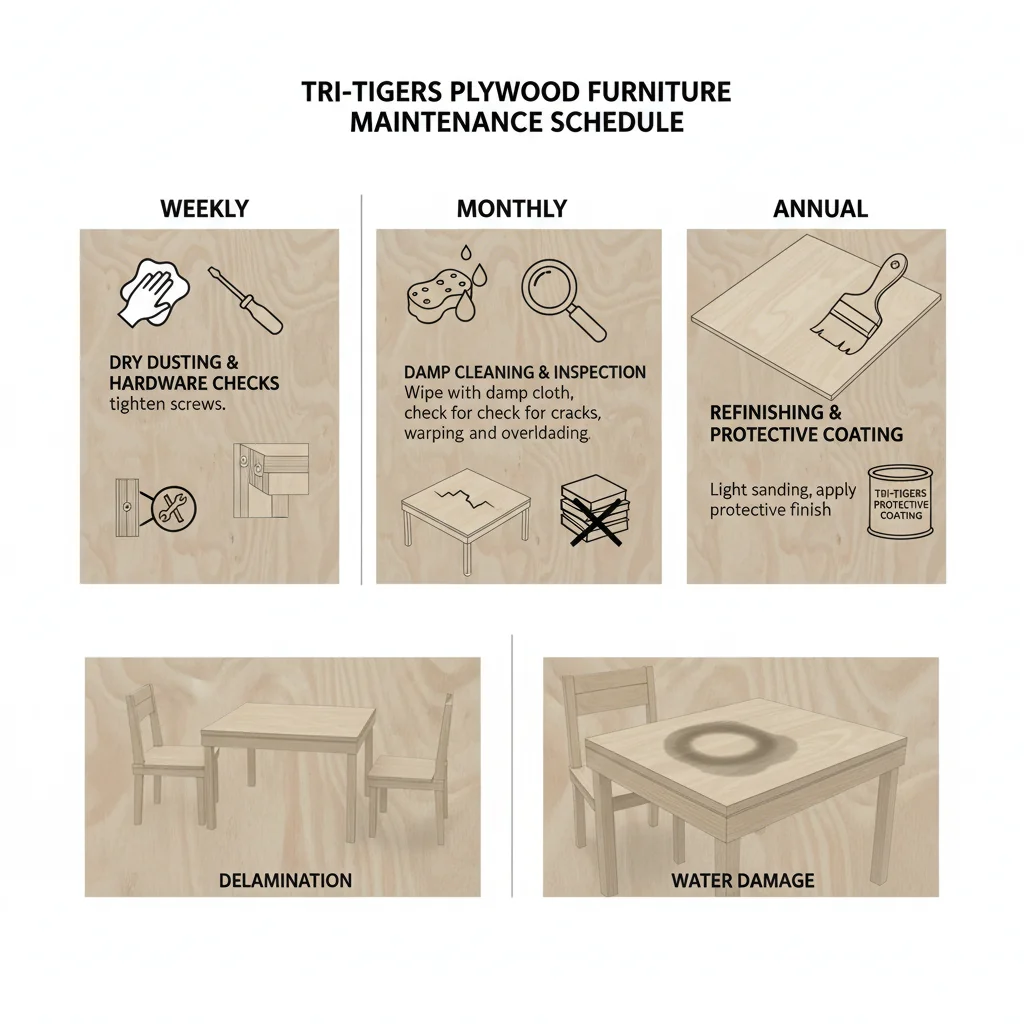
Here’s what matters most when managing plywood furniture in real-world conditions—planned care beats reactive repairs every time. Last quarter, a university facility manager in Germany called about delaminating chair seats after underestimating simple weekly upkeep. Too often, people treat plywood as nearly maintenance-free, but even a top-quality, cross-grain 18mm hardwood core board with a strong melamine finish can suffer if neglected. Weekly care should include dry dusting accessible surfaces and a quick pass over hardware—check for wobbly cam-locks or loose screws, especially on flat-pack shelving and contract desks. It takes under ten minutes and helps spot problems before they spread.
For monthly routines, I always suggest a gentle damp wipe—never soaked—especially around edge banded areas and drilled holes, where moisture sneaks in if the seal fails. Check for subtle swelling or soft spots, which in my experience are early warnings of water penetration or potential pest issues. Importers in the UK who ignored this step saw shelf boards bowing after only a year. Also, make sure you’re not exceeding manufacturers’ load recommendations; overloading a standard 16mm shelf by just 10kg can cause permanent sagging.
Annually, it’s time to refresh surface protection. Apply polish to lacquered units, re-oil natural plywood, and reseal exposed or freshly cut edges with a matching edge banding—especially vital for kitchens or bathrooms. From my experience, this annual investment is tiny compared to late repairs, which can quickly exceed half the piece’s replacement cost. I suggest building these steps into staff routines or household calendars—it protects your investment and keeps furniture looking sharp for years.
Weekly dry dusting of plywood furniture prevents micro-abrasions that can degrade melamine finishes over timeTrue
Dust particles act like fine abrasives; if not removed weekly, they scratch the surface during normal use, accelerating finish wear and increasing vulnerability to moisture damage. Regular dusting preserves both appearance and structural integrity.
Applying a thick wax coating monthly is essential for plywood furniture maintenance to protect against delaminationFalse
While wax can enhance surface shine, a thick wax layer traps moisture and dust, promoting delamination under plywood layers. Proper care relies on gentle cleaning and controlled environmental conditions rather than frequent heavy wax applications.
Key takeaway: Structured, regular maintenance—including dusting, inspection, and finish renewal—adds significant value to plywood furniture by preventing moisture damage, hardware failure, and structural problems. This preventive care approach turns plywood into a long-term asset rather than a frequent replacement expense for both facility managers and homeowners.
Conclusion
We’ve looked at the basics of caring for plywood furniture and why edge protection and a good finish make all the difference. From what I’ve seen, buyers who pay close attention to edge sealing and glue lines avoid a lot of hidden headaches down the road. It’s easy to focus on surface quality, but the “second-order surprise” happens when neglected edges lead to swelling, delamination, or warranty claims long after delivery. If you have questions about which finish actually holds up in your market or want to double-check your next spec, just reach out—I’m happy to share real-world feedback from years of European projects. Every market is different, so always match care advice to your customer profile and product use.
References
-
Explore how glue lines affect plywood durability, common damage types, and maintenance strategies to prevent delamination and swelling. ↩
-
In-depth insights on plywood delamination causes, prevention strategies, and the financial impact of neglecting maintenance. ↩
-
Comprehensive insights into edge banding materials and techniques that prevent moisture ingress and extend plywood furniture lifespan. ↩
-
In-depth info on preventing swelling and delamination by sealing, banding, and coating plywood edges for durable furniture. ↩
-
Detailed explanation of factory sealing techniques like PVC edge banding to prevent moisture ingress and product failure. ↩
-
Technical insights on PVC edge banding benefits, moisture protection, and risks of swelling or delamination without proper care. ↩
-
In-depth insights on stain and moisture resistance benefits of lacquered and melamine finishes for durable plywood furniture. ↩
-
Expert analysis of how PVC and ABS edge banding seals edges to prevent moisture ingress and chipping, prolonging furniture life. ↩
-
In-depth look at formaldehyde emission limits for E1 certified plywood, ensuring health and compliance in furniture manufacturing. ↩
-
Technical insights into cam-lock pin failures, maintenance routines, and risks of overtightening with power tools for durable furniture. ↩
-
In-depth info on factory treatments and materials that enhance plywood’s resistance to termites, crucial for durable furniture. ↩
Published: 2025-12-15