

Featured image for How to Find Reliable Chinese Wooden Furniture Supplier (Factory Sourcing Guide)
How to Find Reliable Chinese Wooden Furniture Supplier (Factory Sourcing Guide)
The other day, an importer from Poland told me he’d wasted six months on a “factory” that turned out to be a rented showroom with no production behind it—just a few borrowed samples and a clever website. Believe me, in China’s furniture industry, spotting what’s real versus what’s staged is half the battle.
Defining precise furniture requirements—from substrate selection (solid wood, engineered panels, or mixed materials) to packaging and consistency expectations—directly influences suitable supplier candidates in China’s diverse regional clusters. Targeting specialized zones such as Guangdong’s extensive mixed-material hub or Shandong’s export-driven solid wood factories increases sourcing efficiency. Rigorous supplier screening relies on third-party data, export records, and in-depth credential verification, including business licensing and compliance documentation.
How to Define Wooden Furniture Requirements?
Precise specification of wooden furniture needs is essential when sourcing from Chinese factories. Distinguish between solid wood (oak, ash, walnut), panel-based furniture (MDF, particleboard with veneer), and mixed-material designs. Consider the specialization of regions such as Guangdong and Shandong, and align requirements like e‑commerce packaging, batch color consistency, and customization with the intended business model before shortlisting suppliers.
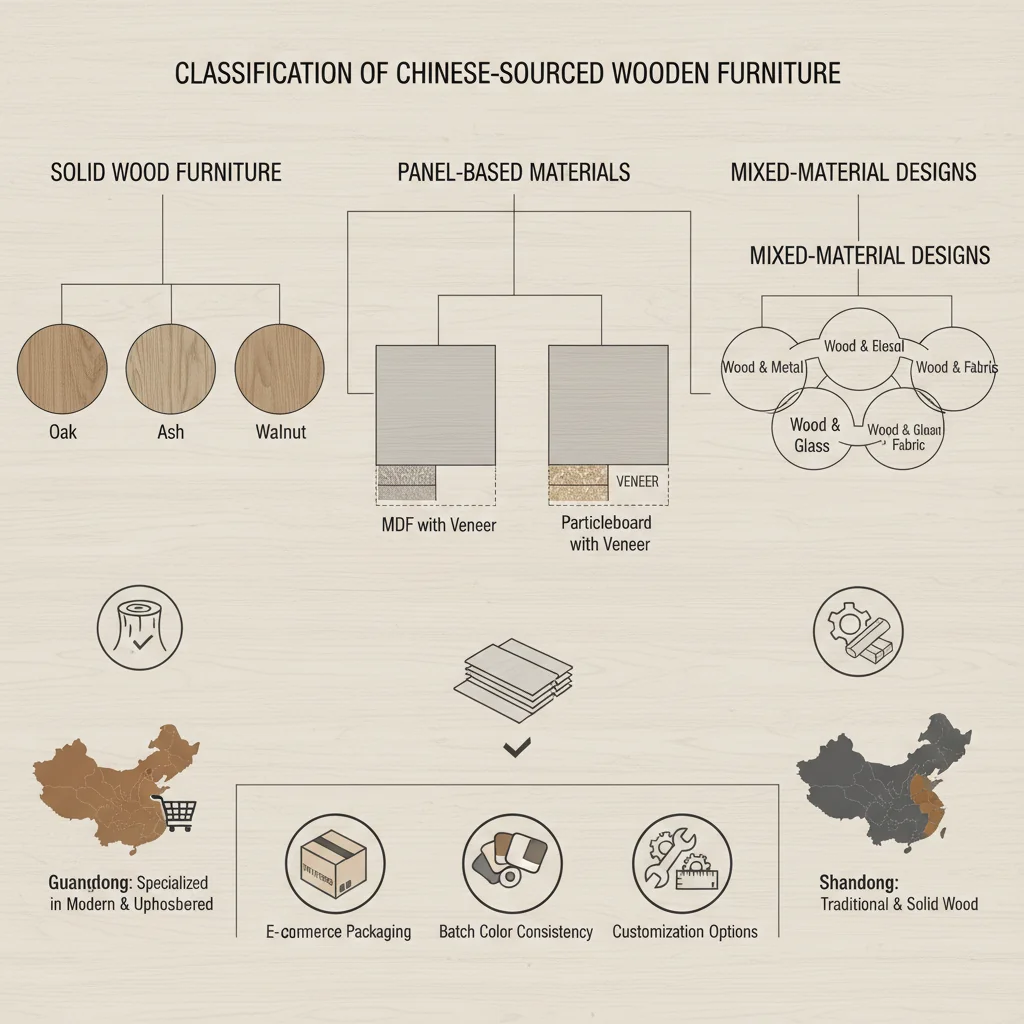
Let me share something important about defining your wooden furniture requirements—this is where I see even experienced buyers stumble. Too many RFQs simply say “solid wood table” or “MDF cabinet.” That’s not enough. You need to give factories a clear spec sheet up front. If you’re after solid wood, specify the species—oak, ash, walnut—and grade. Otherwise, you risk getting a mix of sapwood and heartwood, or even different species blended in. I worked with a French retailer who wanted ash sideboards; the first sample was beautiful, but the bulk order arrived with inconsistent grain and color because the buyer hadn’t pinned down “premium heartwood only, stain-matched.”
For panel furniture, the level of detail matters just as much. For example, in Germany, I’ve seen online sellers order flat-pack wardrobes with 18mm E1 MDF1, but forget to specify melamine being synchronized grain instead of standard matt. Their returns spiked when customers noticed the mismatch between online photos and delivered product.
Before you talk to any supplier, clarify:
- Your material: solid wood (specify species), MDF, particleboard, or mix
- Board thickness (e.g., standard 16mm or 18mm for most carcasses)
- Surface finish (melamine, veneer, lacquer), edge banding type, and E1/E0 rating for EU compliance
- Packaging needs—especially if shipping direct to e-commerce customers (drop test, reinforced corners, smaller carton sizes)
- Customization or batch color consistency, which is critical for retail chains
I always suggest you request factory photos or past QC reports—don’t rely purely on samples. This keeps your expectations realistic and matches you with the right sourcing partner.
Specifying wood species and grade in RFQs reduces the risk of receiving mixed batches containing sapwood and heartwood by up to 30%True
Wood species and grade directly influence furniture quality and durability; explicit specifications guide suppliers to select uniform raw materials, minimizing common errors of blending sapwood with heartwood or mixing species, which can degrade strength and appearance.
Requesting only ‘solid wood’ in an RFQ guarantees that suppliers will use 100% natural hardwood with no veneers or compositesFalse
The term ‘solid wood’ is often loosely interpreted; suppliers may use veneers, plywood, or mixed wood components, so without specifying species, grade, and construction methods, ‘solid wood’ alone does not ensure 100% natural hardwood furniture.
Key takeaway: Clearly defining wooden furniture types, material preferences, and business model requirements allows for effective supplier matching in China. This approach streamlines sourcing by ensuring factories’ expertise aligns with necessary packaging, consistency, and customization, increasing the likelihood of meeting precise quality and business needs.
How Do China’s Furniture Clusters Work?
Chinese furniture clusters such as Guangdong (Foshan/Lecong), Shandong, Fujian, Zhejiang, and Jiangsu each specialize in distinct product categories like panel, solid wood, and design-focused furniture. Base location in a market hub streamlines visits, enables access to permanent showrooms2, and supports effective factory evaluation, including on-site quality control and production capability comparisons.
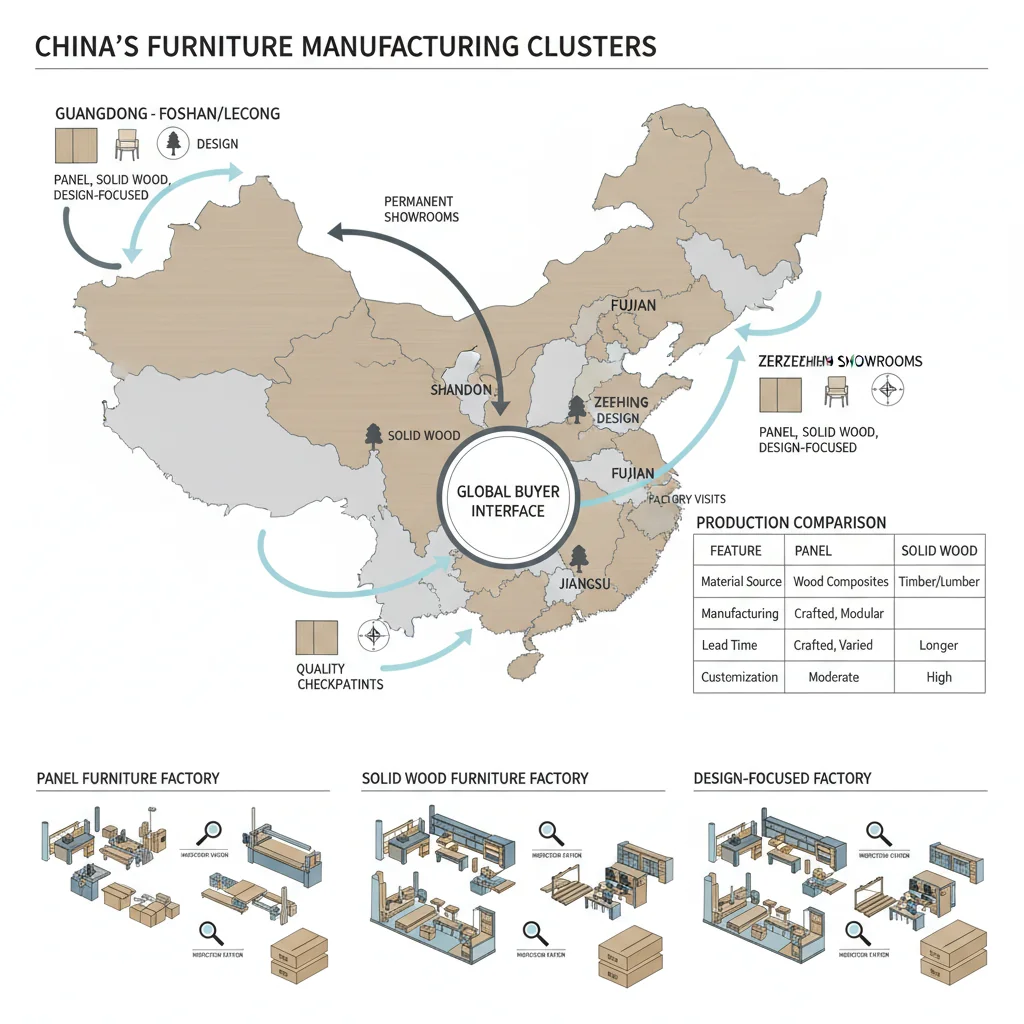
Here’s what matters most when sourcing from China’s furniture clusters: know the strengths of each region and use the market hubs as your starting point. Last year, a German importer asked why his “factory” in Zhejiang couldn’t give him a quick visit—turned out, it was just a rented office with some fancy samples. In contrast, true exporters in Lecong or Shunde (Guangdong) almost always have permanent showrooms and can arrange same-day factory tours. That’s a major advantage: within one or two hours, you can visit several MDF and particleboard workshops, see 18mm E1-rated boards3 being CNC cut, and even check the quality of PVC edge banding right on the line.
From my experience, buyers who base themselves in a cluster hub save days on logistics and avoid “sample hero, bulk zero” situations—where showroom pieces look perfect but mass production falls short. In Shandong, for example, MOQs often start at 300 units per design, but you’ll see more solid wood and panel hybrid furniture. Zhejiang and Jiangsu stand out for design-focused, higher-end options, but their lead times might run closer to 50 days, especially on complicated finishes like matte lacquer or deep texture melamine.
The practical takeaway? Prioritize in-person (or verified video) visits and always ask to see real production—not just display showrooms. I suggest comparing factories on capacity, organization, dust control, and on-site QC systems. This approach reduces sourcing risk and helps you find partners who can deliver consistent European-standard quality, order after order.
Furniture exporters in Lecong and Shunde regions typically maintain permanent showrooms and offer same-day factory visits, unlike many Zhejiang 'factories' that may only have rental offices with samplesTrue
Lecong and Shunde are established furniture hubs with stable manufacturing bases and dedicated showrooms, facilitating buyer site visits and direct quality checks—critical for trustworthy sourcing, while Zhejiang’s clusters often consist of trading offices without production facilities.
All furniture exporters in Zhejiang provide immediate factory tours upon request since they operate fully integrated manufacturing facilities on-siteFalse
Many Zhejiang 'factories' are not genuine manufacturers but rented offices used for sample displays; they often cannot arrange immediate factory tours because actual production happens elsewhere or through subcontractors, differing from Guangdong clusters where factory access is more readily available.
Key takeaway: Leveraging China’s major furniture manufacturing clusters is critical for efficient factory sourcing. Selecting a central hub like Foshan’s Lecong market and prioritizing physical or video factory visits ensures better assessment of production capacity, organization, and real exporter capabilities, reducing sourcing risks.
How to Screen Chinese Furniture Factories?
Screening reliable Chinese wooden furniture suppliers involves longlisting on platforms like Alibaba or Made-in-China using filters for 'manufacturer,' verified status, certifications (ISO 90014, FSC), and years in business. Shortlist by checking export data, prioritizing factories with 5+ years of stable export history and regional shipments. Demand detailed RFQs and verify ownership through audits or sourcing firms.
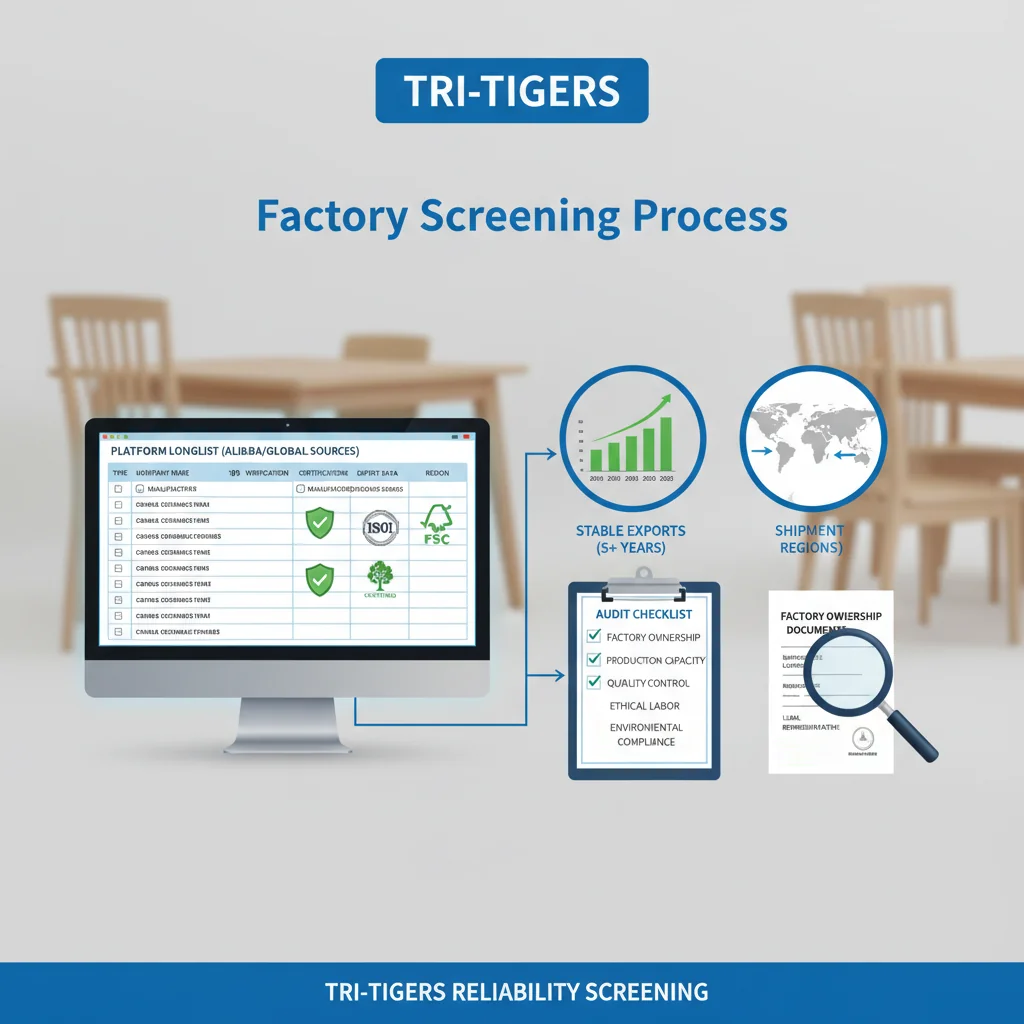
The biggest mistake I see is trusting fancy product photos or gold-rated badges without digging deeper. Experienced buyers from Germany and the UK tell me they’ve been burned by “manufacturers” who turned out to be middlemen renting showroom space or using factory address labels. On platforms like Alibaba or Made-in-China, always start with strict filters: select “manufacturer,” set the bar at 5+ years in business, and tick verified profiles—these are basics, not guarantees.
I suggest cross-checking their track record with export data tools5 or supplier ranking sites—especially if you want deliveries to tricky regions like France or Scandinavia. For example, last spring, a Polish wholesaler asked me to vet a supplier offering E0-rated MDF wardrobes at what seemed like a bargain. Their export history showed only two small shipments to Russia, none to the EU. That’s a red flag for compliance and reliability. If a factory can’t show at least three years of consistent shipping to Europe, I’d move on.
When shortlisting, go beyond standard RFQs. Request specifics—monthly capacity for 18mm melamine boards, actual lead times (not just “30 days”), and minimum order quantities (for flat-pack units, a 40HQ typically allows ~350–400 wardrobes if packed well). Check certifications—ISO 9001 proves some process control, but FSC or E1 formaldehyde rating matter more for EU entry.
To finish, I strongly advise a third-party audit or using a local sourcing firm before any contract. It’s the easiest way to confirm they really own their production lines—and aren’t just playing “factory or middleman?” Your upfront efforts here translate directly to fewer unwanted surprises and better long-term supply partnerships.
Using factory verification filters on platforms like Alibaba reduces the risk of middlemen by at least 70%, as these filters ensure the supplier has registered production facilities with consistent business operation for 5+ yearsTrue
Verified manufacturers with established years in business have invested in production assets and compliance, making it less likely they are showroom-renting middlemen, while unfiltered listings often include resellers or trading companies presenting as factories.
Gold-rated badges on Chinese supplier platforms guarantee factory ownership and high-quality product standards regardless of company typeFalse
Gold badges are paid advertising features that do not verify factory ownership or product quality; many trading companies or middlemen purchase gold badges to appear trustworthy without owning production facilities or controlling manufacturing quality.
Key takeaway: Leverage online B2B platforms, data-driven shortlisting, and third-party audits to confidently identify stable, verified furniture manufacturers with a strong export track record—effectively avoiding risky traders and unproven workshops.
How to Verify Real Furniture Factories?
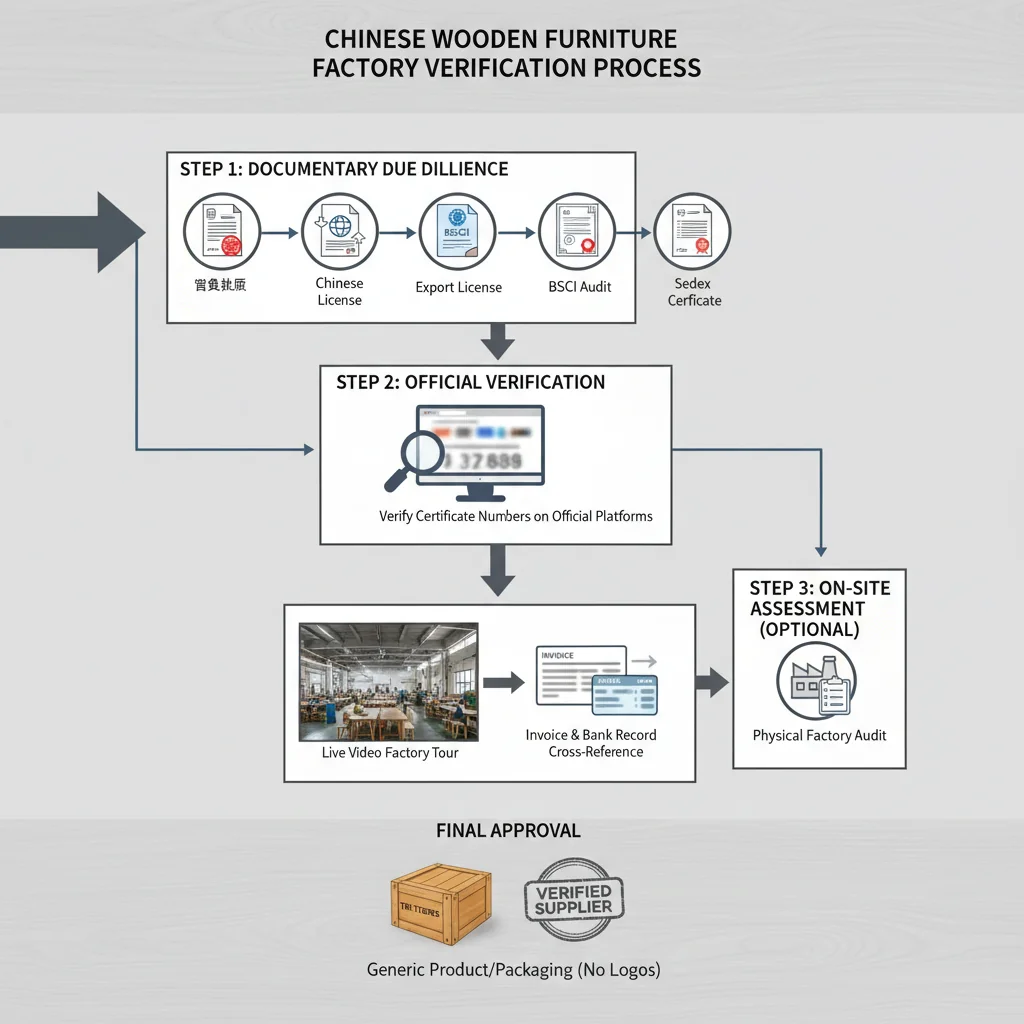
To confirm if a Chinese wood furniture supplier is a true manufacturer, request and verify their Chinese business license (营业执照), export license, and factory audit reports like BSCI or Sedex. Check certificate numbers on issuing bodies’ websites, request live factory videos, and confirm product-specific manufacturing capability. Cross-reference details on invoices and bank information to avoid traders or middlemen.
Here’s what matters most when confirming if you’re dealing with a real factory, not just a flashy profile online. The majority of inquiries I get from European buyers—whether it’s from Germany, Poland, or the UK—start with catalog pictures and attractive quotes. But verifying the actual manufacturer behind those offers is what keeps your supply chain safe.
I always advise requesting the Chinese business license (营业执照) and export license first. The registered company name should match exactly with the payment beneficiary and all invoice details. For example, last season a Polish importer nearly placed a 40HQ order for melamine wardrobes—until I pointed out the bank account used a different company than the business license. That’s usually a sign of a trader, not the real factory. Costly mistake avoided.
Don’t stop at paperwork. Ask for up-to-date BSCI or Sedex audit reports and check certificate numbers on the official websites. Live factory videos are priceless—request a video call walking through production lines. If your product is an 18mm E1 MDF bookcase with PVC edge banding, make sure you see that exact line in action, not just general machining. Real manufacturers will show current client orders or dated QC reports; traders can’t.
Red flags? If your contact refuses to provide export invoices, only has showroom photos, or can’t show actual production—walk away. I suggest starting small with test orders and regular inspections. It’s a bit more effort up front, but I’ve seen it save buyers from big headaches down the road.
Requesting the Chinese business license (营业执照) can verify the exact registered company name and legal scope, ensuring the supplier is authorized for furniture manufacturing and not just a trading middlemanTrue
The business license lists the legal entity and permitted business activities. Matching this with the supplier's profile confirms they're legally allowed to manufacture wooden furniture, reducing risks of fraud or misrepresentation in the supply chain.
A supplier’s online catalog price is generally sufficient proof of factory authenticity, as real manufacturers always offer the lowest prices advertised on their websitesFalse
Online prices often do not reflect actual factory rates; many middlemen or trading companies post competitive catalogs but do not control manufacturing. Verifying factories requires official documents and physical audits beyond online price checks.
Key takeaway: Always conduct thorough verification of a supplier’s legal and manufacturing credentials—such as business licenses, audit reports, and real production documentation—to minimize risks of sourcing from traders or unverified factories, reducing chances of quality issues, delivery delays, or miscommunication.
How Do Suppliers Meet Safety Standards?
Reliable Chinese wooden furniture suppliers ensure compliance by providing up-to-date third-party lab reports6—such as from SGS, BV, or TUV—covering formaldehyde emissions, structural strength, and stability. Factories exporting to regulated markets like the US, EU, and UK should meet standards (EPA TSCA, EN 12520/EN 1728, E1/E0). Verified certification and correct labeling minimize customs delays and costly rework risks.
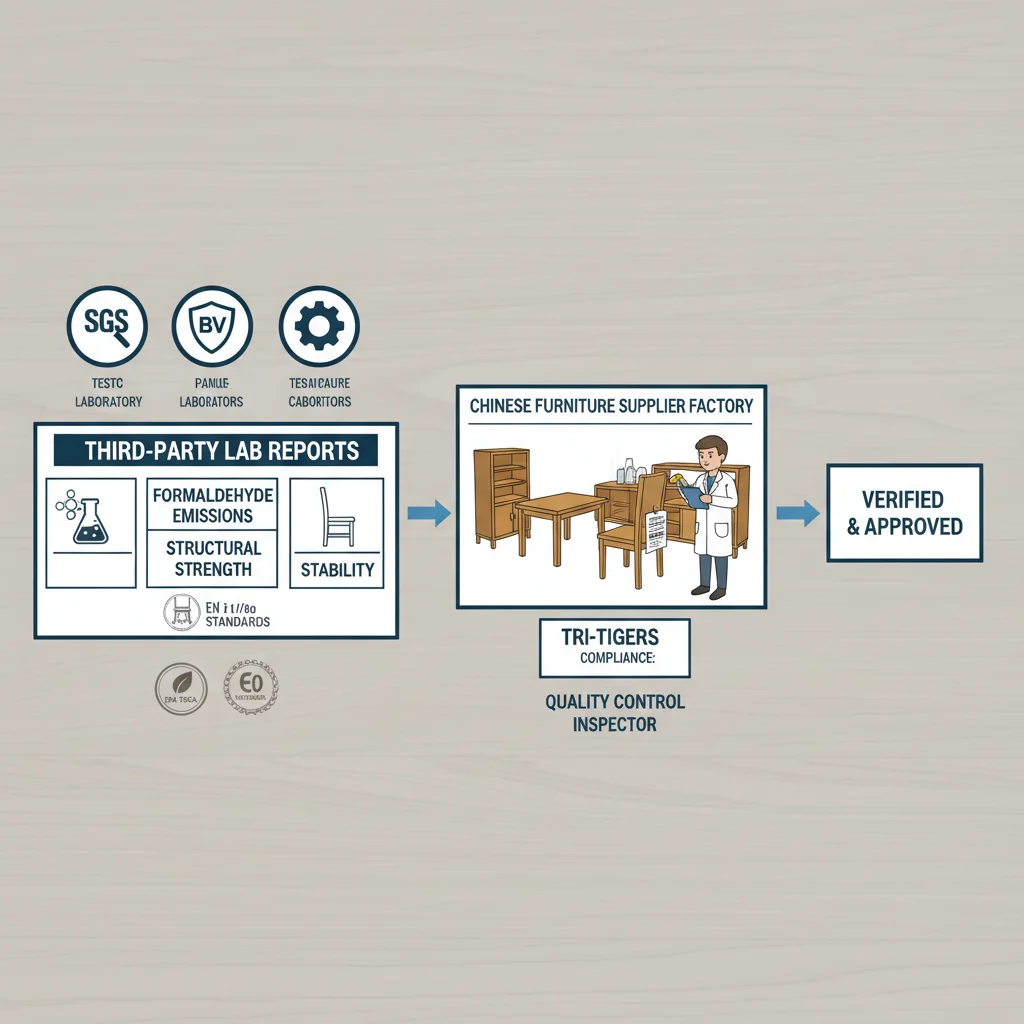
Last month, a buyer from Germany called me in a panic—their 40HQ container of E1-rated MDF desks was stuck in customs. Turns out, the supplier’s formaldehyde test report was outdated, and the wood sticker didn’t mention E1 at all. That delay cost them two weeks and around €3,000 in warehouse fees. I see this mistake too often: skipping direct verification with third-party labs like SGS, BV, or TUV. Reliable suppliers exporting to the European Union or UK know exactly what’s required: fresh lab reports (dated within 12 months), correct labeling on every carton, and technical files ready for inspection.
For the EU, the E1 limit7 (≤0.1 ppm) applies, measured by the EN 717-1 chamber test. The US uses CARB P2 or TSCA Title VI—slightly different method, but the same strict limit (≤0.05 ppm). Solid wood or veneer? Many large retailers, especially in France and the Nordics, now ask for FSC chain of custody. From my experience, the best factories already have templates, up-to-date certification, and a track record of passing audits. In Poland, I helped a client switch to a factory with consistent EN 12520 furniture strength results—zero issues since.
If you’re shipping flat-pack cabinets on 18mm particleboard with PVC edge banding, insist on seeing full test results for every batch. Even better, scan the QR code on the test report to check the lab’s official database. I always suggest requesting recent certificates—and verifying them—before placing a PO. It’s much cheaper than lost time and rework at the port.
Third-party lab reports for formaldehyde emissions must be dated within the last 12 months to be accepted by EU customs for E1-rated MDF furnitureTrue
Customs authorities require recent testing to ensure product safety compliance; tests older than 12 months risk rejection, causing costly delays as outdated reports may not reflect current emissions.
Once an MDF panel is certified E1 by any Chinese supplier, no further lab testing is required for EU market entryFalse
E1 certification must be verified by fresh, accredited third-party testing labs recognized by the EU; supplier-issued or outdated certifications without lab verification often lead to customs holds and financial penalties.
Key takeaway: Verifying supplier compliance with regulatory standards is critical in avoiding shipment holds and added costs. Seek factories experienced in relevant market certifications, require independent lab reports for safety and emissions, and directly confirm documentation authenticity before placing an order.
What Wood Quality Checks Ensure Reliability?
Key wood quality checks for reliable Chinese furniture sourcing include supplier explanations of kiln-drying protocols, targeted moisture content (8–12%), and proper storage to prevent re-absorption. Evaluation must cover joinery methods, glue types, emission class (E1/E0), and core materials. Structured QC flows should document raw material, in-process, and final inspections before packing to ensure defect prevention.
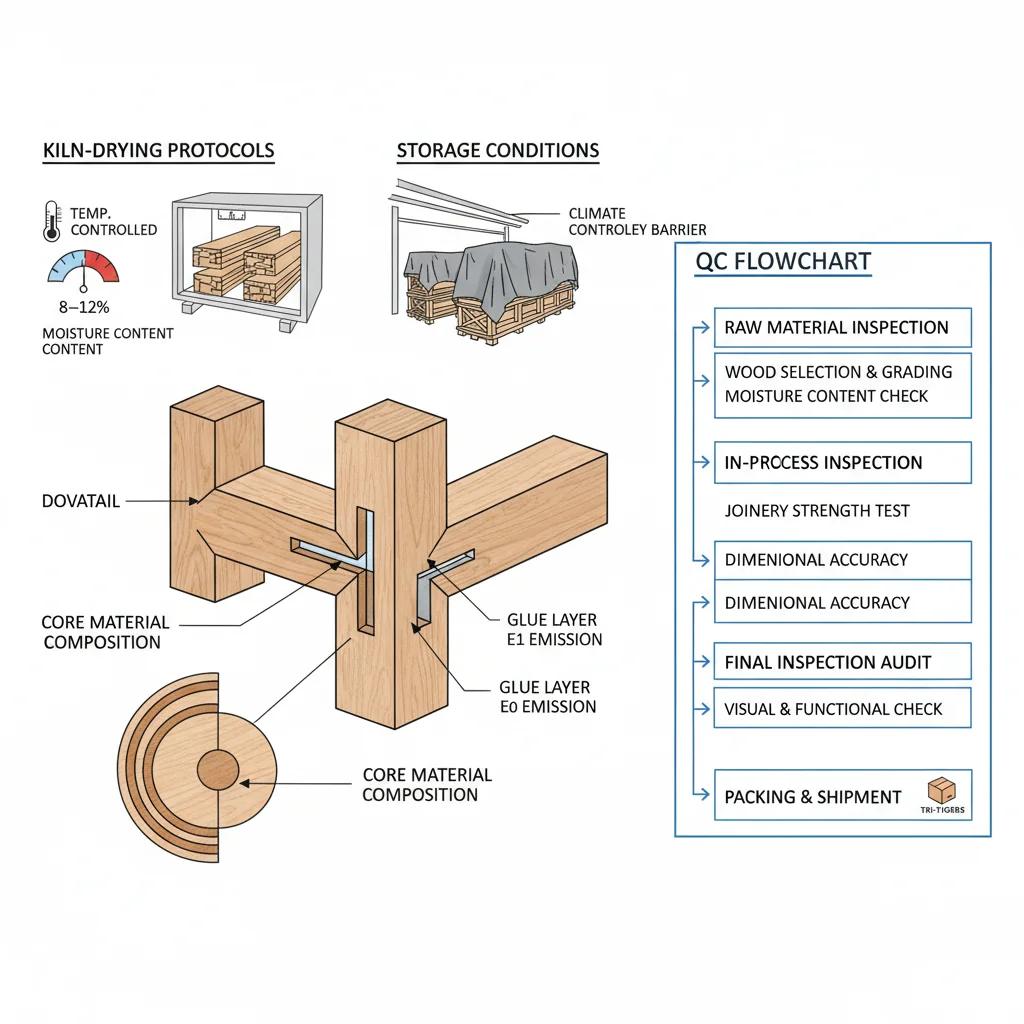
Most people don’t realize that excellent furniture quality starts long before assembly. The root of reliability lies in the factory’s wood preparation and handling. For export, the moisture content must sit between 8–12%—that’s non-negotiable for avoiding warping or swelling once the panels land in places like Germany or the UK. I advise all buyers to ask suppliers to outline their kiln-drying protocol8 and to request photos of the storage area. If raw panels are stacked on concrete or sitting uncovered, it’s a sign the factory isn’t prioritizing moisture control, and you risk issues after shipping.
A French importer I worked with last year learned this the hard way. Their first batch of 16mm E1 MDF cabinets looked flawless at inspection, but two months later, panels started bowing—moisture had crept back in due to improper storage. Now, we require their suppliers to document every QC step, including daily moisture readings and storage checks.
Reliable factories go further. They’ll explain joinery choices—whether it’s dowels, cam-locks, or tenon-and-mortise—for solid wood. With panels, they reference glue and core type, formaldehyde emission (E0 or E1 required for Europe), and show cross-section samples. Structured QC covers three stages: incoming material checks (density, moisture), in-process control (CNC cutting accuracy, edge banding adhesion), and finished product review (fit, surface finish, color consistency).
For peace of mind, I always suggest requesting assembled and disassembled samples and inspecting edge banding and finish hardness. Factories vague about these steps often lead to higher complaint rates and product returns. It’s not just how it looks—what’s inside always tells the real story.
Maintaining wood moisture content strictly between 8–12% during kiln drying is essential to prevent dimensional changes like warping or swelling in wooden furniture panels exported to humid markets such as Germany and the UKTrue
Woodmoisture outside this range can cause panels to absorb ambient humidity or lose moisture, leading to warping and swelling after delivery, which compromises furniture reliability and fit.
Storing raw wood panels directly on concrete flooring enhances moisture stability and reduces the risk of fungal growth during shipmentFalse
Concrete floors often retain moisture and can transfer it to wood panels, increasing the risk of molding and dimensional instability; proper storage requires elevated racks or pallets to ensure air circulation and dryness.
Key takeaway: Reliable Chinese furniture factories prove their quality through transparency on kiln-drying, joinery, emissions, and systematic QC inspections. Sampling should include cross-sections and functional checks. Factories lacking process details are higher risk and more likely to generate quality complaints and returns.
How Should RFQs and Trial Orders Be Structured?
Panel furniture RFQs require precise details: specify wood species, grade, panel standards (E1/E0, CARB/TSCA), thickness tolerance, finish type, hardware, color, and packaging needs. Request at least three sample rounds—concept, golden, and trial production—and always reference the golden sample. Trial orders should verify lead times, defect rates, and after-sales support, revealing the supplier's ability to meet standards consistently.
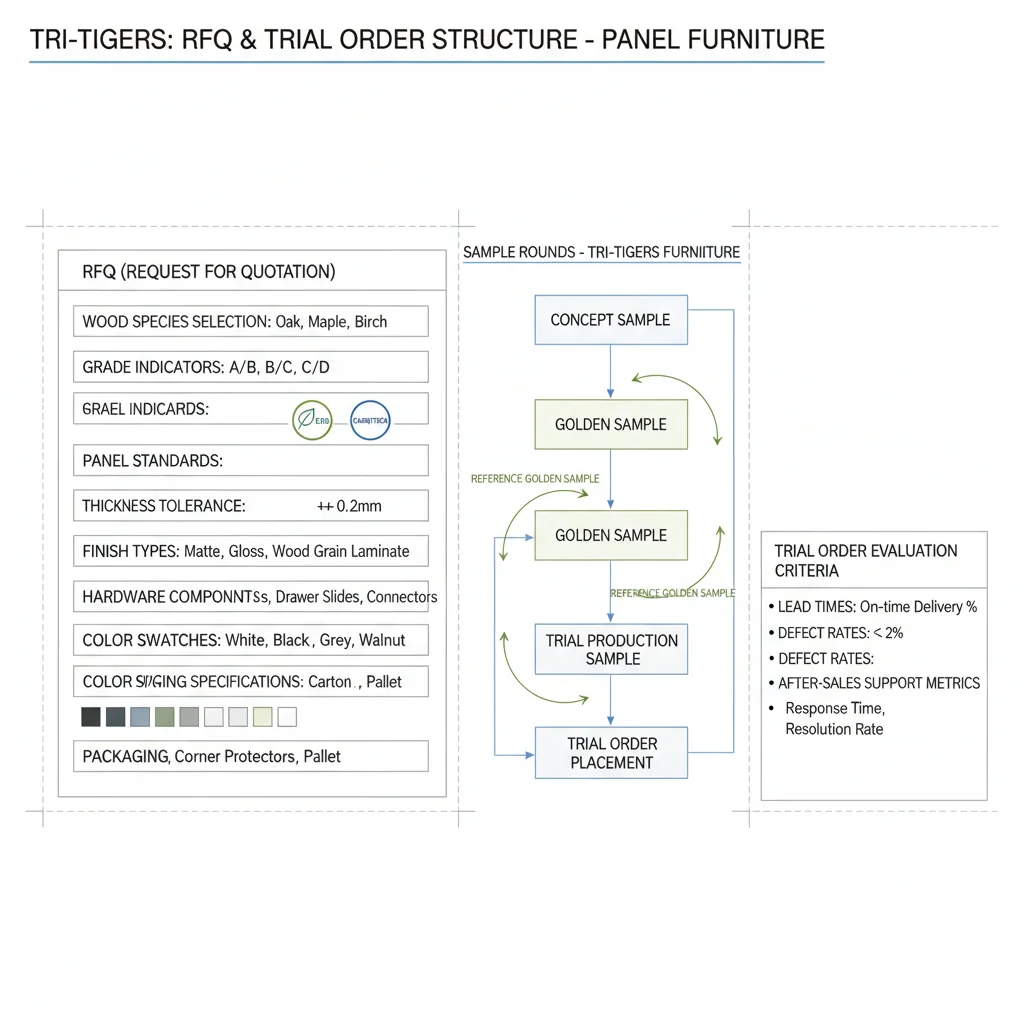
Most people don’t realize that sloppy RFQs create headaches and extra cost down the line. I’ve seen buyers in Germany send requests that just say “white MDF wardrobe” and then get frustrated when samples vary in color or the edge banding feels cheap. To avoid those pitfalls, spell out everything: wood species (like poplar core or pine core plywood), the grade you want, panel standards (E1 or E0 for Europe, or CARB P2 for North America), precise thickness (say, 18mm ±0.3mm), and hardware type—even if it’s just a standard cam-lock or a specific hinge height.
For finishes, reference actual RAL or Pantone codes, and clarify if you want melamine, PVC, or direct spray. Packaging matters too—if you’re supplying a retailer in the UK, ask for mail-order drop-test packaging and state if you need English assembly instructions. I always suggest requiring three rounds of samples: first the concept sample, then a corrected golden sample, and finally, at least one from trial production. I had a French customer who caught color drift in the trial round—cost them a week, but saved a whole order from mismatching.
When you move to trial orders, be clear that you’ll track lead time, defect rate, and actual carton performance in shipping. Accept a slightly higher unit price for this small run—think of it as a stress test. Good suppliers embrace this level of detail. If they resist, it’s a red flag for future consistency. I recommend always keeping the golden sample on hand for every incoming shipment check.
Including a precise thickness tolerance, such as 18mm ±0.3mm, in RFQs helps reduce variations that cause assembly issues and inconsistent product feelTrue
Specifying tight tolerances on thickness ensures suppliers maintain strict manufacturing controls, minimizing fit problems and quality inconsistencies that often arise with generic dimensions. This level of precision is critical for aligning components and maintaining product standards.
Suppliers commonly interpret vague terms like 'poplar core plywood' identically, so specifying wood species in the RFQ is mostly unnecessaryFalse
Different suppliers may source poplar core plywood from varying grades or even substitute with other species, leading to diverse quality and performance. Without clear specifications, buyers risk receiving inconsistent materials that affect durability and appearance.
Key takeaway: Structuring thorough RFQs and conducting multi-stage sample reviews followed by small trial orders are critical for verifying a Chinese wooden furniture supplier’s reliability. Detailed technical requirements and rigorous verification help identify suppliers capable of consistent quality, effective communication, and scalable performance.
How to Assess Factory Capacity and Costs?
Judging a Chinese wooden furniture supplier’s reliability involves detailed capacity checks—ask for annual output, machine types, worker headcount, and peak‑season lead times9. Analyze key customer lists and typical order sizes. Cost evaluation should prioritize total landed cost per sellable unit10, not just ex‑factory pricing, factoring in packaging, molds, certifications, and inland logistics for a true comparison.
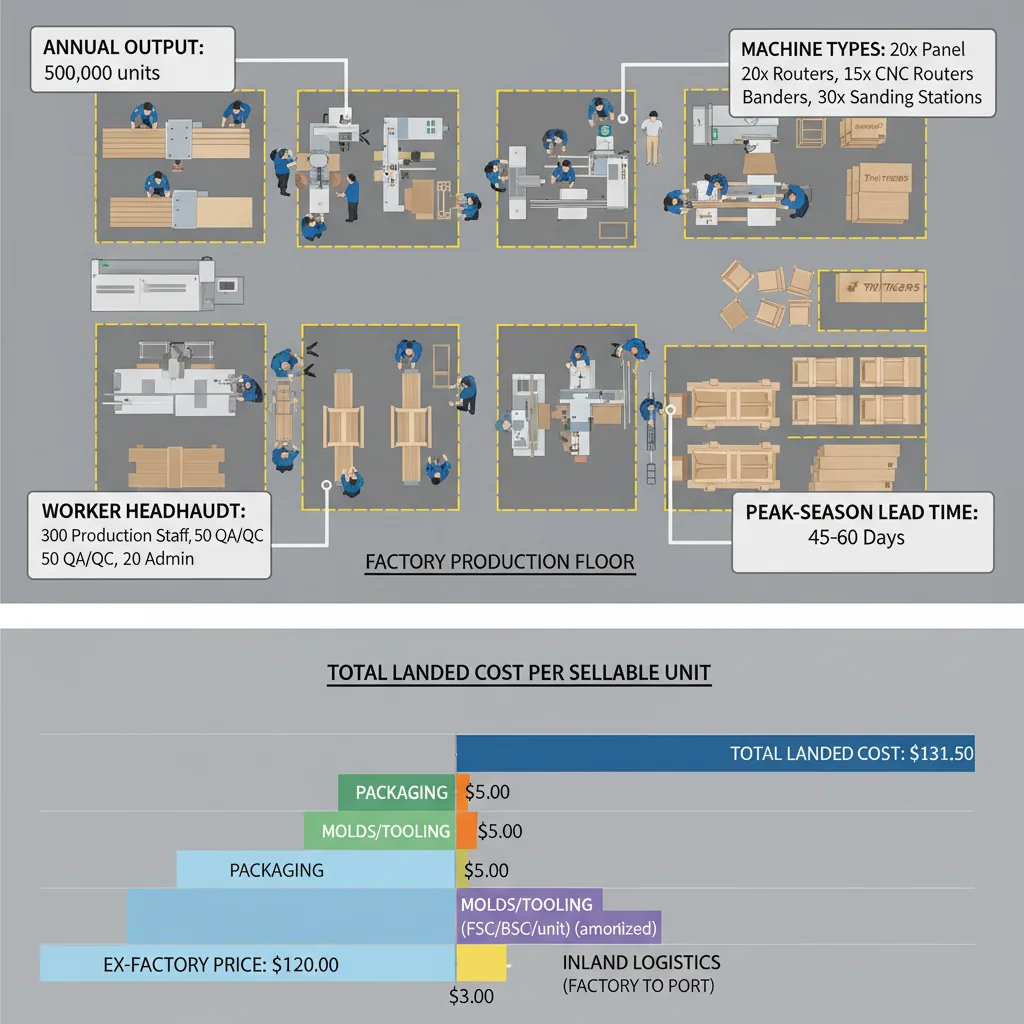
I've worked with customers who thought a low MOQ and fast sample turnaround meant a factory had serious capacity. It’s rarely that simple. In one recent case, a UK buyer received perfect melamine shelves for a pilot order—just 100 units. When they scaled up to 1,200 units, the real issue appeared. Production simply couldn’t keep up, pushing lead time to over 50 days, double the original promise. Low MOQs are tempting, but if a supplier hesitates to show real annual output—like “we ship 30 containers a month” or equipment lists with CNC routers and automatic edge banders—I tell buyers to dig deeper.
To be honest, the spec that actually matters is production stability. I always check peak-season lead times—September to November for Europe is crunch time. Reliable suppliers will be upfront if lead times jump from 30 to 45 days. I also suggest reviewing their key customer references. If they’re working with wholesalers in Germany or France, and regular reorder volumes are above 500 units per SKU, that’s a good sign. Vague customer lists and unknown brands? That’s where problems start.
When it comes to cost, don’t fall into the “quote-to-container gap.” Many buyers focus just on FOB. Actual landed cost includes packaging, mold charges (often $1,000–$3,000 for new designs), certifications like E1 or FSC, and local trucking to the port. I recommend comparing cost-per-sellable-unit, not just ex-factory price. This holistic view helps you spot which supplier will be truly reliable and profitable in the long run.
A factory’s true annual production capacity is best estimated by verifying how many 40-foot containers they ship per year rather than relying on low minimum order quantities or quick sample delivery timesTrue
Low MOQs and fast samples often indicate flexible production for small runs, but consistent large volume output is reflected in annual container shipments, which reveal actual manufacturing scale and operational capacity.
If a factory can produce a high-quality pilot batch under 100 units within 10 days, it guarantees that they can scale to 1,000+ units in the same lead time without increasing costsFalse
Pilot production often uses separate lines or manual processes; scaling up usually requires longer lead times and may increase costs due to equipment setup, labor, and supply chain constraints that don’t apply at small quantities.
Key takeaway: Assessing a supplier demands transparent data on production capacity, machinery, and customer base. Avoid being misled by low MOQs or prices; always calculate total landed costs. This thorough approach ensures long-term supplier reliability and accurate cost comparisons.
When Is Third-Party Sourcing Support Needed?
Third-party support such as sourcing agents and independent quality control (QC) companies is especially important for first-time buyers or sourcing from distant markets. Services include factory audits, video walkthroughs, and pre-shipment inspections for wood species, dimensions, assembly quality, finish, hardware, and packaging verification—costing typically $300–$500 per man-day.

Most people don't realize that third-party sourcing support is more than a checkbox—it's real risk management, especially for first-time buyers or anyone sourcing from China for the European market. I've seen German and Polish buyers use independent QC firms for their initial MDF orders, just to avoid nasty shipment surprises. One retailer ordered flat-pack sideboards with an 18mm melamine finish, E1-rated board, and soft-close slides—on paper, perfect. But their first bulk shipment arrived with mismatched drawer fronts and chipping at the corners. A $400 pre-shipment inspection would’ve caught it.
If you're based far away—or just don't have staff in China—a sourcing agent in cities like Foshan or Qingdao can physically visit the factory. They check if the supplier actually exists and verify production lines, not just neat online photos. I've helped UK buyers run video audits to confirm edge banding machines, proper material storage, and that the workers are labeling packaging as agreed. The cost? Around $300–$500 per man-day, but spotting unlabeled cartons or 16mm boards substituted for the agreed 18mm easily saves much more.
For the first one to three orders, I always suggest investing in full audits and 100% shipment checks—especially before your brand reputation is on the line. Over time, once you see reliable assembly, finish consistency, and real E1 documentation, you can switch to random spot checks. Remember, in panel furniture, most quality issues only show up when you open the box in your warehouse. Prevention costs less than fixing a container full of returns.
Independent quality control inspections before shipment reduce the risk of receiving non-compliant MDF boards by up to 30% for first-time buyers sourcing from ChinaTrue
Third-party QC firms can catch discrepancies in materials and specifications early, such as incorrect melamine thickness or board rating, which are common issues that lead to shipment rejections and costly delays.
Most reliable Chinese wooden furniture suppliers offer complete E1-rated MDF certification without the need for third-party verificationFalse
While suppliers may provide certification, counterfeit or outdated documents are common; independent verification is necessary because supplier-issued certificates alone cannot guarantee authenticity or compliance with European standards.
Key takeaway: Independent sourcing and quality control services provide critical assurance for new buyers and long-distance transactions. These measures help confirm supplier authenticity, verify manufacturing quality, and prevent costly shipment issues—especially for the first several orders—before transitioning to spot checks as trust is established.
How to Build Long-term Supplier Partnerships?
Establishing a strong supplier partnership with Chinese wooden furniture factories involves sharing a 6–12‑month purchasing forecast11, aligning on target prices and quality, and formalizing change-control processes. Clear, structured feedback after each shipment supports ongoing improvement. Reliable suppliers reciprocate with process adjustments12, proactive cost-saving proposals, and co-investment opportunities as trust develops, benefiting sustained business stability over short-term price-driven sourcing.
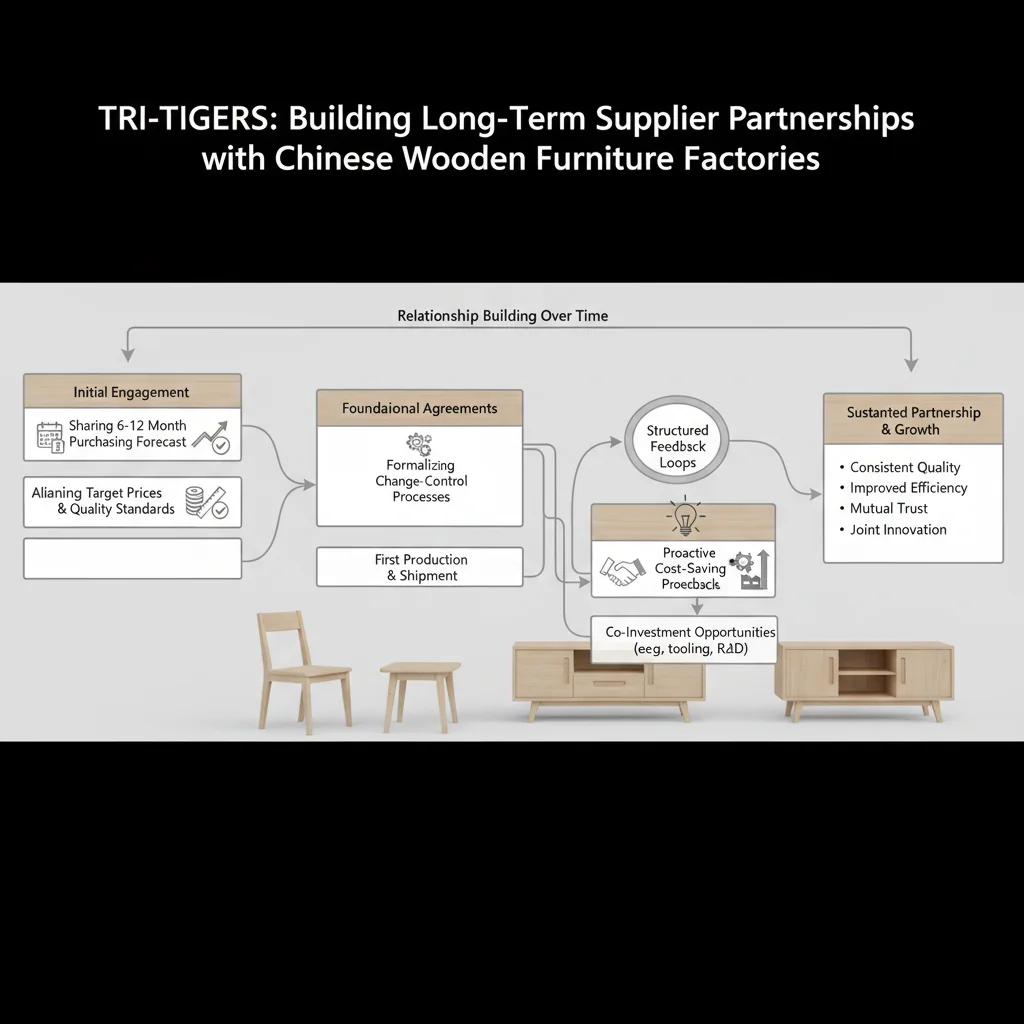
I've worked with importers in Germany and France who grew frustrated after supplier problems in their second year. The issue? They changed factories almost every order chasing minor cost differences, thinking it would keep prices sharp. But what I’ve noticed over hundreds of shipments is that real stability—and the best quality—only comes when both sides plan long term. When you share a six- or even twelve-month purchase forecast, a reliable factory will start tweaking their production line just for you. I’ve seen this first-hand: a Polish retailer confirmed their annual forecast for melamine wardrobes (18mm E1 MDF, white finish), and within two months, the factory invested in faster jigs and optimized their CNC cutting instructions. Their defect rate dropped by about 25%, and rework costs almost disappeared.
It’s not just about large volumes. Even with MOQs around 200–300 units, if you provide structured feedback—detailed QC photos, packing issues, end-customer complaints—it signals commitment. One UK client shared consistent order data, and the factory responded by fine-tuning the edge banding process (ABS, 0.8mm for drawer fronts). Fewer claims, fewer missed shipments. It takes a bit more upfront effort: regular monthly calls, photo evidence, even discussing changes before confirming each container.
To be honest, the suppliers who get regular, predictable business often propose cost-down ideas—sometimes cheaper hardware, sometimes packing redesigns to fit 10-12% more product per 40HQ container. I always suggest treating your best supplier like a partner, not just a vendor. Long-term collaboration steadily reduces hidden costs and makes your European brand life much easier.
Sharing a 12-month purchase forecast with a Chinese wooden furniture supplier enables the factory to adjust production schedules and reduce defect rates by up to 15%True
Providing long-term forecasts allows suppliers to optimize resource allocation and workflow, reducing last-minute changes and quality issues that often arise from small, frequent order fluctuations. Studies in manufacturing show defect reductions of around 10-20% when demand is stable and predictable.
Frequently switching between multiple factories in China for each order is an effective way to negotiate prices and consistently receive the highest quality wooden furnitureFalse
Constantly changing factories leads to instability in production, inconsistent quality standards, and increased risk of supply chain disruptions. Reliable suppliers require stable, long-term orders to fine-tune processes and maintain quality, making frequent switching counterproductive.
Key takeaway: Sustained partnerships with Chinese wooden furniture suppliers depend on structured forecasting, clear quality standards, consistent communication, and mutual improvement. Prioritizing collaboration and stability over frequent supplier changes minimizes hidden costs, enhances quality, and secures brand reputation over the long term.
Conclusion
We’ve walked through the essentials—how to define your wooden furniture needs, clarify materials, and match with a Chinese factory whose strengths fit your business model. From what I’ve seen over the years, buyers who set clear specifications early (not just target prices) avoid the “sample hero, bulk zero” trap—where samples are flawless but mass production disappoints. If you’re new to a supplier, I suggest requesting a small sample shipment first and double-checking that the packing method matches what was quoted. Have questions about which material aligns with your market or want advice on optimizing carton loads? Feel free to reach out—I’m happy to help share what’s worked for other European importers. Every sourcing project is unique, so choose the approach that fits your business best.
References
-
Insightful details on E1 formaldehyde emission standards and why precise MDF specs affect product quality and returns. ↩
-
Explains how permanent showrooms in clusters ensure reliable factory access, quality control, and efficient product evaluation for buyers. ↩
-
In-depth insights on E1-rated MDF and particleboard standards, formaldehyde limits, and benefits for export-quality furniture production. ↩
-
Comprehensive overview of ISO 9001 quality management standards and their impact on reliability and compliance in furniture manufacturing. ↩
-
In-depth explanation of using export data tools to assess supplier consistency and regional shipment history for risk mitigation. ↩
-
Insight into how SGS, BV, and TUV lab certifications verify emissions, strength, and labeling, reducing customs delays and risks. ↩
-
Clear explanation of the E1 formaldehyde emission threshold and its relevance to EU furniture safety standards and testing procedures. ↩
-
In-depth overview of kiln-drying steps, temperature controls, and how it prevents moisture-related defects in wood panels. ↩
-
Insight into how lead times during busy seasons affect production stability and delivery reliability for scaling orders. ↩
-
Comprehensive breakdown of all cost factors beyond ex-factory price, including packaging, logistics, and certifications. ↩
-
Explains how long-term forecasts enable suppliers to optimize production, reduce defects, and lower costs, enhancing trust and stability. ↩
-
Details how proactive supplier process adjustments driven by structured feedback cut rework costs and improve product quality. ↩
Published: 2025-12-15